

Discover references
Natural Language Processing
Natural Language Processing: The Key to Unlocking Linguistic Insights
Explore the exciting world of Natural Language Processing (NLP) — a fascinating branch of artificial intelligence that focuses on the interaction between computers and humans through natural language, allowing profound comprehension and usage of human language by machines.
What is Natural Language Processing?
Natural Language Processing is a critical component of AI that empowers machines to interpret, generate, and respond to human language in a valuable way. By combining computational linguistics with statistical, machine learning, and deep learning models, NLP enables computers to process and understand human language, bridging communication gaps between machines and humans.
Applications of NLP
NLP technology underpins many modern-day applications that we rely on daily. From the simplicity of autocorrect and predictive text on mobile devices to the sophistication of virtual assistants like Siri and Alexa, NLP is continuously evolving and finding new avenues to enhance our interaction with technology. Other notable applications include sentiment analysis, machine translation, chatbots, and information retrieval systems.
Understanding the Techniques
To fully appreciate NLP, it's essential to understand the various techniques it employs. Key techniques include tokenization, stemming, lemmatization, and part-of-speech tagging, all of which are crucial for text preparation and analysis. More advanced techniques involve named entity recognition, parsing, and word embeddings — each playing a pivotal role in breaking down and understanding language uniquely.
Challenges in NLP
The field of NLP is not without its challenges. Language ambiguity, irony, and context variation pose significant obstacles. Moreover, diverse languages with unique syntactic and semantic rules further complicate processing efforts. Researchers and developers continuously innovate to create models that can adapt to these intricacies, enabling more accurate language comprehension by machines.
The Role of NLP in the Future of AI
Natural Language Processing has a transformative impact on numerous sectors. As AI becomes increasingly pervasive in various industries, from healthcare to finance to education, NLP's importance is unfaltering. It enhances customer services, aids in diagnosis and treatment in medicine, offers insights through social media analytics, and further enriches e-learning platforms.
Future advancements in NLP promise more sophisticated human-computer interactions. Emerging technologies like BERT (Bidirectional Encoder Representations from Transformers) and GPT (Generative Pre-trained Transformer) demonstrate the potential for deeper contextual understanding and generation of human-like text. With ongoing research, NLP is on the brink of monumental breakthroughs that could redefine our interaction with technology.
A Word on NLP Resources and Learning
For those fascinated by this dynamic field, a wealth of resources is available. Books, online courses, and research papers offer insights and detailed understanding of NLP's underlying principles. Delving into these materials equips enthusiasts and professionals with the skills needed to contribute to this ever-evolving domain. At our bookstore, we curate an extensive collection of NLP resources, ensuring a comprehensive learning experience for our audience.
Embrace the future of communication with Natural Language Processing. Dive into our diverse selection of NLP books and materials to broaden your knowledge and stay ahead in this innovative field.
Books
109 results
English
Beginner
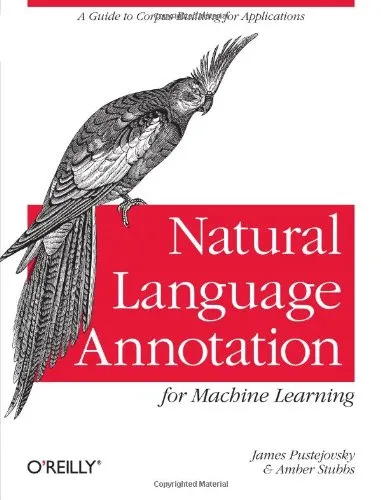
Natural Language Annotation for Machine Learning
James Pustejovsky,Amber Stubbs
2012
View book

English
Beginner
Neural Networks for Applied Sciences and Engineering: From Fundamentals to Complex Pattern Recognition
Sandhya Samarasinghe
2006
View book

English
Beginner
An Introduction to Corpus Linguistics (Studies in Language and Linguistics)
Graeme D. Kennedy
1998
View book


English
Beginner
The Cambridge History of the English Language, : English in Britain and Overseas: Origins and Development ()
Robert Burchfield
1995
View book
English
Beginner
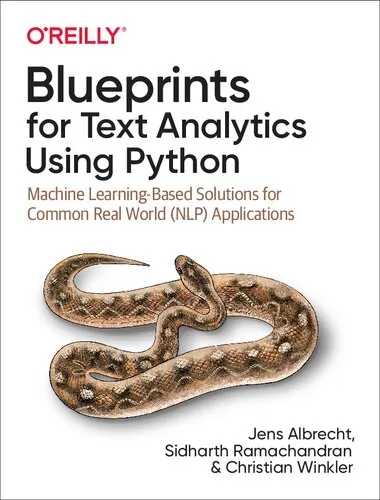
Blueprints for Text Analytics Using Python: Machine Learning-Based Solutions for Common Real World (NLP) Applications
Jens Albrecht,Sidharth Ramachandran,Christian Winkler
2021
View book
English
Beginner
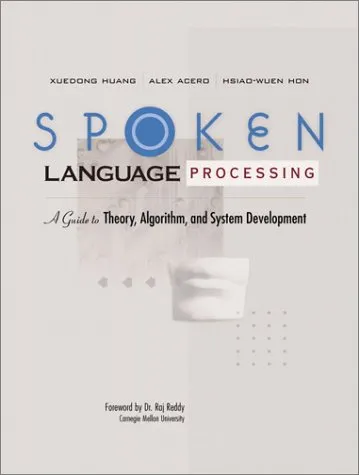
Spoken Language Processing: A Guide to Theory, Algorithm and System Development
Xuedong Huang,Alex Acero,Hsiao-Wuen Hon
2001
View book
English
Beginner
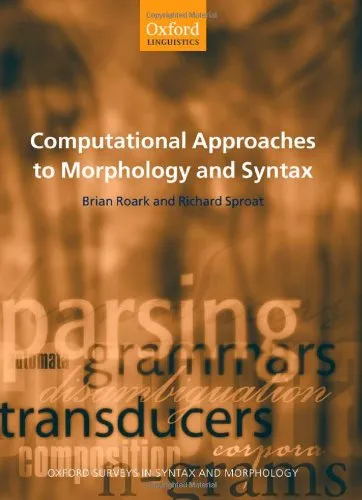
Computational approaches to morphology and syntax
Brian Roark,Richard Sproat
2007
View book
English
Beginner
Parsing Techniques: A Practical Guide
Dick Grune,Ceriel J. H. Jacobs
1991
View book
English
Beginner
Natural Language Processing with Python
Steven Bird,Ewan Klein,Edward Loper
2009
View book
English
Unordered
Decoding Large Language Models: An exhaustive guide to understanding, implementing, and optimizing LLMs for NLP applications
Irena Cronin
2024
View book
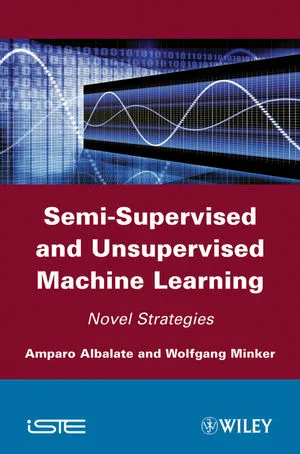
English
Beginner
Semi-Supervised and Unsupervised Machine Learning: Novel Strategies
Amparo Albalate,Wolfgang Minker(auth.)
2010
View book

English
Beginner
Sentiment Analysis in Social Networks
Federico Alberto Pozzi,Elisabetta Fersini,Enza Messina,Bing Liu
2017
View book
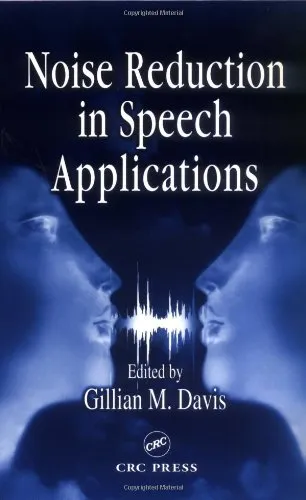
English
Beginner
Noise Reduction in Speech Applications (Electrical Engineering & Applied Signal Processing Series)
Gillian M. Davis
2002
View book

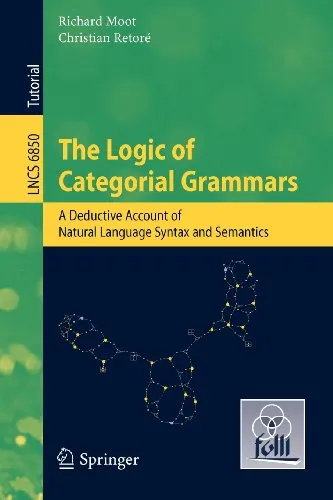
English
Beginner
The Logic of Categorial Grammars: A Deductive Account of Natural Language Syntax and Semantics
Richard Moot,Christian Retoré (auth.)
2012
View book
English
Beginner
Natural Language Processing with Python Cookbook
Krishna Bhavsar,Naresh Kumar,Pratap Dangeti
2017
View book
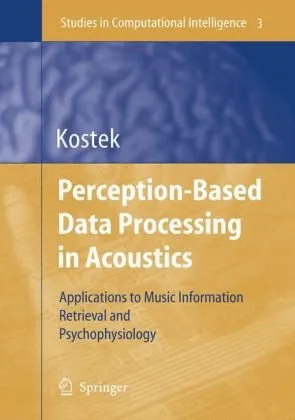
English
Beginner
Kernel Based Algorithms for Mining Huge Data Sets: Supervised, Semi-supervised, and Unsupervised Learning
Bozena Kostek
2005
View book
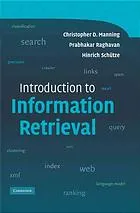
English
Beginner
Introduction to information retrieval
Christopher D Manning;Prabhakar Raghavan;Hinrich Schutze
2008
View book
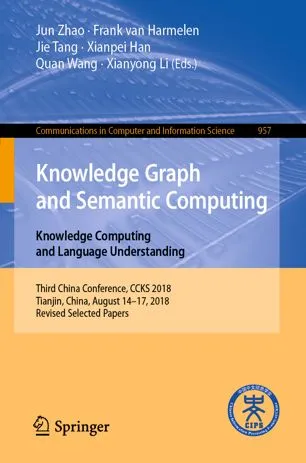
English
Unordered
Knowledge Graph and Semantic Computing. Knowledge Computing and Language Understanding: Third China Conference, CCKS 2018, Tianjin, China, August 14–17, 2018, Revised Selected Papers
Jun Zhao,Frank van Harmelen,Jie Tang,Xianpei Han,Quan Wang,Xianyong Li
2019
View book

English
Intermediate
GPT-3: Building Innovative NLP Products Using Large Language Models
Sandra Kublik;Shubham Saboo
2022
View book
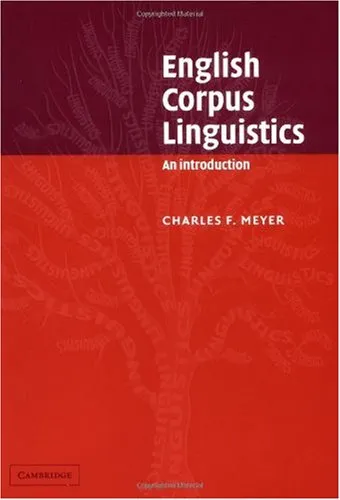
English
Beginner
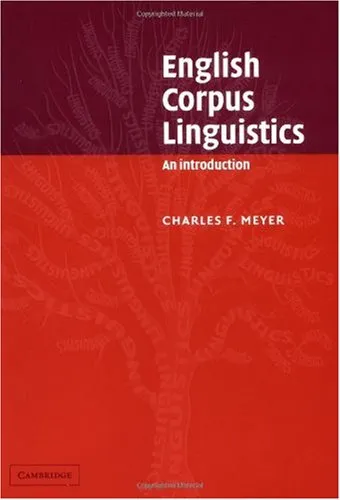
English Corpus Linguistics: An Introduction (Studies in English Language)
Charles F. Meyer
2002
View book
English
Beginner
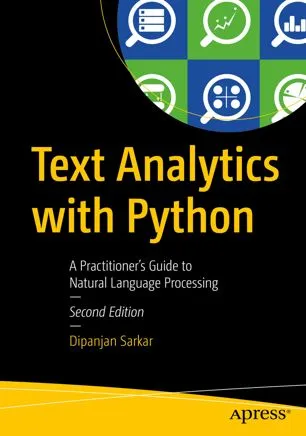
Text Analytics with Python: A Practitioner's Guide to Natural Language Processing
Dipanjan Sarkar
2019
View book

English
Beginner
The Development of Standard English, 1300-1800: Theories, Descriptions, Conflicts (Studies in English Language)
Laura Wright
2000
View book
English
Beginner
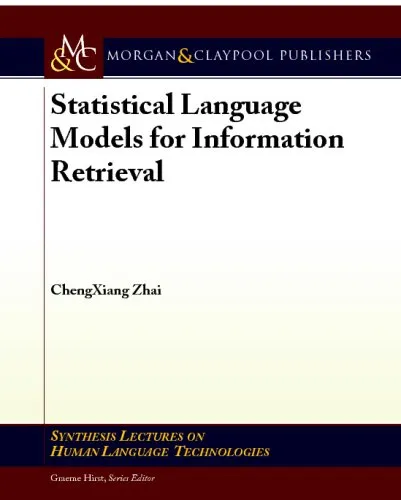
Statistical language models for information retrieval
ChengXiang Zhai
2008
View book

English
Beginner
The Role of Semantic, Pragmatic, and Discourse Factors in the Development of Case (Studies in Language Companion Series)
Johanna Barddal,Shobhana L. Chelliah
2009
View book

English
Beginner
Foundations of Statistical Natural Language Processing
Manning C.D.,Schütze H.
1999
View book
English
Beginner
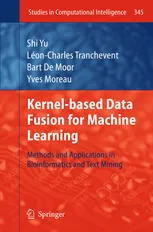
Kernel-based Data Fusion for Machine Learning: Methods and Applications in Bioinformatics and Text Mining
Shi Yu,Léon-Charles Tranchevent,Bart De Moor,Yves Moreau (auth.)
2011
View book

English
Beginner
A Statistical Approach to Neural Networks for Pattern Recognition (Wiley Series in Computational Statistics)
Robert A. Dunne
2007
View book

English
Beginner
Italo-Celtic Origins and Prehistoric Development of the Irish Language (Leiden Studies in Indo-European 14)
Frederik Kortlandt
2007
View book
English
Unordered
Java Data Science Cookbook. Explore the power of MLlib, DL4j, Weka and more
Rushdi Shams
2017
View book
English
Beginner
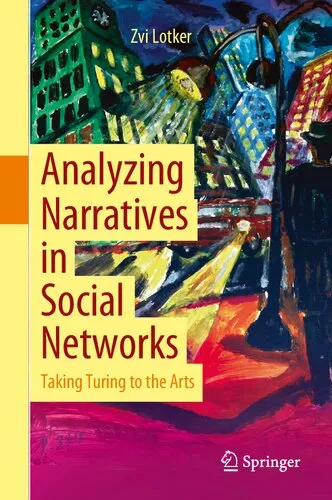
Analyzing Narratives in Social Networks: Taking Turing to the Arts
Zvi Lotker
2021
View book
English
Beginner
Linguistic Fundamentals for Natural Language Processing
Emily M. Bender
2013
View book
English
Beginner
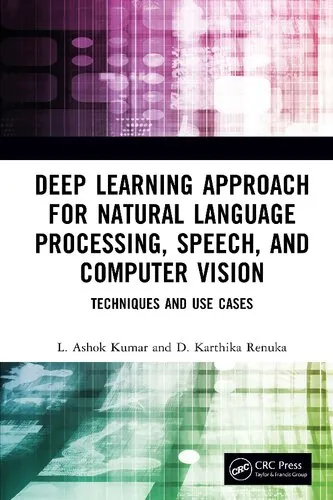
Deep Learning Approach for Natural Language Processing, Speech, and Computer Vision: Techniques and Use Cases
L. Ashok Kumar,D. Karthika Renuka
2023
View book