
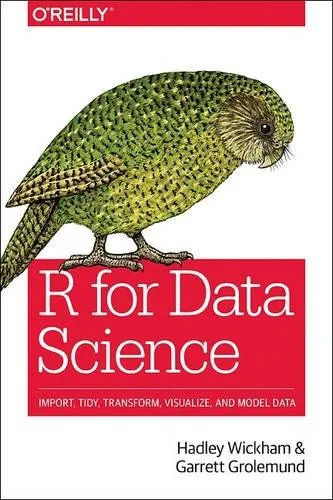
R for Data Science: Import, Tidy, Transform, Visualize, and Model Data
Hadley Wickham,Garrett Grolemund
2017
View book

Book guide and evaluation
Johanna Barddal,Shobhana L. Chelliah
0 reviews
Published
pages
views
The Role of Semantic, Pragmatic, and Discourse Factors in the Development of Case: An Introduction "The Role of Semantic, Pragmatic, and Discourse Factors in the Development of Case" presents an intricate exploration into the linguistic variables influencing the de
Before you read
"The Role of Semantic, Pragmatic, and Discourse Factors in the Development of Case" presents an intricate exploration into the linguistic variables influencing the development and transformation of case systems across languages. This book delves into the complex interplay of semantics, pragmatics, and discourse, offering deep insights into how these elements contribute to linguistic change and the grammaticalization processes that define case systems. This scholarly work is not just for linguists but for anyone interested in understanding the dynamic forces that shape language evolution over time.
This compelling volume offers a comprehensive examination of the ways in which semantic, pragmatic, and discourse factors interact to influence the development of case systems. Through meticulous analysis and cross-linguistic studies, the book provides a theoretical framework for understanding the synchronic variations and diachronic shifts observed in case morphology and syntax. Each chapter within the book tackles different aspects of these interactions, underscoring the significance of non-syntactic resources in shaping syntactic constructs. It synthesizes previous research and introduces novel perspectives, making it a cornerstone text for future linguistic studies.
The contributors, hailing from different linguistic disciplines, lend their expertise to highlight various case studies and empirical data that illustrate how languages evolve not solely from a structural standpoint but also through functional and contextual adaptation. This interdisciplinary approach enriches the discussion, extending beyond traditional syntax and morphology to encompass detailed semantic roles, pragmatic motivations, and discourse functions that drive the evolution of case systems.
"Understanding language evolution requires us to look beyond syntax and morphological markers to consider the contextual forces at play."
"Semantic, pragmatic, and discourse-related factors are not peripheral; they are foundational to the development and reconfiguration of case systems."
This book is a pivotal text in the field of linguistics because it bridges theoretical constructs with empirical evidence, offering a multifaceted view of language evolution. By prioritizing an interdisciplinary methodology, it breaks new ground in understanding how languages dynamically evolve, influenced by a range of factors beyond mere structural considerations. This makes it an invaluable resource for students, educators, and researchers in linguistics, providing them with tools and frameworks to analyze how semantic, pragmatic, and discourse elements drive linguistic transformations.
The insights garnered from this volume also extend to practical applications, such as language teaching, artificial intelligence, and computational linguistics, where understanding case systems can greatly enhance natural language processing and language acquisition methodologies. Its relevance thus transcends pure academic inquiry, touching upon domains where language and technology intersect.
Your question is answered in the context of this title and author. Each answer uses 2 points.
0 reviews, 4.9 average out of 5
Sign in to publish a review.
Ask a focused question and learn from the community.
Related references that continue this learning path.
Hadley Wickham,Garrett Grolemund


Mihai Surdeanu,Marco Antonio Valenzuela-Escarcega