
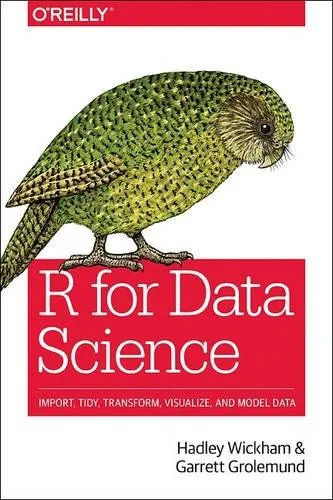
R for Data Science: Import, Tidy, Transform, Visualize, and Model Data
Hadley Wickham,Garrett Grolemund
2017
View book
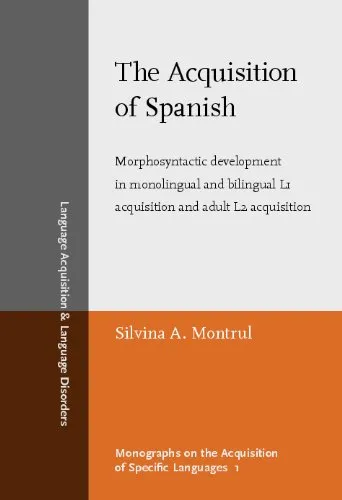
Book guide and evaluation
Silvina A. Montrul
0 reviews
Published
pages
views
Introduction Welcome to an in-depth exploration into the dynamic and intricate journey of acquiring the Spanish language. Conceived for linguists, educators, and language enthusiasts, 'The Acquisition of Spanish: Morphosyntactic Development in Monolingual and Bilingual L1
Before you read
Welcome to an in-depth exploration into the dynamic and intricate journey of acquiring the Spanish language. Conceived for linguists, educators, and language enthusiasts, 'The Acquisition of Spanish: Morphosyntactic Development in Monolingual and Bilingual L1 Acquisition and Adult L2 Acquisition' delves into the nuances of how both monolingual and bilingual speakers learn and master Spanish. This book, part of the esteemed Language Acquisition & Language Disorders series, Volume 37, provides a comprehensive blueprint for understanding the various processes and stages involved in Spanish morphosyntactic development in different learning contexts.
'The Acquisition of Spanish' meticulously discusses the process of Spanish language acquisition in multiple contexts. Beginning with a foundation in linguistic theory, the book navigates through the initial stages of monolingual first language (L1) acquisition, where young children acquire their mother tongue. It draws parallels and contrasts that with bilingual L1 acquisition scenarios, wherein children grow up learning two languages simultaneously.
Furthermore, the book intricately examines adult second language (L2) acquisition, showcasing how different cognitive and environmental factors impact the learning trajectory. Each chapter delves into specific morphosyntactic elements—such as verb conjugation, gender agreement, and syntactic structures—analyzing developmental patterns. The theoretical discussions are robustly supported by empirical data from various studies, offering readers a grounded and nuanced understanding of Spanish acquisition.
"The art of language acquisition is not merely a tale of memorization; it is a sophisticated dance of comprehension, interpretation, and creativity."
"In the bilingual mind, languages do not merely coexist; they coalesce to form a unique tapestry of communication."
This book is pivotal for those seeking an in-depth understanding of how Spanish language proficiency can be achieved in varied contexts. It extends beyond theoretical discussions, providing practical insights that can inform teaching methodologies and language policy design. By bridging the gap between theory and practice, it illuminates the cognitive pathways that underlie language acquisition, offering a significant contribution to the fields of linguistics and education.
Furthermore, it serves as a critical resource for educators who aim to foster bilingual environments, offering them a deeper grasp of the intricacies involved in nurturing Spanish language skills among diverse learner groups. Researchers and scholars interested in morphosyntactic development will find substantial empirical evidence and analysis that can further their studies in language acquisition.
In essence, 'The Acquisition of Spanish' is not only a scholarly text but also a beacon for anyone intrigued by the rich complexity of language learning. Its contribution to understanding the nature of Spanish acquisition is invaluable, ensuring its status as a key work in the field of language acquisition and disorders.
Your question is answered in the context of this title and author. Each answer uses 2 points.
0 reviews, 4.8 average out of 5
Sign in to publish a review.
Ask a focused question and learn from the community.
Related references that continue this learning path.
Hadley Wickham,Garrett Grolemund

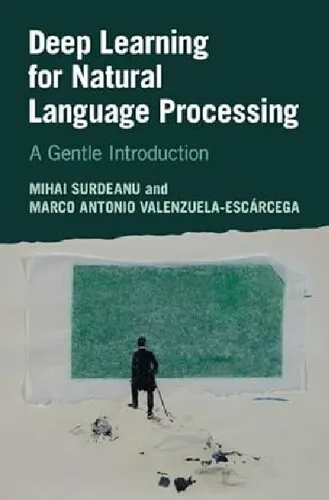
Mihai Surdeanu,Marco Antonio Valenzuela-Escarcega