
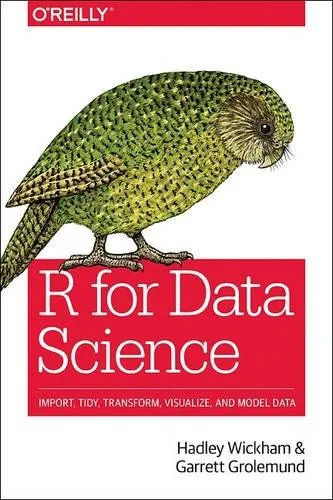
R for Data Science: Import, Tidy, Transform, Visualize, and Model Data
Hadley Wickham,Garrett Grolemund
2017
View book
Book guide and evaluation
Oyvind Palshaugen
0 reviews
Published
pages
views
Introduction to "The End of Organization Theory" Welcome to an exploration of "The End of Organization Theory," a groundbreaking work that challenges conventional wisdom and introduces a radical new perspective on how we understand and engage with organizational structur
Before you read
Welcome to an exploration of "The End of Organization Theory," a groundbreaking work that challenges conventional wisdom and introduces a radical new perspective on how we understand and engage with organizational structures. This book is an essential read for anyone interested in organizational studies, business management, and innovative thinking.
"The End of Organization Theory" dissects the antiquated frameworks that have long governed organizational studies. It argues that traditional theories have failed to adapt to the rapidly evolving landscapes of the global economy and technology. The book posits that organizations, much like living organisms, must evolve or face obsolescence. Through a blend of historical analysis, case studies, and theoretical innovation, the narrative guides readers through the inadequacies of existing models and proposes a fresh framework. This new paradigm emphasizes adaptability, agility, and a holistic understanding of human and technological interaction.
“Organizations are more like dynamic entities in constant flux, rather than static structures confined by rigid borders.”
“To thrive in the future, we must unshackle ourselves from the mental chains of the past.”
“In a world defined by complexity and change, the only constant is the need for innovation and adaptability.”
"The End of Organization Theory" is a seminal work because it not only critiques existing paradigms but also offers actionable insights and frameworks for the future. It is relevant to anyone seeking to understand or implement change within organizations. By highlighting the need for transformation in how we conceive and operate within organizations, the book plays a crucial role in the evolution of management thought. It serves as a call to action for leaders, managers, academics, and students alike, urging them to rethink and reshape the future of organizational theory and practice.
Your question is answered in the context of this title and author. Each answer uses 2 points.
0 reviews, 4.5 average out of 5
Sign in to publish a review.
Ask a focused question and learn from the community.
Related references that continue this learning path.
Hadley Wickham,Garrett Grolemund

Mihai Surdeanu,Marco Antonio Valenzuela-Escarcega