
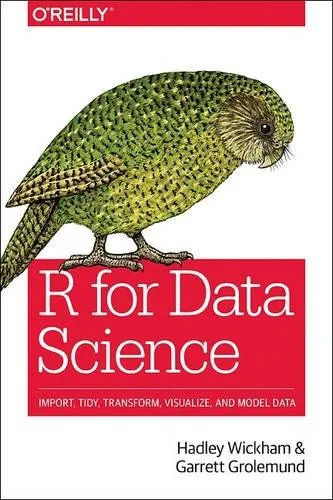
R for Data Science: Import, Tidy, Transform, Visualize, and Model Data
Hadley Wickham,Garrett Grolemund
2017
View book
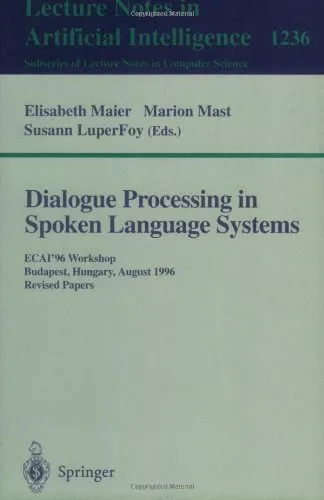
Book guide and evaluation
Elisabeth Maier,Marion Mast (auth.),Elisabeth Maier,Marion Mast,Susann LuperFoy (eds.)
0 reviews
Published
pages
views
Introduction Welcome to "Dialogue Processing in Spoken Language Systems: ECAI'96 Workshop Budapest, Hungary, August 13, 1996 Revised Papers", a significant contribution to the field of computational linguistics, dialogue systems, and spoken language processing. This book c
Before you read
Welcome to "Dialogue Processing in Spoken Language Systems: ECAI'96 Workshop Budapest, Hungary, August 13, 1996 Revised Papers", a significant contribution to the field of computational linguistics, dialogue systems, and spoken language processing. This book compiles revised papers presented during the ECAI'96 Workshop held in Budapest, providing an in-depth exploration of the theoretical foundations, cutting-edge developments, and real-world applications for spoken dialogue systems. Authored and edited by experts in the field, this collection merges diverse perspectives to offer readers a comprehensive understanding of dialogue processing in the domain of spoken language technologies.
The workshop served as a forum for discussing key challenges and achievements in dialogue processing, focusing on interactive systems capable of comprehending and generating natural speech. The discussions and papers aimed to bridge the gap between theoretical advancements and practical implementation, addressing topics that range from natural language understanding, multi-modal dialogues, user interaction models, and system architecture in spoken language systems. The revised papers in this book undergo a rigorous peer-review process to refine and enrich the contributions made at the workshop.
As interest in conversational agents, virtual assistants, and voice-enabled technologies has soared, the insights and methodologies discussed in this book remain as relevant today as they were at the time of its compilation. Whether you're a researcher, practitioner, or enthusiast in dialogue systems, this book serves as a key resource for understanding the evolution and future direction of this fascinating field.
At its heart, "Dialogue Processing in Spoken Language Systems" seeks to address the complexities surrounding human-computer interaction where speech serves as the primary medium of communication. The book encompasses a wide range of themes, including the design and implementation of dialogue systems, conversational AI models, user modeling, and error handling in spoken dialogues.
The chapters present methodologies for processing spoken language, highlighting both linguistic theories and computational techniques. Topics include the handling of prosodic elements in speech, the integration of contextual knowledge into dialogue processing, and methods for improving system robustness against misunderstandings or ambiguous user input. From a technical perspective, the book further delves into algorithm design, machine learning approaches for improving dialogue systems, and evaluations that measure system performance in real-world scenarios.
Several case studies and experimental results presented in the text offer practical insights into developing spoken language systems. As the book progresses, readers are introduced to innovative ideas surrounding personalization in dialogues, multi-modal interaction strategies, and building scalable architectures for real-time conversational interfaces.
"The true measure of a dialogue system lies not only in its ability to understand speech but in its success in managing human expectations and behavior."
"Advancing spoken language systems requires not just technological progress but a deep understanding of linguistics, psychology, and human-computer interaction."
This book stands out as one of the pioneering works in spoken language systems, addressing the interdisciplinary nature of creating effective and intelligent dialogue systems. At a time when conversational AI is ubiquitous through virtual assistants like Alexa, Siri, and Google Assistant, the foundational knowledge presented in this book serves as a critical resource for those exploring the next frontier of natural language processing.
By presenting a mix of theoretical frameworks and practical applications, this book caters to students, researchers, and industry experts alike. It not only reflects the achievements of the ECAI'96 Workshop but also anticipates many of the challenges and opportunities that modern voice technologies continue to face.
The revised papers capture the spirit of innovation from the workshop and provide lasting contributions to the dialogue systems field. Decades later, the insights presented still resonate deeply in the fast-evolving technological landscape, attesting to the book's enduring significance.
Your question is answered in the context of this title and author. Each answer uses 2 points.
0 reviews, 3.0 average out of 5
Sign in to publish a review.
Ask a focused question and learn from the community.
Related references that continue this learning path.
Hadley Wickham,Garrett Grolemund

Mihai Surdeanu,Marco Antonio Valenzuela-Escarcega