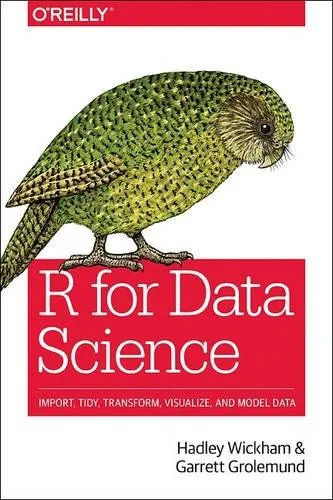
R for Data Science: Import, Tidy, Transform, Visualize, and Model Data
Hadley Wickham,Garrett Grolemund
2017
View book
Book guide and evaluation
Gregory Grefenstette (auth.),Gregory Grefenstette (eds.)
0 reviews
Published
pages
views
Introduction to Cross-Language Information Retrieval Cross-Language Information Retrieval by Gregory Grefenstette is a comprehensive exploration into the evolving field of information retrieval wherein language barriers are systematically addressed throug
Before you read
Cross-Language Information Retrieval by Gregory Grefenstette is a comprehensive exploration into the evolving field of information retrieval wherein language barriers are systematically addressed through advanced computational methods. As modern communication and information have become increasingly multilingual, the demand for effective systems that retrieve information across languages has surged. This book sets out to provide both novice and expert readers with the theoretical foundations, practical methodologies, and research breakthroughs in this fascinating area of study.
The book combines linguistic theory, computer science, and real-world applications, addressing the complexities involved in retrieving information from documents written in one language for queries posed in another. Not only does it delve into the challenges of multilingual corpora, machine translation, and semantic representation, but it also offers solutions rooted in statistical techniques, corpus-based approaches, and cutting-edge research. This is an essential read for professionals, researchers, and students who aim to break down linguistic barriers in the field of information organization and retrieval.
Cross-Language Information Retrieval explores how information seekers can overcome language barriers to access knowledge. It covers fundamental topics such as query translation, document translation, multilingual indexing, and hybrid approaches to cross-language retrieval. By meticulously combining linguistic insights and computational technology, the book demonstrates how systems can be designed to intelligently interpret and bridge the differences between languages.
The book is divided into several key thematic areas, including the history and motivation behind cross-language information retrieval, methodologies for developing multilingual systems, the role of statistical and linguistic models in translation, and the evaluation metrics used to measure system effectiveness. Gregory Grefenstette also highlights real-world implementations and the challenges posed by ambiguous words, cultural context, and resource scarcity for lesser-known languages.
One of the unique aspects of the book is its critical look at various translation methods, from rule-based systems to modern statistical and neural machine translations. Additionally, the book provides readers with a lens to view the evolving nature of multilingual information retrieval in the light of emerging technologies like artificial intelligence and big data.
"Information retrieval is not just about finding answers; it is about breaking barriers to reach the answers that matter." - Gregory Grefenstette
"Linguistic diversity is not a challenge to be conquered, but a reality to be embraced by the systems we build." - Gregory Grefenstette
"The true test of cross-language retrieval lies not in just translating words, but in translating meaning." - Gregory Grefenstette
In an era of globalization, where information flows freely across borders, the ability to access knowledge irrespective of language is crucial. Cross-Language Information Retrieval addresses this contemporary challenge with clarity and depth. It caters not only to researchers and developers working in the field but also to practitioners in industries like education, healthcare, and e-commerce, where multilingual data is prevalent.
By thoroughly discussing cutting-edge methodologies, Gregory Grefenstette provides the foundation needed to create systems that are scalable, effective, and truly global. This book is more relevant than ever in today’s interconnected world, where understanding and accessing multilingual information is critical for informed decision-making, fostering cross-cultural understanding, and advancing technological innovation.
Your question is answered in the context of this title and author. Each answer uses 2 points.
0 reviews, 4.0 average out of 5
Sign in to publish a review.
Ask a focused question and learn from the community.
Related references that continue this learning path.
Hadley Wickham,Garrett Grolemund
Christopher D Manning;Prabhakar Raghavan;Hinrich Schutze