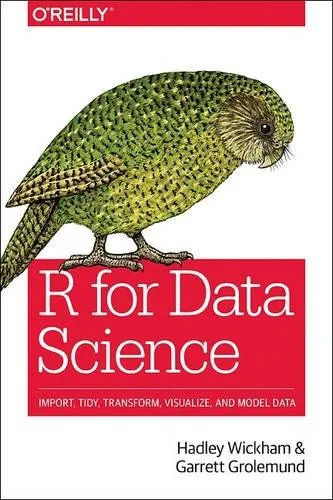
R for Data Science: Import, Tidy, Transform, Visualize, and Model Data
Hadley Wickham,Garrett Grolemund
2017
View book

Book guide and evaluation
Olivier Chapelle,Bernhard Schölkopf,Alexander Zien
0 reviews
Published
pages
views
Introduction to Semi-Supervised Learning "Semi-Supervised Learning" is a comprehensive and pathbreaking resource that offers an in-depth exploration of an essential branch of machine learning. Written by Olivier Chapelle, Bernhard Schölkopf, and Alexander Zien, this book e
Before you read
"Semi-Supervised Learning" is a comprehensive and pathbreaking resource that offers an in-depth exploration of an essential branch of machine learning. Written by Olivier Chapelle, Bernhard Schölkopf, and Alexander Zien, this book elucidates the foundational concepts, theories, methodologies, and real-world applications of semi-supervised learning algorithms. Its central focus revolves around leveraging both labeled and unlabeled data to achieve optimal predictive performance, making it a critical read for researchers, data scientists, and practitioners who want to harness the potential of minimal supervision in machine learning.
As labeled data often comes with a significant cost in terms of time and resources, many contemporary challenges in data analysis require us to maximize the utility of unlabeled data. This book discusses not only the theoretical underpinnings of semi-supervised learning but also provides practical guidance on implementing these methods effectively. By bridging the gap between theory and practice, this book empowers readers to develop innovative approaches to machine learning and address limitations posed by sparsely labeled datasets.
"Semi-Supervised Learning" delves deeply into the framework of learning algorithms that utilize both labeled and unlabeled data. The book is structured into multiple sections that begin with foundational knowledge on machine learning paradigms and then expand into the specifics of semi-supervised techniques. Topics covered include classification, regression, clustering, manifold learning, and transductive inference. The authors provide careful analysis of various algorithms such as graph-based methods, self-training, co-training, and expectation-maximization (EM) within the context of semi-supervised learning.
One of the standout features of this book is its emphasis on mathematical rigor while maintaining an accessible narrative. The book skillfully explains how unlabeled data can enhance learning performance by introducing additional constraints or exploiting the underlying structure of the data. It also ventures into the role of graphical models and kernel methods in semi-supervised learning, ensuring readers acquire both a solid theoretical foundation and practical implementation insights.
Additionally, the authors discuss real-world applications where semi-supervised learning is particularly impactful. Areas such as natural language processing, bioinformatics, computer vision, and fraud detection are explored, providing inspiring case studies that highlight the versatility and power of semi-supervised approaches.
The authors' profound insights shine through in several thought-provoking statements, including:
"The challenge in semi-supervised learning lies in effectively utilizing unlabeled data to impose constraints and regularity that improve model generalization."
"Semi-supervised learning fundamentally bridges the gap between the abundance of unlabeled data and the scarcity of labeled data, transforming limitations into opportunities."
In today's era of big data, where unlabeled data is abundant and labeled data remains expensive or difficult to obtain, semi-supervised learning emerges as a pivotal solution. This book provides a crucial foundation for harnessing the power of unlabeled data, making it indispensable for advancing fields like artificial intelligence, data science, and computational research.
Moreover, "Semi-Supervised Learning" occupies a unique position in the machine learning literature. By presenting a cohesive framework for combining theory and application, the authors appeal to both academic audiences and industry practitioners. It encourages innovation by addressing challenges such as scalability, sparsity, and performance optimization in varied domains.
This book enriches the reader's understanding of contemporary trends in machine learning and equips them with the tools to make data-driven decisions in uncertain or resource-constrained environments. Its lasting impact lies in enabling efficient, scalable, and intelligent systems that rely on limited labeled data while leveraging the full potential of the unlabeled data universe.
Your question is answered in the context of this title and author. Each answer uses 2 points.
0 reviews, 4.5 average out of 5
Sign in to publish a review.
Ask a focused question and learn from the community.
Related references that continue this learning path.
Hadley Wickham,Garrett Grolemund
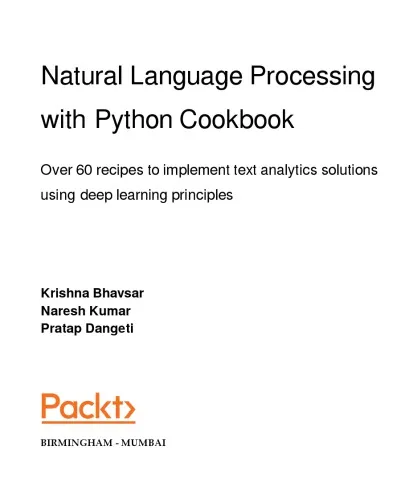
Krishna Bhavsar,Naresh Kumar,Pratap Dangeti