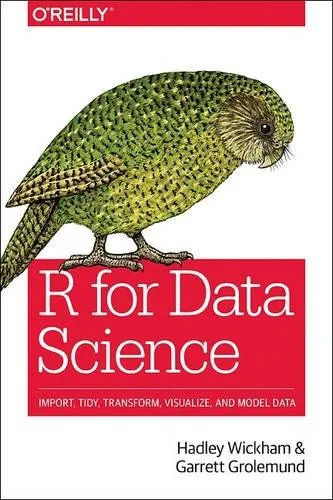
R for Data Science: Import, Tidy, Transform, Visualize, and Model Data
Hadley Wickham,Garrett Grolemund
2017
View book
Book guide and evaluation
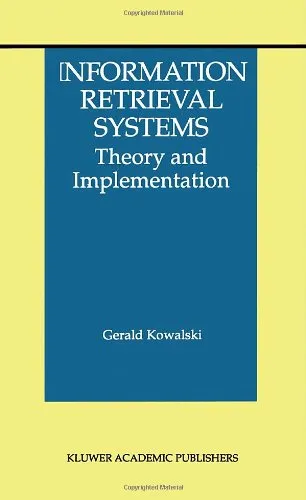
Gerald J. Kowalski
0 reviews
Published
pages
views
Introduction to 'Information Retrieval Systems: Theory and Implementation' Written by Gerald J. Kowalski, 'Information Retrieval Systems: Theory and Implementation' is an authoritative book that dives deep into the world of information storage and retrieval. In today’s digital
Before you read
Written by Gerald J. Kowalski, 'Information Retrieval Systems: Theory and Implementation' is an authoritative book that dives deep into the world of information storage and retrieval. In today’s digital age, where the accessibility and organization of information are critical to productivity, this book stands as a cornerstone for understanding the theories, methodologies, and technical aspects behind how data is retrieved and structured in computer-based systems.
Whether you're an academic researcher, a student delving into computer science, or a professional working in the field of data science or library science, this book offers comprehensive insights into the mechanics and implementation of sophisticated information retrieval (IR) systems. Spanning key concepts like indexing, query processing, retrieval algorithms, and user interaction, it connects the theoretical underpinnings of IR to practical applications seen in modern search engines and digital libraries. Let's explore what makes this book an essential guide in its field.
The book is meticulously organized to cater to readers who are either new to the subject or seasoned experts. It begins with a historical perspective on the evolution of information retrieval systems, setting the stage for understanding its relevance in current times. Key concepts such as the storage structure models, retrieval methods, and user behaviors are tackled step by step.
One of the major highlights of the book is its coverage of the mathematical and computational foundations behind retrieval systems. Topics like Boolean, vector space, and probabilistic models are explained in great depth. Furthermore, emphasis is placed on modern techniques such as natural language processing (NLP), neural networks, and semantic search, providing insights into how technology has advanced since traditional IR systems.
The book also includes a significant focus on the practical challenges faced in implementing and maintaining IR systems, including scalability, performance tuning, and dealing with unstructured data. Through clear explanations and relevant examples, it bridges the gap between theoretical knowledge and practical execution, making it suitable for both students and professionals aiming to enhance their skills.
"At the heart of every information retrieval system lies the user – if we fail to serve the user's needs, the system fails regardless of how advanced it may seem."
"The challenge of information retrieval is not just retrieving data, but ensuring it is the right data, retrieved in the most efficient and meaningful way possible."
The importance of this book cannot be overstated, especially in today's information-driven world. With more data generated daily than ever before in human history, the ability to efficiently retrieve meaningful information is a superpower that drives industries, research, and innovation. Whether it’s powering a search engine like Google or managing large-scale corporate data warehouses, IR systems touch nearly every aspect of modern life.
Gerald J. Kowalski's approach in explaining both foundational concepts and modern trends makes this book essential for those looking to dive into the ever-evolving domain of information retrieval. It caters to a wide audience by seamlessly blending academic rigor with real-world relevance. Whether you're working on optimizing search algorithms, designing user interfaces for better search experiences, or researching new retrieval methods, this book serves as a trusted guide.
Moreover, the text emphasizes the human factor in IR systems, reminding readers that all this technology ultimately revolves around improving the user's ability to find meaningful and accurate information. This human-centric perspective makes the book not just technically enriching but also philosophically profound.
Your question is answered in the context of this title and author. Each answer uses 2 points.
0 reviews, 4.0 average out of 5
Sign in to publish a review.
Ask a focused question and learn from the community.
Related references that continue this learning path.
Hadley Wickham,Garrett Grolemund
Christopher D Manning;Prabhakar Raghavan;Hinrich Schutze