
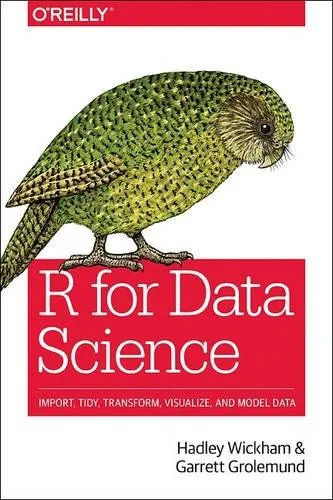
R for Data Science: Import, Tidy, Transform, Visualize, and Model Data
Hadley Wickham,Garrett Grolemund
2017
View book
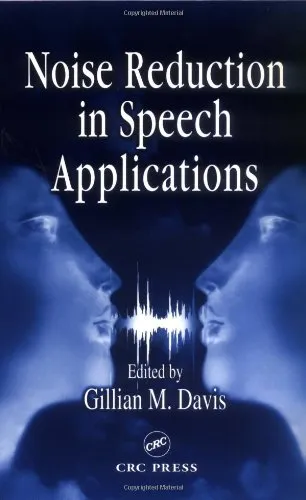
Book guide and evaluation
Gillian M. Davis
0 reviews
Published
pages
views
Introduction Noise is a persistent challenge in the field of speech communication, posing significant obstacles to clarity, intelligibility, and overall performance in numerous applications, from telecommunication to assistive listening devices. "Noise Reduction in Speech Appl
Before you read
Noise is a persistent challenge in the field of speech communication, posing significant obstacles to clarity, intelligibility, and overall performance in numerous applications, from telecommunication to assistive listening devices. "Noise Reduction in Speech Applications" delves into the intricate science and practical methodologies of minimizing noise in speech-related systems, offering engineers, researchers, and academics a comprehensive resource on the topic. By bridging theoretical concepts with real-world applications, this book solidifies its place within the Electrical Engineering & Applied Signal Processing Series as a must-read for professionals in the field.
In today's world, where voice-based technologies are advancing rapidly with virtual assistants, automatic speech recognition systems, and advanced telecommunications, the ability to effectively manage and reduce noise is paramount. This book covers state-of-the-art techniques, algorithms, and innovations designed to tackle noise interference while ensuring speech quality and intelligibility are maintained. Meticulously researched and written, "Noise Reduction in Speech Applications" offers both foundational knowledge and cutting-edge solutions, making it a valuable tool for both students and professionals.
The book begins with an in-depth exploration of the fundamentals of noise in speech applications. Readers are introduced to the types and sources of noise, how they affect speech signals, and the challenges posed in diverse environments, such as outdoor public spaces, noisy offices, or vehicular systems. From there, the book transitions into the key technologies used for noise reduction, including spectral subtraction, Wiener filtering, beamforming, and adaptive techniques.
A central focus is placed on analyzing both traditional and modern approaches. Conventional noise reduction methods are thoroughly explained, providing the foundational understanding needed for readers to grasp more advanced techniques. Chapters on machine learning and deep learning-based approaches highlight the integration of artificial intelligence into speech processing, showcasing their transformative impact in areas like automatic speech recognition and speaker identification.
The practical aspects of implementing these techniques are also covered in detail, with case studies and application-specific scenarios. Whether it’s designing robust teleconferencing systems, enhancing hearing aids, or improving mobile communication, the book demonstrates how noise reduction principles can be effectively applied across industries. Each chapter concludes with a set of problems and solutions geared towards reinforcing the material covered, making it both a learning tool and a reference for future application.
"Noise is not merely an inconvenience; it is a barrier to understanding, a roadblock to communication. Reducing it isn’t just improving sound, it’s enhancing human connection."
"In speech processing, excellence is achieved not by erasing every imperfection but by preserving the essence of communication amidst a sea of disruptions."
"The greatest innovation in noise suppression is the ability to adapt—employing solutions that continuously learn and evolve with the environment."
This book stands out as a critical resource for several reasons. First, it tackles a universal challenge within both everyday and professional speech technologies: the presence of noise. By offering practical solutions grounded in cutting-edge research, it aids in improving the quality of communication across devices and industries alike.
Furthermore, "Noise Reduction in Speech Applications" bridges the gap between academia and industry. Written with clarity and structure, it makes highly technical topics accessible to professionals while maintaining the depth needed for academic rigor. The focus on actionable strategies ensures that its insights are practical and impactful, whether it’s guiding the development of a new product or improving existing systems.
In an era where voice-controlled systems and wearable devices are surging in usage, the importance of noise reduction cannot be overstated. Readers will not only gain theoretical understanding but also the skills necessary to create more efficient and effective applications, shaping the future of communication technology. This book is not just about algorithms and techniques—it’s about ensuring that every voice is heard clearly, regardless of the surrounding environment.
Your question is answered in the context of this title and author. Each answer uses 2 points.
0 reviews, 4.0 average out of 5
Sign in to publish a review.
Ask a focused question and learn from the community.
Related references that continue this learning path.
Hadley Wickham,Garrett Grolemund
L. Ashok Kumar,D. Karthika Renuka