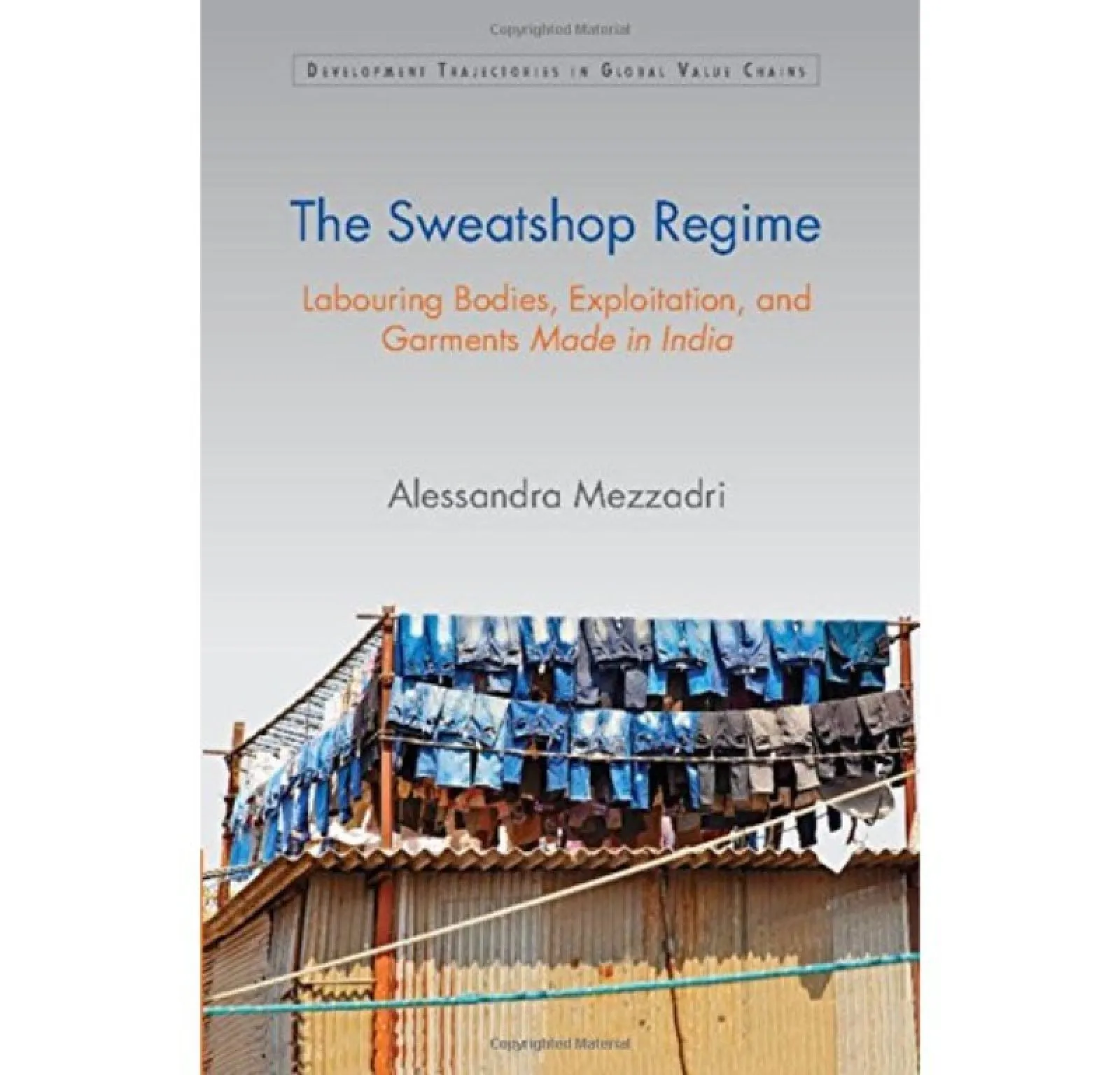
- Published Year: 2017
- Page count: 258
- File Size: 3 MB
- Language: English
- Published by: Cambridge University Press
- Visited by: 240
- Rating/Review: 4.6
- ISBN: 9781107116962
Keywords:
The Sweatshop Regime: Labouring Bodies, Exploitation, and Garments Made in India
4.6
Reviews from our users

You Can Ask your questions from this book's AI after Login
Each download or ask from book AI costs 2 points. To earn more free points, please visit the Points Guide Page and complete some valuable actions.



![The Ultimate iOS Interview Playbook: Conquer Swift, frameworks, design patterns, and app architecture [Team-IRA]](https://s3.refhub.ir/images/thumb/The_Ultimate_iOS_Interview_Playbook__Conquer__29925.webp)






Introduction to 'The Sweatshop Regime: Labouring Bodies, Exploitation, and Garments Made in India'
Written by Alessandra Mezzadri, The Sweatshop Regime is a groundbreaking exploration of the complex dynamics of labor exploitation inherent in India's garment industry. By delving deeply into the lives and working conditions of garment workers, this book provides illuminating insight into the global supply chain's hidden inequities and the systemic mechanisms that perpetuate them. Through rigorous research and compelling storytelling, the book critically unravels the often-overlooked realities behind fast fashion, drawing attention to the suffering and challenges of laboring bodies that produce garments for global markets.
Detailed Summary of the Book
The book begins by contextualizing India's garment industry within both its historical and contemporary frameworks. Mezzadri examines the rise of India's apparel production in the global economy, emphasizing the role of sweatshop-style factories in catering to the demands of international brands that thrive on cheap labor and relentless productivity.
The narrative then shifts focus towards the experiences of the workers themselves, dissecting the garment production system through the perspectives of those engaged in various stages of manufacturing. Mezzadri introduces the concept of the "sweatshop regime" to describe the exploitative structures underpinning the labor process, including gendered divisions of labor, precarious working conditions, and oppressive managerial practices. These dimensions are not limited to formal factory settings but extend into home-based labor and other subcontracting arrangements, showcasing the fragmented and dispersed nature of this industry.
A key strength of The Sweatshop Regime lies in its theoretical framework. The book integrates insights from feminist political economy, Marxist analysis, and global production network theories to critically analyze the process of labor devaluation. Mezzadri argues that the interaction among local social hierarchies, global economic structures, and supply chain capitalism creates an extractive regime that systematically depletes workers' bodies while offering minimal remuneration or protections in return.
Over several chapters, the book details how workers endure exploitative practices like long hours, meager wages, informal contracts, lack of safety measures, and harassment. These indignities are compounded by the interlocking discriminatory systems of caste, class, ethnicity, and gender, which marginalize certain segments of the workforce even further. The book concludes with a powerful critique of global retail brands, advocacy organizations, and governments for perpetuating or enabling these exploitative labor models while offering limited or superficial solutions.
Key Takeaways
- The global garment industry thrives on the systematic exploitation of workers, particularly in low-income countries like India.
- Labor exploitation is deeply gendered, with women bearing a disproportionate burden due to sociocultural and economic factors.
- The "sweatshop regime" extends beyond factory walls, encompassing informal and home-based labor, creating a complex web of exploitation.
- Global brands and buyers play a key role in sustaining exploitative labor models through their cost-cutting practices and reliance on supply chain capitalism.
- Meaningful change requires not just better regulations but a fundamental restructuring of global production and labor relations.
Famous Quotes from the Book
"The sweatshop regime is not an anomaly of global capitalism; it is intrinsic to its functioning."
"Behind every inexpensive garment lies a human cost, a cost typically borne by the most invisible and vulnerable workers."
Why This Book Matters
In an era of fast fashion and globalization, The Sweatshop Regime offers a crucial intervention in understanding the true costs of cheap clothing. It lays bare the structural inequalities sustained by global capitalism and highlights the interconnectedness of local and global economies. The book is a wake-up call for policymakers, corporations, and consumers alike, urging them to re-evaluate the ethical, environmental, and social implications of the choices they make.
Mezzadri's research also emphasizes the importance of amplifying workers' voices and experiences, challenging the dominant narratives provided by corporations and governments. Instead of merely advocating utopian solutions, the book emphasizes the need for systemic transformations in labor governance, consumer culture, and international trade policies. As such, The Sweatshop Regime is both a scholarly contribution and a call to action, making it invaluable for students, activists, and professionals engaged in labor rights, feminism, and global development.
Ultimately, this book matters because it enables critical reflection on how modern economies operate and at whose expense, reminding us that the fight for economic justice is inseparable from the fight for human dignity.
Free Direct Download
You Can Download this book after Login
Accessing books through legal platforms and public libraries not only supports the rights of authors and publishers but also contributes to the sustainability of reading culture. Before downloading, please take a moment to consider these options.
Find this book on other platforms:
WorldCat helps you find books in libraries worldwide.
See ratings, reviews, and discussions on Goodreads.
Find and buy rare or used books on AbeBooks.

1240
بازدید4.6
امتیاز0
نظر98%
رضایتReviews:
4.6
Based on 0 users review
Questions & Answers
Ask questions about this book or help others by answering
No questions yet. Be the first to ask!