English
Beginner
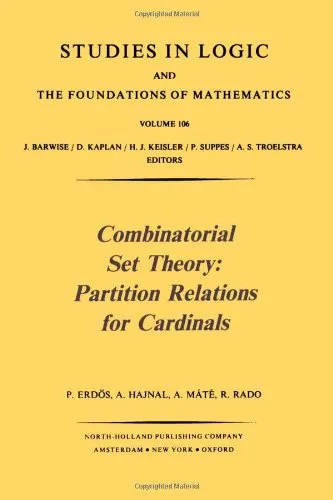
Combinatorial Set Theory: Partition Relations for Cardinals
Paul Erdos
1984
View book
Discover references
Set theory forms the foundation of modern mathematical logic and serves as the basis for most mathematical disciplines. Whether you are a student, scholar, or a mathematics enthusiast, our selection of set theory books will provide you with a comprehensive guide to its principles, developments, and applications.
Set theory is a branch of mathematical logic that studies sets, which are collections of objects. This field was created in the late 19th century by the German mathematician Georg Cantor, who found that it was a powerful way to understand the infinite. Set theory has since become a critical foundation for understanding and working within mathematics, providing essential concepts used in areas such as algebra, calculus, probability, and more. At its core, set theory deals with understanding how sets relate to one another, how they can be manipulated and combined, and the various types of relationships that can exist among elements of a set.
Set theory is often introduced at the university level, especially for students pursuing degrees in mathematics, computer science, engineering, and information technology. However, its relevance extends beyond academia; anyone interested in logical reasoning, complex problem-solving, or theoretical computer science will find exploring set theory enlightening. Our curated collection ensures that whether you are looking for textbooks, research compendiums, or introductory guides, you will find resources that suit your level of expertise and interest within set theory.
The category of set theory in our bookstore includes a vast range of topics:
Understanding set theory enhances mathematical literacy and offers a structured method to grapple with complex, abstract ideas. It helps develop logical reasoning skills and improve problem-solving capabilities, which are invaluable across numerous scientific fields. Studying set theory not only benefits those pursuing careers in mathematics but also in economics, data science, philosophy, and any discipline requiring robust analytical thinking.
Our collection features books from renowned authors and mathematicians who are experts in set theory. Some notable titles include:
Delving into set theory opens up a world of mathematical exploration and understanding. Whether you're starting out or looking to deepen your knowledge, our set theory category is comprehensive, enriched with substantial texts that cater to various levels of expertise. Equip yourself with the mathematical mindset and knowledge that will empower you to navigate the complexities of modern mathematical inquiries and applications.
Paul Erdos
Jim Woodcock,Victor Bandur (auth.),Burkhart Wolff,Marie-Claude Gaudel,Abderrahmane Feliachi (eds.)
Chihara
Herbert B. Enderton
C. Ward Henson (auth.),Leif O. Arkeryd,Nigel J. Cutland,C. Ward Henson (eds.)
Vitaly Bergelson,Andreas Blass,Mauro Di Nasso,Renling Jin (ed.)
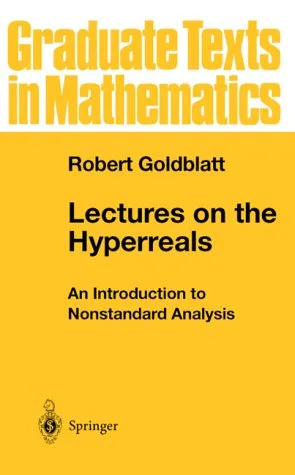
Robert Goldblatt

Mary Tiles
David Naumann (eds.)
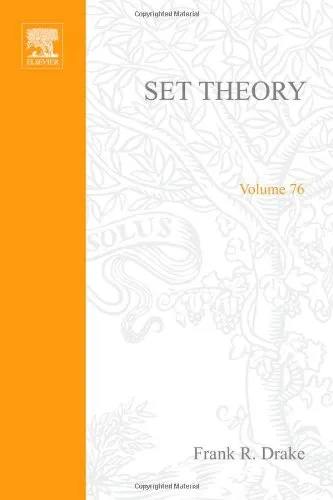
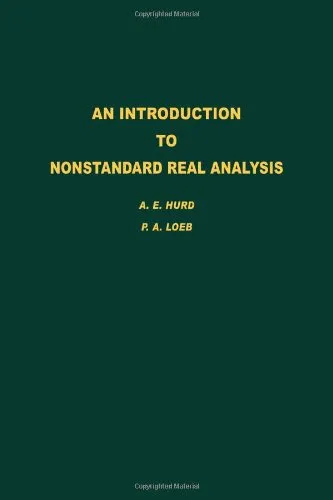
Albert E. Hurd,Peter A. Loeb
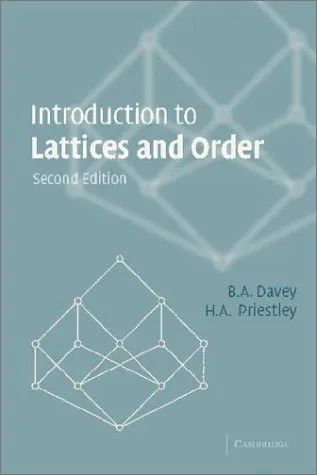
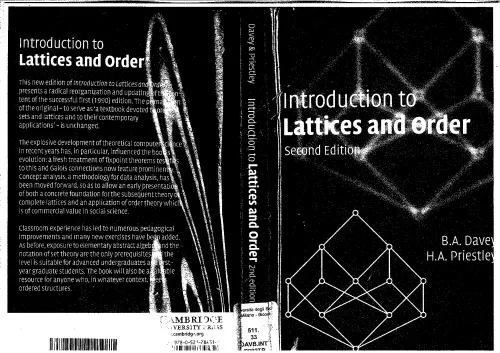
B. A. Davey,H. A. Priestley

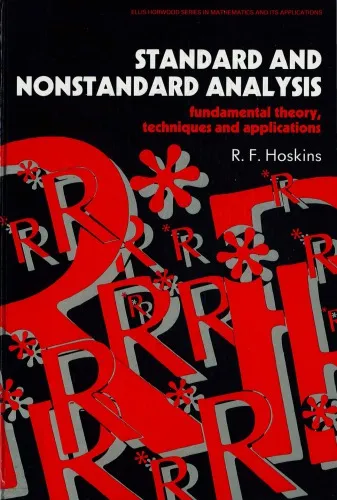
R. F. Hoskins
Karel Hrbacek;Olivier Lessmann;Richard O'Donovan
Errett Bishop
Leopoldo Nachbin (Eds.)
Charles M. Quinn
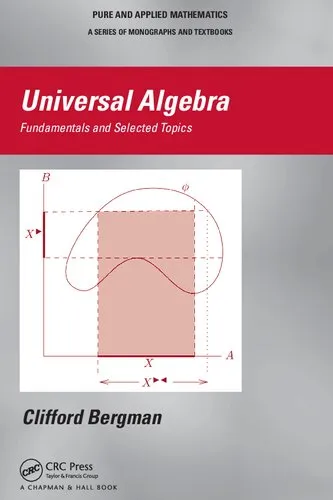
Clifford Bergman
Yiannis N. Moschovakis

Domenico Cantone,Pietro Ursino
Akihiro Kanamori (auth.),Matthew Foreman,Akihiro Kanamori (eds.)
Gregory L. Naber