Book guide and evaluation
Glia
Tanaka, Tatsuhide; Murakami, Koichi; Bando, Yoshio; Yoshida, Shigetaka
English
Unordered
Set Theory
4.6 / 5
0 reviews
2014 November 24
Published
106
pages
202
views
Glial cells are no longer considered passive bystanders in neuronal brain circuits. Not only are they required for housekeeping and brain metabolism, they are active participants in regulating the physiological function and plasticity of brain circuits and the online control of b
Before you read
What will you get from this book?
Glial cells are no longer considered passive bystanders in neuronal brain circuits. Not only are they required for housekeeping and brain metabolism, they are active participants in regulating the physiological function and plasticity of brain circuits and the online control of behavior both in invertebrate and vertebrate model systems. In invertebrates, glial cells are essential for normal function of sensory organs (C. elegans) and necessary for the circadian regulation of locomotor activity (D. melanogaster). In the mamallian brain, astrocytes are implicated in the regulation of cortical brain rhythms and sleep homeostasis. Disruption of AMPA receptor function in a subset of glial cell types in mice shows behavioral deficits. Furthermore, genetic disruption of glial cell function can directly control behavioral output. Regulation of ionic gradients by glia can underlie bistability of neurons and can modulate the fidelity of synaptic transmission. Grafting of human glial progenitor cells in mouse forebrain results in human glial chimeric mice with enhanced plasticity and improved behavioral performance, suggesting that astrocytes have evolved to cope with information processing in more complex brains. Taken together, current evidence is strongly suggestive that glial cells are essential contributors to information processing in the brain. This Research Topic compiles recent research that shows how the molecular mechanisms underlying glial cell function can be dissected, reviews their impact on plasticity and behavior across species and presents novel approaches to further probe their function.
Ask this book
Your question is answered in the context of this title and author. Each answer uses 2 points.
Sign in to ask the book assistant.
Reader reviews
0 reviews, 4.6 average out of 5
No reviews yet
If you have read this book, help the next reader with your experience.
Write a review
Sign in to publish a review.
Reader questions and answers
Ask a focused question and learn from the community.
Sign in to ask or answer a question.
No questions yet
Be the first to ask a clear, useful question.
What to read next
Related references that continue this learning path.
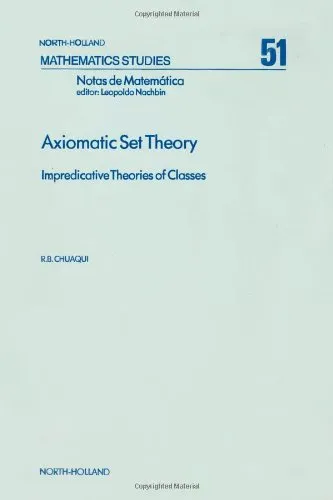
Axiomatic Set Theory: Theory Impredicative Theories of Classes
Leopoldo Nachbin (Eds.)
1981
View book

Computational Quantum Chemistry: An Interactive Introduction to Basis Set Theory
Charles M. Quinn
2002
View book