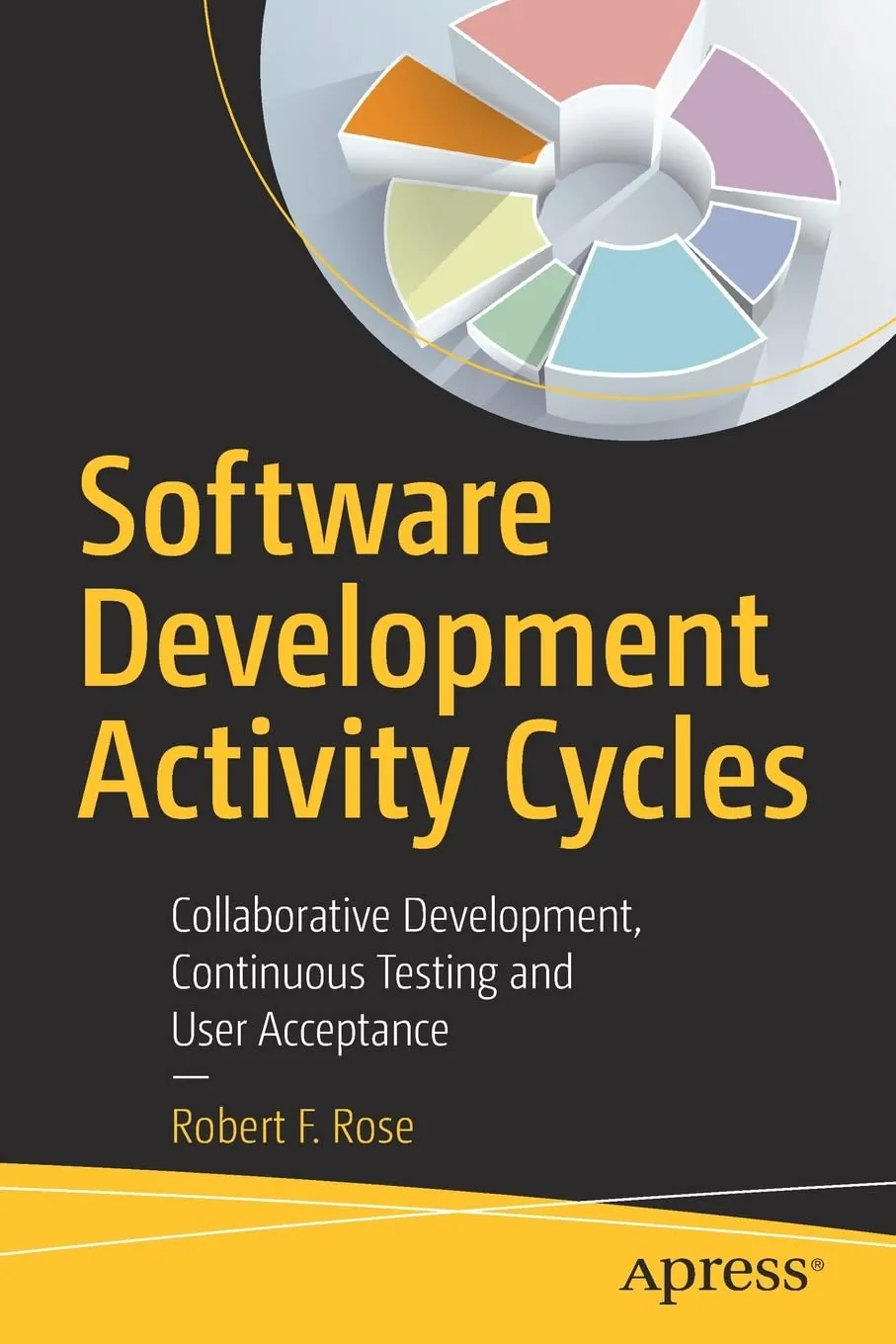
- Published Year: 2022
- Page count: 301
- File Size: 7 MB
- Language: English
- Published by: Apress
- Visited by: 92
- Rating/Review: 4.6
- ISBN: 9781484282380
Keywords:
Software Development Activity Cycles: Collaborative Development, Continuous Testing and User Acceptance
4.6
Reviews from our users

You Can Ask your questions from this book's AI after Login
Each download or ask from book AI costs 2 points. To earn more free points, please visit the Points Guide Page and complete some valuable actions.
![The Ultimate iOS Interview Playbook: Conquer Swift, frameworks, design patterns, and app architecture [Team-IRA]](https://s3.refhub.ir/images/thumb/The_Ultimate_iOS_Interview_Playbook__Conquer__29925.webp)


Written from the perspective of a Technical Project Manager, this study presents a scenario for a complete “shift left” software development effort. It brings considerations for Test and Support as early as the Inception Stage. Based on an innovative model - Development Process Activity Cycles (DPAC) - this representation allows visualization of progress including recursive activities. The model is based on an interpretation of the Deming quality cycle of Plan Do, Check Act (PDCA). Periodic Management reports are generated using configuration management data generated during the Act phase of each iteration. There is no Test stage in the DPAC model; Test is represented in the back swing Check Phase of each iteration. This approach allows the user or Subject Mater Expert (SME) to contemplate the face of the system through several iterations of design and development, using the triad principle (“Power of Three”) matching a programmer, tester and member of the user community This approach incrementally reveals the best fit to the intent of the vision statement and iteratively uncovers the needs of the user while maintaining conceptual integrity. This book provides a holistic and comprehensible view of the entire development process including ongoing evolution and support, staffing, and establishment of a comprehensive quality engineering program. It describes activity inside the “belly of the beast.” By including support services as a part of the development model a complete return on investment (ROI) can be calculated and a value stream can be measured over the entire Application Life Cycle. You will · See how the various disciplines constituting the software development process come together · Understand where in the iterative development process progress can be measured and control exercised · Review how a quality engineering program will positively affect the quality of the development process · Examine how the quality of the development process profoundly affects the quality of the software system Who this book is for Intended for a technical audience, this work should be of interest to all technical personnel including analysts, programmers, test and production, especially mid level managers and anyone familiar with the principles of a Lean, Agile approach to development.
Free Direct Download
You Can Download this book after Login
Accessing books through legal platforms and public libraries not only supports the rights of authors and publishers but also contributes to the sustainability of reading culture. Before downloading, please take a moment to consider these options.
Find this book on other platforms:
WorldCat helps you find books in libraries worldwide.
See ratings, reviews, and discussions on Goodreads.
Find and buy rare or used books on AbeBooks.

1092
بازدید4.6
امتیاز0
نظر98%
رضایتReviews:
4.6
Based on 0 users review
Questions & Answers
Ask questions about this book or help others by answering
No questions yet. Be the first to ask!