- Published Year: 2021
- Page count: 196
- File Size: 10 MB
- Language: English
- Published by: IOP Publishing
- Visited by: 274
- Rating/Review: 5.0
-
ISBN:
0750325984
9780750325981
Keywords:
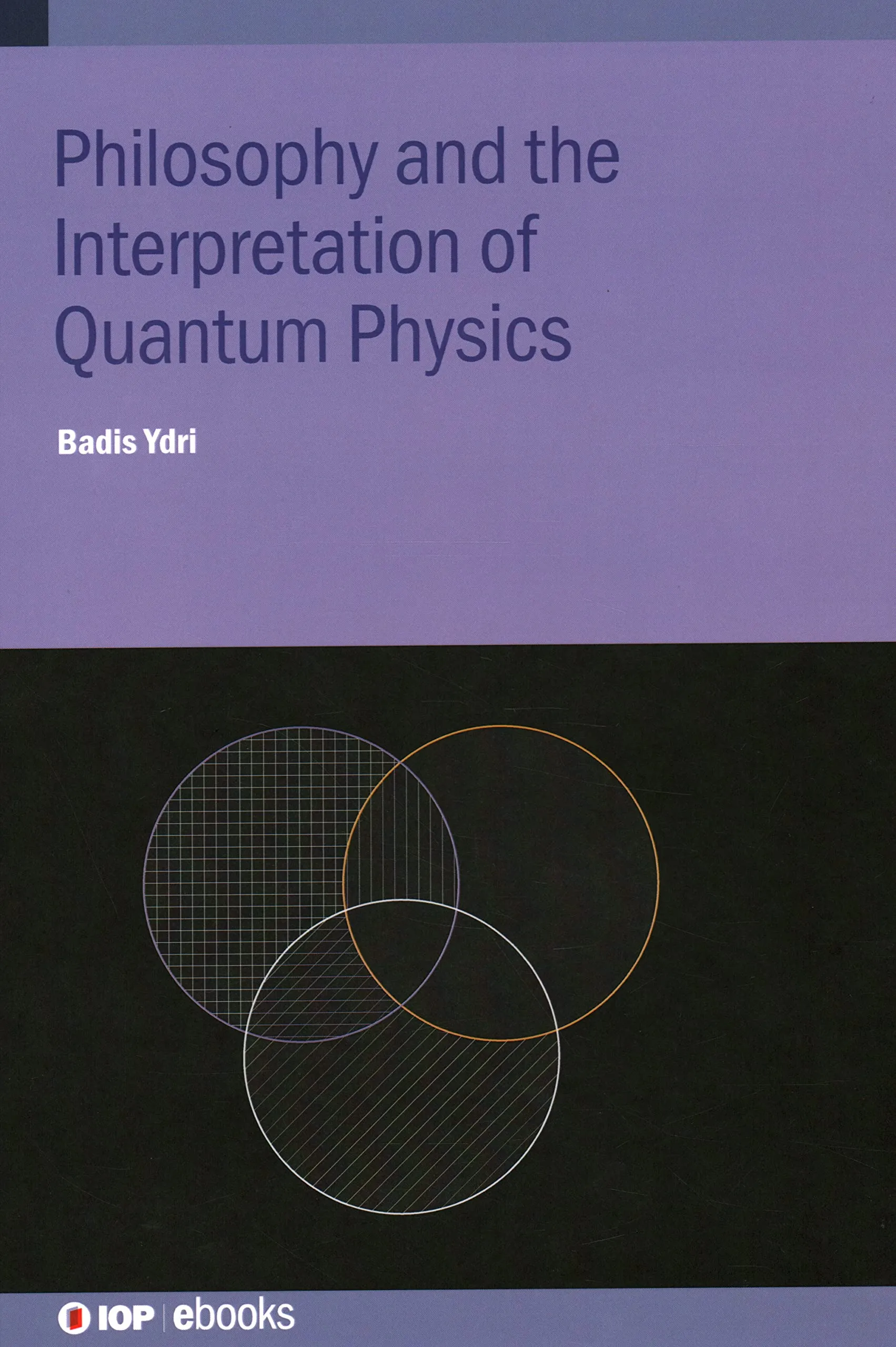
Philosophy and the Interpretation of Quantum Physics
5.0
Reviews from our users

You Can Ask your questions from this book's AI after Login
Each download or ask from book AI costs 2 points. To earn more free points, please visit the Points Guide Page and complete some valuable actions.

![The Ultimate iOS Interview Playbook: Conquer Swift, frameworks, design patterns, and app architecture [Team-IRA]](https://s3.refhub.ir/images/thumb/The_Ultimate_iOS_Interview_Playbook__Conquer__29925.webp)





Introduction to "Philosophy and the Interpretation of Quantum Physics"
"Philosophy and the Interpretation of Quantum Physics" explores one of the most profound scientific revolutions in human history from both a scientific and a philosophical perspective. Quantum physics, with its counterintuitive principles and mind-bending paradoxes, has challenged our understanding of reality itself. Through this book, I aim to bridge the gap between physics and philosophy, providing a holistic view of the quantum realm, grounded in both the mathematics of quantum mechanics and the existential questions it raises.
This book delves deep into the philosophical implications of quantum mechanics, offering readers a multidisciplinary perspective that combines physics, metaphysics, and epistemology. It is not merely a textbook or a scientific explanation of quantum mechanics but rather an intellectual journey into the interpretation of the quantum world—a journey that uncovers the limits of human knowledge and the nature of reality itself.
Written for students, scholars, and curious thinkers, the book offers intricate discussions on the observer effect, quantum entanglement, the measurement problem, and various interpretations of quantum mechanics, including the Copenhagen interpretation, many-worlds theory, and more. Readers will gain both a technical foundation and philosophical insight into the mysteries of quantum physics, leaving them with a profound sense of wonder about the universe.
Detailed Summary of the Book
"Philosophy and the Interpretation of Quantum Physics" comprises a thoughtful exploration of quantum mechanics, divided into thematic discussions that blend technical principles with philosophical musings. The book begins with an accessible introduction to the foundational concepts of quantum mechanics, presenting mathematical and interpretive frameworks in a clear and concise manner.
From there, the book moves on to the central themes that have sparked philosophical debate for decades. Topics include the wave-particle duality of matter, the collapse of the wave function during measurement, and the role of the observer in influencing outcomes. These are contrasted with interpretations like the many-worlds hypothesis, where reality branches into infinite possibilities at every quantum event, and Bohmian mechanics, which reintroduces determinism into quantum theory.
The philosophical discussions are further enriched by exploring metaphysical questions: Does quantum physics refute realism? What is the role of consciousness in shaping reality? Is the universe fundamentally deterministic or probabilistic? These issues form the backbone of the book, weaving together threads of philosophy and physics in an engaging and accessible style. By the end of the book, the reader will have a comprehensive understanding of the philosophical terrain surrounding quantum mechanics, with tools to critically analyze its implications.
Key Takeaways
- Quantum mechanics challenges our classical notions of reality, causality, and determinism.
- Different interpretations of quantum mechanics offer competing views on the nature of the universe, from parallel worlds to hidden variables.
- The role of the observer in quantum mechanics raises profound questions about consciousness and its relationship to the physical world.
- Quantum entanglement defies locality, suggesting that particles can influence each other instantaneously across vast distances.
- The philosophical implications of quantum physics require us to rethink our fundamental understanding of existence, space, and time.
Famous Quotes from the Book
"Quantum mechanics does not merely describe reality; it compels us to question the very nature of reality itself."
"In the quantum world, the act of observation is not passive; it is transformative, redefining what we understand as 'reality.'"
"The many-worlds interpretation isn't just a theory of physics; it is a challenge to the singularity of existence as we know it."
Why This Book Matters
"Philosophy and the Interpretation of Quantum Physics" is not just an academic exercise—it’s a guide to understanding the essential mysteries of the universe and our place within it. It matters because, in grappling with the philosophical implications of quantum mechanics, we begin to see the world—and ourselves—in a new light.
For physicists, it offers a deeper appreciation of the philosophical challenges inherent in their work, expanding their perspective beyond mathematics and experimental results. For philosophers, it provides a gateway into one of the most revolutionary scientific concepts of the modern age, offering tools to engage with questions about reality, causality, and knowledge. For the general reader, it is an invitation to ponder the fundamental questions that have occupied humanity since time immemorial.
In a world increasingly dominated by technology and scientific discovery, understanding the philosophical dimensions of quantum physics is more relevant than ever. This book aims to equip readers with the tools to engage with these ideas thoughtfully and critically, fostering a deeper sense of connection with the mysteries of existence.
Free Direct Download
You Can Download this book after Login
Accessing books through legal platforms and public libraries not only supports the rights of authors and publishers but also contributes to the sustainability of reading culture. Before downloading, please take a moment to consider these options.
Find this book on other platforms:
WorldCat helps you find books in libraries worldwide.
See ratings, reviews, and discussions on Goodreads.
Find and buy rare or used books on AbeBooks.

1274
بازدید5.0
امتیاز0
نظر98%
رضایتReviews:
5.0
Based on 0 users review
Questions & Answers
Ask questions about this book or help others by answering
No questions yet. Be the first to ask!