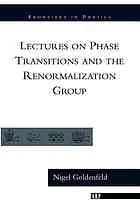
- Published Year: 1992
- Page count: 417
- File Size: 8 MB
- Language: English
- Published by: Addison-Wesley
- Visited by: 197
- Rating/Review: 4.7
-
ISBN:
0-201-55408-9
0-201-55409-7
978-0-201-55408-3
978-0-201-55409-0
9780429962042
0429962045
Keywords:
Lectures on phase transitions and the renormalization group
4.7
Reviews from our users

You Can Ask your questions from this book's AI after Login
Each download or ask from book AI costs 2 points. To earn more free points, please visit the Points Guide Page and complete some valuable actions.



![The Ultimate iOS Interview Playbook: Conquer Swift, frameworks, design patterns, and app architecture [Team-IRA]](https://s3.refhub.ir/images/thumb/The_Ultimate_iOS_Interview_Playbook__Conquer__29925.webp)






Introduction to "Lectures on Phase Transitions and the Renormalization Group"
"Lectures on Phase Transitions and the Renormalization Group" is an acclaimed book by Professor Nigel Goldenfeld, offering a profound exploration into the fascinating and intricate realms of condensed matter physics, statistical mechanics, and critical phenomena. This book bridges the gap between foundational physics concepts and cutting-edge research, making it a valuable resource for advanced students, researchers, and anyone with a deep interest in understanding the universal aspects of phase transitions and scaling phenomena. Skillfully written, the book serves as both an excellent teaching guide and a reliable resource for individual study, precisely because it blends theoretical rigor with intuitive explanations.
Detailed Summary of the Book
The book begins by addressing phase transitions, a critical feature of many-body systems that arise naturally in contexts ranging from magnetism to fluid dynamics and biological processes. The thermodynamic perspective introduces concepts such as critical temperature, order parameters, and universality. The focus then shifts to the role of statistical mechanics in explaining why macroscopic observables exhibit universal behavior near critical points.
One of the book's central themes is the renormalization group (RG) theory, a revolutionary framework that underpins our modern understanding of universality and scaling in phase transitions. Goldenfeld elaborates on how the renormalization group addresses previously unsolved questions, such as diverging correlation lengths and scaling exponents. The RG approach simplifies the problem of scale invariance by offering insights into how microscopic interactions determine macroscopic phenomena across diverse systems.
Additionally, the book covers lattice models like the Ising and Potts models, which exemplify the emergence of collective behavior. It delves into mean-field approaches, correlation functions, Landau-Ginzburg theory of critical phenomena, and Monte Carlo simulations. Furthermore, special attention is given to dynamic critical phenomena and symmetry-breaking mechanisms.
With step-by-step derivations and a plethora of examples, Goldenfeld explains complex concepts in an approachable manner while still preserving their mathematical essence. Each chapter concludes with thought-provoking problems and exercises for readers to test their understanding.
Key Takeaways
- A deep understanding of phase transitions and critical phenomena through the lens of statistical mechanics.
- An introduction to the revolutionary renormalization group theory and its connection to universality and scaling.
- A clear methodology for applying theoretical tools to real-world systems, such as fluids, superconductors, and magnets.
- Demystification of complex mathematical approaches, enabling readers to grasp both the intuition and rigor behind various physical phenomena.
- Practical insights into applications of the renormalization group in fields beyond physics, including biology and economics.
Famous Quotes from the Book
"Universality is the remarkable phenomenon that seemingly different systems exhibit the same critical behavior."
"The renormalization group is more than just a computational tool; it is a conceptual framework that fundamentally alters our perception of what constitutes a theory."
"Phase transitions are not just about changes in physical state; they are the keys to understanding the interplay of symmetry and complexity in nature."
Why This Book Matters
This book is a cornerstone in the study of phase transitions and the renormalization group, serving as an indispensable guide for both seasoned physicists and students venturing into statistical mechanics and condensed matter physics for the first time. Its significance stems from its ability to break down highly technical material into digestible, logical steps that connect theory to experiment.
Moreover, the renormalization group has applications far beyond physics. Its concepts have been applied to topics as diverse as neural networks, pattern formation, biological evolution, and even financial modeling. Understanding the principles outlined in this book has the potential to transform one’s perspective on diverse systems and their universal behaviors.
Goldenfeld’s emphasis on universality and scaling introduces a paradigm shift in thinking about complex systems. In a world increasingly defined by interdisciplinary research, this book transcends traditional boundaries, providing readers with the tools to unify ideas across physics, mathematics, and beyond. Therefore, it is more than just a textbook; it is a theoretical and conceptual toolkit for anyone interested in the interplay between simplicity and complexity in nature.
Free Direct Download
You Can Download this book after Login
Accessing books through legal platforms and public libraries not only supports the rights of authors and publishers but also contributes to the sustainability of reading culture. Before downloading, please take a moment to consider these options.
Find this book on other platforms:
WorldCat helps you find books in libraries worldwide.
See ratings, reviews, and discussions on Goodreads.
Find and buy rare or used books on AbeBooks.