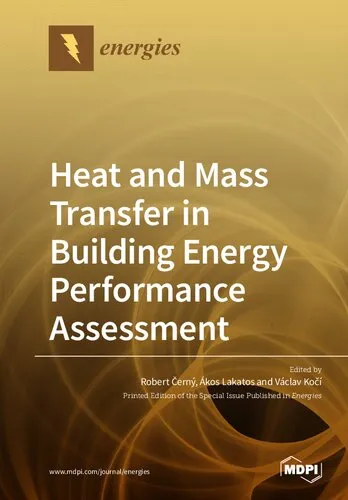
- Published Year: 2019
- Page count: 124
- File Size: 31 MB
- Language: English
- Published by: MDPI AG
- Visited by: 116
- Rating/Review: 4.0
-
ISBN:
9783039219261
9783039219278
303921926X
Keywords:
Heat and Mass Transfer in Building Energy Performance Assessment
4.0
Reviews from our users

You Can Ask your questions from this book's AI after Login
Each download or ask from book AI costs 2 points. To earn more free points, please visit the Points Guide Page and complete some valuable actions.



![The Ultimate iOS Interview Playbook: Conquer Swift, frameworks, design patterns, and app architecture [Team-IRA]](https://s3.refhub.ir/images/thumb/The_Ultimate_iOS_Interview_Playbook__Conquer__29925.webp)



Introduction to "Heat and Mass Transfer in Building Energy Performance Assessment"
Buildings are more than just physical structures — they are intricate systems where energy efficiency, climate resilience, and environmental sustainability intertwine. "Heat and Mass Transfer in Building Energy Performance Assessment" serves as an indispensable guide for researchers, engineers, and professionals aiming to bridge the gap between theory and practice in this essential field of study.
Detailed Summary of the Book
In today's rapidly evolving world, assessing and optimizing the energy performance of buildings is critical for achieving sustainable development goals. This book provides a comprehensive exploration of the fundamental processes of heat and mass transfer and their application to the field of building performance. By delving into both theoretical principles and real-world case studies, it equips readers with the knowledge required to address modern challenges in building design, operation, and energy assessment.
Across multiple chapters, the book systematically unpacks topics ranging from the physics of heat and moisture transfer to computational modeling techniques. It investigates how materials, construction methods, and environmental factors influence buildings' thermal and moisture behavior. Using advanced methods and data-driven approaches, this resource emphasizes how to enhance building envelopes, improve insulation design, and address issues like condensation, mold growth, and thermal bridging.
Ultimately, the book combines multidisciplinary insights from physics, engineering, and architecture to provide a robust framework for energy-efficient and sustainable building design. By doing so, it inspires innovation and encourages the development of structures that align with energy regulations and ecological priorities.
Key Takeaways
- Understand the fundamental principles of heat and mass transfer in building systems.
- Learn advanced methods for evaluating building energy performance using a combination of analytical and numerical approaches.
- Explore the influence of building material properties and construction techniques on heat and moisture behavior.
- Gain practical insights into solving real-world challenges, such as insulation optimization, thermal bridging, and moisture control.
- Bridge the gap between theoretical concepts and their applications in energy performance assessment for buildings.
- Enhance your expertise in using computational tools for energy modeling and materials simulation.
Famous Quotes from the Book
"The sustainable future of our built environment depends on mastering the interplay of heat and moisture transfer — a science with the power to transform theory into practice."
"In a world demanding energy efficiency, the building envelope is not just a barrier, but a bridge connecting innovation, comfort, and sustainability."
"Quantifying energy performance isn't just about numbers; it's about understanding the systems that shape the environments we live and work in."
Why This Book Matters
As the global population continues to grow and urbanize, the importance of energy-efficient and sustainable buildings becomes ever more significant. Buildings account for a substantial percentage of global energy consumption, making improved building performance a cornerstone of environmental responsibility and economic resilience.
This book matters because it equips professionals at all levels — from researchers to practitioners — with the tools to understand and solve complex problems in building energy performance. By addressing the intricate relationships between heat transfer, moisture migration, and material properties, it empowers readers to create structures that minimize energy use, optimize indoor comfort, and outlast evolving climate challenges.
Moreover, with increasing global regulations urging the adoption of net-zero energy targets, the insights from this book provide cutting-edge knowledge that can shape policies, technologies, and strategies. Whether you're looking to design high-performance buildings, develop advanced materials, or refine energy assessment methodologies, the practical and theoretical foundations in this book are indispensable in achieving those goals.
Free Direct Download
You Can Download this book after Login
Accessing books through legal platforms and public libraries not only supports the rights of authors and publishers but also contributes to the sustainability of reading culture. Before downloading, please take a moment to consider these options.
Find this book on other platforms:
WorldCat helps you find books in libraries worldwide.
See ratings, reviews, and discussions on Goodreads.
Find and buy rare or used books on AbeBooks.

1116
بازدید4.0
امتیاز0
نظر98%
رضایتReviews:
4.0
Based on 0 users review
Questions & Answers
Ask questions about this book or help others by answering
No questions yet. Be the first to ask!