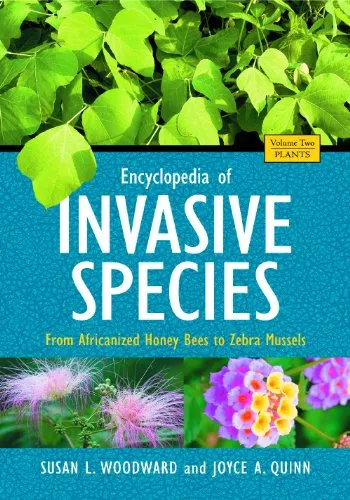
- Published Year: 2011
- Page count: 873
- File Size: 29 MB
- Language: English
- Published by: Greenwood
- Visited by: 154
- Rating/Review: 4.5
-
ISBN:
0313382204
9780313382208
9780313382215
Keywords:
Encyclopedia of Invasive Species 2 volumes : From Africanized Honey Bees to Zebra Mussels
4.5
Reviews from our users

You Can Ask your questions from this book's AI after Login
Each download or ask from book AI costs 2 points. To earn more free points, please visit the Points Guide Page and complete some valuable actions.



![The Ultimate iOS Interview Playbook: Conquer Swift, frameworks, design patterns, and app architecture [Team-IRA]](https://s3.refhub.ir/images/thumb/The_Ultimate_iOS_Interview_Playbook__Conquer__29925.webp)





Introduction to the Book
The "Encyclopedia of Invasive Species: From Africanized Honey Bees to Zebra Mussels" is a comprehensive and meticulously researched resource that explores one of the most pressing ecological issues of our time: invasive species. This two-volume set offers an in-depth examination of various invasive organisms, their impacts on habitat, and their role in directly influencing biodiversity, ecosystems, and even human lives. Written for researchers, students, policymakers, and lay readers who share a commitment to environmental stewardship, this encyclopedia balances scientific accuracy with general accessibility, making it a valuable resource for anyone interested in protecting our natural world.
With contributions from experts across the globe and an engaging format, the encyclopedia compiles detailed and up-to-date information on invasive species that range from plants, animals, and fungi to pathogens and microbes. By focusing on real-world examples like the infamous zebra mussels or Africanized honey bees, the book delves into the history, biology, and ecological consequences of these species on the ecosystems they invade. Along the way, it sheds light on the challenges associated with combating invasive species and the collaborative efforts required to mitigate their impacts.
Detailed Summary of the Book
The encyclopedia is structured to offer a comprehensive overview of the phenomenon of invasive species, featuring individual entries spanning across two volumes. Each entry provides detailed taxonomic information and touches on geography, environmental effects, and the methods used for control and management.
In Volume 1, readers are introduced to a wide variety of animal invasions, from terrestrial species like feral swine to aquatic invaders like lionfish. These species are examined through a multidisciplinary approach, showcasing their mechanisms of spread and the global patterns of invasion that have emerged in recent centuries. The book highlights how globalization, trade, and transportation have accelerated the introduction and establishment of invasive organisms.
Volume 2 shifts attention to invasive plants, pathogens, and microorganisms like fungi and bacteria. It also explores socio-economic interactions, such as how agriculture, forestry, and fisheries are impacted by non-native pests and pathogens. Throughout both volumes, the encyclopedia provides case studies from different regions worldwide, offering practical insights into mitigation and policy strategies.
Additionally, the encyclopedia delves into key concepts underpinning invasion biology, including ecosystem resilience, ecological niches, and the role of climate change as a catalyst for invasion. It showcases how interdisciplinary approaches—combining ecology, sociology, and economics—are essential for developing sustainable solutions.
Key Takeaways
- Invasive species pose a significant threat to biodiversity, altering ecosystems and sometimes outcompeting native species to extinction.
- Human activity, particularly globalization and trade, has accelerated the spread of invasive species to unprecedented levels.
- Understanding invasion biology is critical for designing better management and policy frameworks to deal with both current and future species invasions.
- The book offers global examples, making it clear that invasive species are a transnational problem requiring international cooperation.
- Emphasizing the interconnectedness between human activity and the natural world, the encyclopedia serves as a call to balance progress with ecological sustainability.
Famous Quotes from the Book
"Invasive species are not merely a biological phenomenon but also a societal challenge, born out of our interconnected world."
"Preventing the introduction of invasive species is far more effective—and cost-efficient—than combating them once they are established."
"Every invasive species has a story, a tale shaped by history, culture, and science. This encyclopedia compiles these narratives to inform and inspire action."
Why This Book Matters
The "Encyclopedia of Invasive Species" is more than a reference manual—it is a call to action for protecting our planet's delicate ecosystems. This book matters for several reasons:
Firstly, it equips readers with the scientific knowledge required to understand the complexities of invasive species, highlighting the urgency of addressing their impacts. As climate change and globalization intensify the problem, the information in this book becomes increasingly relevant. It showcases how invasive species can devastate ecosystems, threaten water quality, and even impact livelihoods tied to agriculture and fishing.
Secondly, this encyclopedia fosters a deeper appreciation for native biodiversity by detailing the harm invasive species cause. Readers are introduced not only to the problem but also to solutions, such as restoration efforts and policies that could curb further losses.
Finally, this two-volume set underscores the interconnectedness of global ecosystems and emphasizes the necessity of international collaboration. It encourages educators, lawmakers, students, and conservationists to see ecological preservation as a shared responsibility and offers practical tools to inspire policy changes and local action plans.
Whether you're a student exploring environmental science, a policymaker crafting legislation, or an informed citizen looking to make a difference, this book is an indispensable guide on the journey to understanding—and combating—the pervasive issue of invasive species.
Free Direct Download
You Can Download this book after Login
Accessing books through legal platforms and public libraries not only supports the rights of authors and publishers but also contributes to the sustainability of reading culture. Before downloading, please take a moment to consider these options.
Find this book on other platforms:
WorldCat helps you find books in libraries worldwide.
See ratings, reviews, and discussions on Goodreads.
Find and buy rare or used books on AbeBooks.

1154
بازدید4.5
امتیاز0
نظر98%
رضایتReviews:
4.5
Based on 0 users review
Questions & Answers
Ask questions about this book or help others by answering
No questions yet. Be the first to ask!