- Published Year: 2008
- Page count: 276
- File Size: 4 MB
- Language: English
- Published by: Springer-Verlag Berlin Heidelberg
- Visited by: 158
- Rating/Review: 4.3
-
ISBN:
9783540690245
3540690247
Keywords:
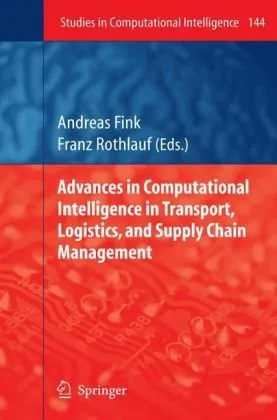
Advances in Computational Intelligence in Transport, Logistics, and Supply Chain Management
4.3
Reviews from our users

You Can Ask your questions from this book's AI after Login
Each download or ask from book AI costs 2 points. To earn more free points, please visit the Points Guide Page and complete some valuable actions.


![The Ultimate iOS Interview Playbook: Conquer Swift, frameworks, design patterns, and app architecture [Team-IRA]](https://s3.refhub.ir/images/thumb/The_Ultimate_iOS_Interview_Playbook__Conquer__29925.webp)


Introduction to "Advances in Computational Intelligence in Transport, Logistics, and Supply Chain Management"
The transportation, logistics, and supply chain industries are the lifeblood of the global economy, connecting people, goods, and services across continents. With the rise of computational intelligence, traditional paradigms in these industries are being redefined, offering new opportunities, tools, and strategies to improve efficiency, decision-making, and innovation. "Advances in Computational Intelligence in Transport, Logistics, and Supply Chain Management" compiles cutting-edge research, practical applications, and emerging trends in leveraging computational intelligence to address the challenges and opportunities of these dynamic sectors.
Authored by Theodore Tsekeris, Loukas Dimitriou, and Antony Stathopoulos, and edited by Andreas Fink and Franz Rothlauf, this book serves as a comprehensive guide for academics, industry professionals, and decision-makers intent on understanding how computational intelligence is transforming transportation systems, logistics networks, and supply chains. By bridging theory with practice, the book addresses fundamental concepts and real-world case studies, making it an essential resource for students, researchers, and practitioners alike.
Summary of the Book
The book delves into the role of computational intelligence—specifically machine learning, neural networks, optimization algorithms, and heuristic methods—in solving complex problems in transport, logistics, and supply chain management. It highlights how these technologies streamline operations, enhance decision-making accuracy, and improve system efficiency.
Chapters of the book are structured to cover a variety of topics, ranging from optimization techniques in freight and passenger transport to advanced supply chain analytics and risk management strategies. Case studies demonstrate how modern algorithms can tackle bottlenecks in urban transport systems, reduce costs in warehouse logistics, and create more resilient supply chains in a globalized economy.
The book also explores predictive analytics, adaptive planning, demand forecasting, and vehicle routing while addressing sustainability—balancing economic efficiency with environmental and social considerations. Each section builds upon the previous one, creating a cohesive narrative that underscores the transformative potential of computational intelligence in these fields.
Key Takeaways
- Comprehensive insights into computational intelligence applications within transport, logistics, and supply chains.
- Practical examples and case studies showcasing real-world implementations.
- Exploration of optimization algorithms and their role in decision-making across different domains.
- Focus on sustainability and risk management in logistics and transportation systems.
- Holistic approach, combining theoretical models, computational tools, and industry perspectives.
Famous Quotes from the Book
"The power of computational intelligence lies not just in solving current problems but in anticipating future challenges and providing innovative solutions."
"Efficiency is no longer a choice in transport and logistics—it is an imperative. Computational intelligence opens the door to efficiency at an unprecedented scale."
"Harnessing computational intelligence transforms supply chain risks into opportunities for growth and resilience."
Why This Book Matters
In an era of globalization and rapid technological advancement, the transport, logistics, and supply chain sectors face both immense challenges and unprecedented opportunities. The traditional models that have powered these industries are no longer sufficient to address the complexities of today’s interconnected world. This book matters because it provides a comprehensive framework for leveraging computational intelligence to innovate, adapt, and excel in this evolving landscape.
The authors offer actionable insights into how computational intelligence can tackle key issues, such as reducing delivery times, optimizing resource allocations, and mitigating risks in the face of uncertainties. As supply chains become increasingly digitalized, professionals and academics alike will find this book a valuable asset in understanding and utilizing these technologies to their full potential.
This work is not only a deep dive into best practices but also a forward-looking exploration of next-generation technologies—such as AI-driven logistics platforms and blockchain in transport systems—positioning its readers to lead in a competitive market. For those eager to stay ahead of the curve, "Advances in Computational Intelligence in Transport, Logistics, and Supply Chain Management" provides the knowledge and tools needed to embrace the future with confidence.
Free Direct Download
You Can Download this book after Login
Accessing books through legal platforms and public libraries not only supports the rights of authors and publishers but also contributes to the sustainability of reading culture. Before downloading, please take a moment to consider these options.
Find this book on other platforms:
WorldCat helps you find books in libraries worldwide.
See ratings, reviews, and discussions on Goodreads.
Find and buy rare or used books on AbeBooks.

1158
بازدید4.3
امتیاز0
نظر98%
رضایتReviews:
4.3
Based on 0 users review
Questions & Answers
Ask questions about this book or help others by answering
No questions yet. Be the first to ask!