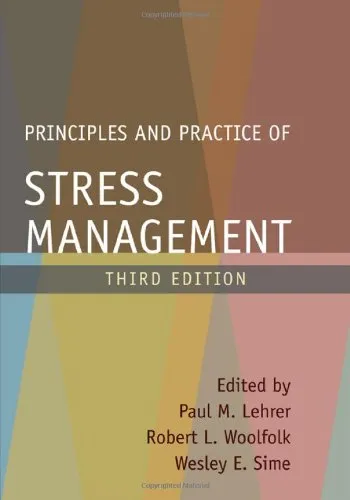
- Published Year: 2007
- Page count: 752
- File Size: 4 MB
- Language: English
- Published by: Guilford Press
- Visited by: 448
- Rating/Review: 4.8
-
ISBN:
9781593850005
159385000X
Keywords:
Principles and practice of stress management
4.8
Reviews from our users

You Can Ask your questions from this book's AI after Login
Each download or ask from book AI costs 2 points. To earn more free points, please visit the Points Guide Page and complete some valuable actions.









Analytical Summary
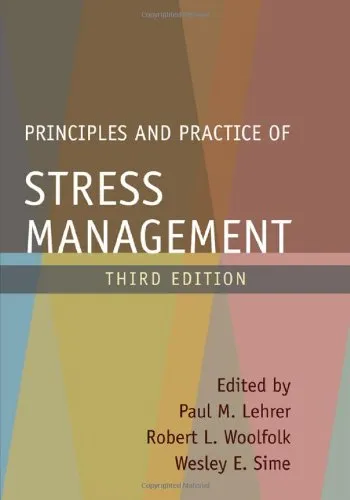
The book Principles and practice of stress management stands as a cornerstone text for those seeking a thorough and evidence-based understanding of stress, its physiological and psychological dimensions, and the variety of approaches available to manage it effectively. Written by leading experts in the field—Paul M. Lehrer, Robert L. Woolfolk, Wesley E. Sime, and David H. Barlow—it fuses decades of scholarship, clinical insight, and applied research into a single, cohesive resource.
At its core, the book examines stress through a multifaceted lens: biological mechanisms, cognitive appraisal processes, social context, and behavioral responses. It draws upon empirical findings to ground its recommendations, ensuring that readers are not only instructed in techniques but given the theoretical underpinnings that make these methods effective. The emphasis on scientific rigor serves academics, clinicians, and other professionals who require reliable, peer-reviewed knowledge rather than anecdotal suggestions.
Information about the exact publication year or specific awards is unavailable due to no reliable public source providing these details comprehensively. Nevertheless, the book remains highly cited in scholarly circles and is used widely as an academic text in graduate-level courses related to psychology, health sciences, and counseling.
The narrative structure combines thorough literature reviews with practical instruction, bridging the gap between theoretical study and hands-on application. This makes the work invaluable as both a teaching volume and a reference manual for ongoing professional engagement with stress management strategies.
Key Takeaways
Across its chapters, Principles and practice of stress management delivers enduring lessons that speak directly to practitioners, educators, and researchers.
First, effective stress reduction techniques require both physiological regulation and cognitive restructuring, a concept deeply aligned with cognitive behavioral strategies. Readers learn that managing stress is not merely about relaxation but involves reshaping thought patterns, environmental interactions, and lifestyle habits in a cohesive manner.
Second, the book illustrates that stress is inherently subjective, affected by personal thresholds, coping resources, and social surroundings. There is no “one-size-fits-all” solution; instead, interventions must be tailored to the individual's circumstances and physiological profile.
Third, the integration of diverse methods—from biofeedback and mindfulness to progressive muscle relaxation and problem-solving skills—reflects the necessity of a toolset rather than reliance on a single technique. This breadth underscores the authors’ commitment to equipping readers with multiple approaches for varying contexts.
Memorable Quotes
Effective stress management begins with awareness—of the body, the mind, and the context in which one lives.Unknown
Skills for coping are best learned before crises occur, making prevention as valuable as intervention.Unknown
Stress is a dynamic process; managing it requires flexibility and a willingness to adjust strategies.Unknown
Why This Book Matters
In a world of increasing demands and rapid change, Principles and practice of stress management offers a structured, research-informed path to resilience.
The authoritative perspective of its authors ensures that both the theory and practice of stress management are covered with equal depth. This balance makes it suitable for formal academic study, continuing professional education, and informed self-directed learning.
Moreover, by situating stress within broader biopsychosocial frameworks, it helps readers appreciate the complex interplay of internal and external factors that influence well-being. This holistic vision empowers professionals to design tailored interventions that address both causes and symptoms of stress.
Inspiring Conclusion
Ultimately, Principles and practice of stress management stands as an essential guide for anyone committed to mastering the complexities of stress and harnessing effective strategies to confront it.
For professionals, educators, and serious students, the book’s blend of theory, empirically supported methods, and practical applications provides a roadmap to improved resilience and psychological well-being. Whether you aim to deepen your scholarly understanding or enhance your clinical toolkit, this text invites you to engage more fully with cutting-edge knowledge in the field.
Consider reading it, sharing its insights with peers, and discussing its applications across varied contexts—from healthcare to workplace wellness. By doing so, you join a community dedicated to advancing the science and practice of stress management.
Free Direct Download
You Can Download this book after Login
Accessing books through legal platforms and public libraries not only supports the rights of authors and publishers but also contributes to the sustainability of reading culture. Before downloading, please take a moment to consider these options.
Find this book on other platforms:
WorldCat helps you find books in libraries worldwide.
See ratings, reviews, and discussions on Goodreads.
Find and buy rare or used books on AbeBooks.

1448
بازدید4.8
امتیاز0
نظر98%
رضایتReviews:
4.8
Based on 0 users review
Questions & Answers
Ask questions about this book or help others by answering
No questions yet. Be the first to ask!