
- Published Year: 2022
- Page count: 446
- File Size: 9 MB
- Language: English
- Published by: O'Reilly Media
- Visited by: 680
- Rating/Review: 5.0
- ISBN: 9781098108250
Keywords:
Fundamentals of Data Engineering: Plan and Build Robust Data Systems
5.0
Reviews from our users

You Can Ask your questions from this book's AI after Login
Each download or ask from book AI costs 2 points. To earn more free points, please visit the Points Guide Page and complete some valuable actions.Related Refrences:



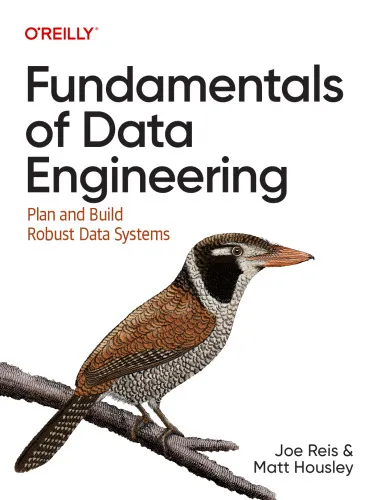
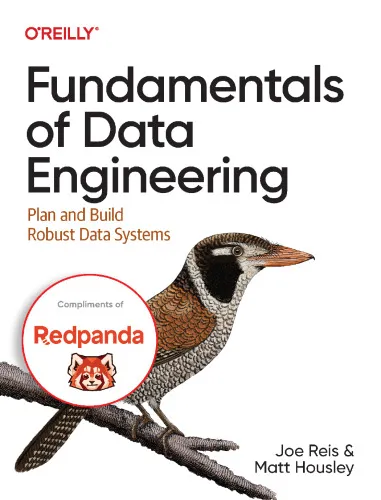
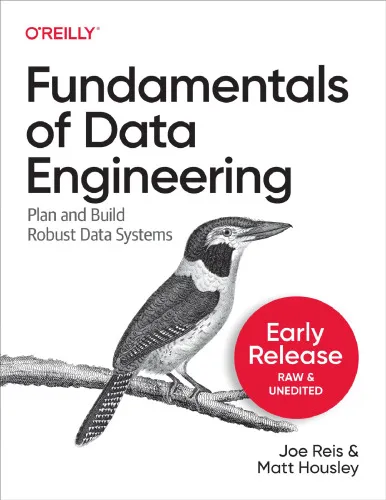
Data engineering has grown rapidly in the past decade, leaving many software engineers, data scientists, and analysts looking for a comprehensive view of this practice. With this practical book, you'll learn how to plan and build systems to serve the needs of your organization and customers by evaluating the best technologies available through the framework of the data engineering lifecycle. Authors Joe Reis and Matt Housley walk you through the data engineering lifecycle and show you how to stitch together a variety of cloud technologies to serve the needs of downstream data consumers. You'll understand how to apply the concepts of data generation, ingestion, orchestration, transformation, storage, and governance that are critical in any data environment regardless of the underlying technology. This book will help you: Get a concise overview of the entire data engineering landscape Assess data engineering problems using an end-to-end framework of best practices Cut through marketing hype when choosing data technologies, architecture, and processes Use the data engineering lifecycle to design and build a robust architecture Incorporate data governance and security across the data engineering lifecycle
Free Direct Download
You Can Download this book after Login
Accessing books through legal platforms and public libraries not only supports the rights of authors and publishers but also contributes to the sustainability of reading culture. Before downloading, please take a moment to consider these options.
Find this book on other platforms:
WorldCat helps you find books in libraries worldwide.
See ratings, reviews, and discussions on Goodreads.
Find and buy rare or used books on AbeBooks.

1680
بازدید5.0
امتیاز2
نظر98%
رضایتReviews:
5.0
Based on 2 users review

aditya51
Dec. 16, 2025, 1:05 p.m.
Book: Fundamentals of Data Engineering
Verdict: Essential reading. If you are tired of chasing the latest "hot tool" and want to understand how to actually build systems, start here.
The Problem: Tutorial Hell
As someone trying to break into Data Engineering, I’ve spent months in "tutorial hell." I know how to spin up an EC2 instance on AWS, I’ve played with Python scripts, and I’ve messed around with SQL. But I constantly felt like I was missing the bigger picture. I knew how to use a hammer, but I didn’t know how to build a house.
I picked up this book hoping for clarity, and honestly, it delivered way more than I expected. It doesn't teach you code; it teaches you how to think.
The Core Concept: The Lifecycle
The best part of this book is that it kills the idea that Data Engineering is just "making pipelines." The authors introduce the Data Engineering Lifecycle, which is the mental model I use for everything now.
Instead of just memorizing tools, the book forces you to look at data in stages:
Generation: Where does the data come from? (APIs, DBs, Logs?)
Ingestion: How do we get it? (Batch vs. Streaming?)
Storage: Where do we put it? (Data Lake vs. Warehouse?)
Transformation: How do we make it useful? (The classic ETL/ELT debate).
Serving: Who is using it? (Analysts, ML models, or Reverse ETL?)
This framework (Part II of the book) was a lightbulb moment for me. It made me realize that my previous projects were failing not because my code was bad, but because I was ignoring the "Undercurrents"—things like Security, DataOps, and Data Management.
Key Takeaways for an Aspiring Engineer
Tools are Temporary, Concepts are Forever: Chapter 4 ("Choosing Technologies") is a reality check. The authors basically say, "Don't marry your tools." The tech stack will change in 5 years, but the principles of why you choose a tool (cost, speed to market, interoperability) won't. This gave me confidence to stop stressing about learning every new tool and focus on the fundamentals.
The "Data Maturity" Curve: The book explains that not every company needs a massive, complex Google-style architecture. A startup needs something different than an enterprise. As an aspiring engineer, this helps me understand what kind of jobs I should be applying for and what questions to ask in interviews.
The "Undercurrents" Matter: I used to think security and orchestration (Airflow/Dagster) were boring afterthoughts. This book made me realize they are actually the glue holding the system together.
What It's NOT
It is not a coding tutorial. You won't find pages of Python or SQL code snippets to copy-paste.
It is not a certification guide. It won't help you pass a specific AWS or Databricks exam directly.
Final Thoughts
If you are coming from a Computer Engineering or CS background like me, you will appreciate the rigorous systems thinking here. If you are coming from a Data Analyst background, this bridges the gap between "running queries" and "building platforms."
Reading this felt like sitting down with a senior principal engineer who is explaining how the industry actually works, minus the marketing fluff. It has given me the vocabulary to sound like I know what I'm talking about in interviews, and the mental framework to actually deliver once I get the job.
Rating: 5/5. Stop watching YouTube tutorials for a weekend and read this instead.

hakou
Dec. 26, 2025, 12:16 a.m.
The must-read book for beginners in Data Engineering.
Questions & Answers
Ask questions about this book or help others by answering
No questions yet. Be the first to ask!