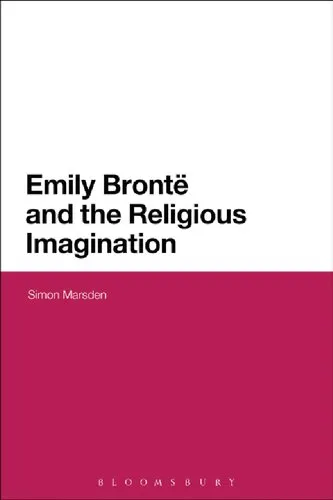
- Published Year: 2014
- Page count: 193
- File Size: 1 MB
- Language: English
- Published by: Bloomsbury Academic
- Visited by: 213
- Rating/Review: 4.5
-
ISBN:
9781441166302
9781472543547
9781441168139
Keywords:
Emily Brontë and the Religious Imagination
4.5
Reviews from our users

You Can Ask your questions from this book's AI after Login
Each download or ask from book AI costs 2 points. To earn more free points, please visit the Points Guide Page and complete some valuable actions.
Readers of Emily Brontë's poetry and of Wuthering Heights have seen in their author, variously, a devout if somewhat unorthodox Christian, a heretic, or a visionary & mystic of the moors&. Rather than seeking to resolve this matter, Emily Brontë and the Religious Imagination suggests that such conflicting readings are the product of tensions, conflicts and ambiguities within the texts themselves. Rejecting the idea that a single, coherent set of religious doctrines are to be found in Brontë's work, this book argues that Wuthering Heights and the poems dramatise individual experiences of faith in the context of a world in which such faith is always conflicted, always threatened. Brontë's work dramatises the experience of imaginative faith that is always contested by the presence of other voices, other worldviews. Her characters cling to visionary faith in the face of death and mortality, awaiting and anticipating a final vindication, an eschatological fulfilment that always lies in a future beyond the scope of the text.
Free Direct Download
You Can Download this book after Login
Accessing books through legal platforms and public libraries not only supports the rights of authors and publishers but also contributes to the sustainability of reading culture. Before downloading, please take a moment to consider these options.
Find this book on other platforms:
WorldCat helps you find books in libraries worldwide.
See ratings, reviews, and discussions on Goodreads.
Find and buy rare or used books on AbeBooks.

1213
بازدید4.5
امتیاز0
نظر98%
رضایتReviews:
4.5
Based on 0 users review
Questions & Answers
Ask questions about this book or help others by answering
Please login to ask a question
No questions yet. Be the first to ask!