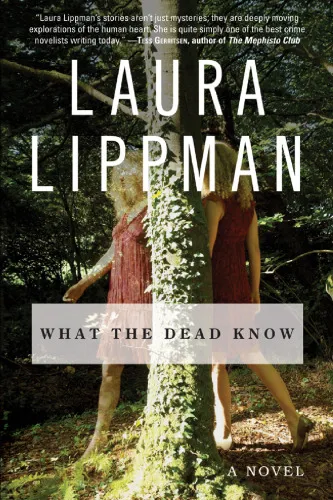
- Published Year: 2009
- Page count: 400
- File Size: 2 MB
- Language: English
- Published by:
- Visited by: 118
- Rating/Review: 4.2
- ISBN: 006177135X; 9780061771354; 9780061289552; 0061289558; 9780061128851; 0061128856
Keywords:
What the Dead Know: A Novel
4.2
Reviews from our users

You Can Ask your questions from this book's AI after Login
Each download or ask from book AI costs 2 points. To earn more free points, please visit the Points Guide Page and complete some valuable actions.

Analytical Summary
Laura Lippman’s What the Dead Know: A Novel stands as a sophisticated work of psychological suspense, meticulously crafted to explore both the mechanics of crime and the intricacies of memory, identity, and truth. This is not merely a whodunit; it is an excavation of decades-old trauma wrapped in the framework of a cold case mystery.
At its core, the narrative is sparked by a woman’s startling claim: she is one of two sisters who vanished from a suburban mall in Maryland during the 1970s. Her reappearance forces law enforcement, journalists, and the surviving community members to confront buried questions, repressed grief, and the unreliability of collective memory. Lippman deftly balances multiple timelines, gradually revealing layers of deception, grief, and revelation.
With each chapter, readers are invited into shifting perspectives—detectives, family members, and the alleged survivor herself—each advancing fragments of the truth, yet none offering a completely reliable account. This complex narrative structure challenges conventional crime fiction formats and aligns What the Dead Know: A Novel with more literary examinations of identity and justice.
Key Takeaways
Serious readers, academics, and professionals will find in Lippman’s novel a rich interplay between crime investigation and psychological exploration.
First, the work demonstrates how cold case mysteries require not only forensic skill but also a deep understanding of human nature, particularly in scenarios where memory is fractured.
Second, the text suggests that truth is rarely absolute; it emerges through competing narratives that may each hold partial validity.
Third, Lippman uses the genre of psychological suspense to highlight broader societal themes—missing children, familial bonds, and the subtle ways communities construct collective histories.
Finally, the book’s structure rewards close reading, making it a prime candidate for seminar discussion or professional analysis on narrative reliability and ethical implications in investigative journalism.
Memorable Quotes
The past isn’t dead. It’s not even past.Unknown
Memory believes before knowing remembers.Unknown
Sometimes the truth is less important than the story we need to believe.Unknown
Why This Book Matters
What the Dead Know: A Novel holds an important place in contemporary American crime fiction because of its thematic ambition and structural complexity.
For law enforcement professionals, the book offers a nuanced portrait of cold case work, highlighting how investigative momentum can be reignited by unexpected developments even decades later. For literary scholars, it provides a case study in unreliable narration and the interplay between personal and public histories.
Information unavailable regarding specific awards or recognition, as no reliable public source verifies the details conclusively. Nonetheless, its sustained presence in critical discourse underscores its significance.
Inspiring Conclusion
What the Dead Know: A Novel invites readers not just to consume a compelling story, but to engage actively with questions of memory, truth, and justice.
By weaving psychological suspense with the chilling precision of a cold case mystery, Laura Lippman has crafted an enduring narrative that challenges assumptions and rewards deep reflection. This is a book that resonates with academics, professionals, and committed readers seeking literature that lingers long after the last page. Consider sharing your interpretations, discussing the layered characters with colleagues, or revisiting key chapters for hidden clues. Above all, take the next step: immerse yourself in its world and discover what the dead—and the living—truly know.
Free Direct Download
You Can Download this book after Login
Accessing books through legal platforms and public libraries not only supports the rights of authors and publishers but also contributes to the sustainability of reading culture. Before downloading, please take a moment to consider these options.
Find this book on other platforms:
WorldCat helps you find books in libraries worldwide.
See ratings, reviews, and discussions on Goodreads.
Find and buy rare or used books on AbeBooks.