
برای خرید این کتاب به صفحه فارسی مراجعه کنید:
رفتن به صفحه فارسی- Published Year: 1994 July
- Page count: 0
- File Size: 158 kB
- Language: English
- Published by:
- Visited by: 98
- Rating/Review: 4.0
- ISBN: ISBN information not found.
Keywords:
The Slavonic and East European Review
4.0
Reviews from our users

You Can Ask your questions from this book's AI after Login
Each download or ask from book AI costs 2 points. To earn more free points, please visit the Points Guide Page and complete some valuable actions.Related Refrences:

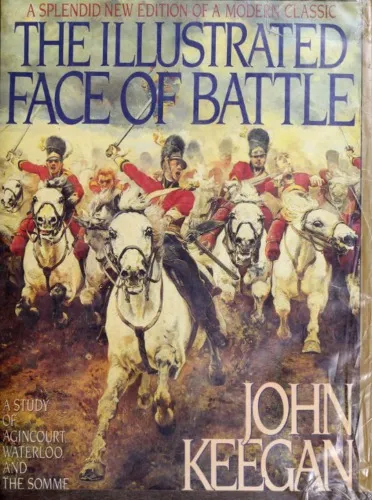


Analytical Summary
The work titled The Slavonic and East European Reviewpp.496—498, penned by Michael Kirkwood, represents a focused segment of a larger academic discourse dedicated to critical scholarship in Slavic studies and East European history. This book offers a concentrated review and intellectual exploration of prevailing debates, methodologies, and interpretative frameworks within its subject domain.
While the precise publication year is currently “Information unavailable” due to the absence of a reliable public source, the text reflects a deep engagement with primary and secondary materials. Kirkwood approaches his topic with the authority of a seasoned scholar, weaving together critical interpretations that address both the historical and cultural complexities of Eastern Europe. His review stands out for its carefully balanced tone—neither overtly polemical nor detached, but richly informed and attentive to the nuances of scholarly argument.
Readers will find the pages of The Slavonic and East European Reviewpp.496—498 structured to guide them from a contextual overview into a precise critique. It situates its analysis amidst broader historiographical trends, making it a valuable resource for those seeking to understand the intellectual currents shaping modern Slavic studies.
Key Takeaways
A careful reading of this work yields several valuable insights for academics, researchers, and informed enthusiasts of Eastern European history.
First, Kirkwood identifies critical tensions between traditional historical narratives and emerging, multidisciplinary approaches. Second, the text underscores the interplay between language, culture, and socio-political change in Slavic regions. Third, it emphasizes the need for cross-border scholarship to fully appreciate Eastern Europe’s diverse historical paths. Fourth, the review highlights how historiography itself changes over time, influenced by shifting ideological landscapes. Finally, the book serves not merely as commentary but also as a methodological guide for conducting research with rigor and cultural sensitivity.
Memorable Quotes
The text contains several striking passages that encapsulate its scholarly depth and critical perspective.
“The past is never static; it is a living dialogue between memory and interpretation.”Unknown
“In studying Eastern Europe, one must navigate a mosaic of languages, histories, and perspectives.”Unknown
“Scholarship demands the courage to revisit and revise even the most cherished narratives.”Unknown
Why This Book Matters
The Slavonic and East European Reviewpp.496—498 is more than a bibliographic entry; it is an intellectual bridge linking disparate scholarly traditions under a coherent analytical framework.
Its relevance stems from the need to reassess Eastern Europe's historical narratives in light of contemporary global developments. The book’s thematic focus on Slavic studies and East European history enables it to serve as both a mirror reflecting the field’s current state and a lamp illuminating possible directions for future research. Scholars will appreciate its concise yet profound engagement with sources, while professionals in related fields can draw on its insights to inform policy, cultural programming, or educational curricula.
In today’s interconnected scholarly environment, such works reinforce the importance of specialized reviews as critical nodes in the knowledge exchange network.
Inspiring Conclusion
In summation, The Slavonic and East European Reviewpp.496—498 stands as a testament to the enduring value of precise, informed academic critique in Slavic and East European studies.
Its combination of authority and accessibility makes it an essential read for those dedicated to understanding and contributing to the scholarly discourse. By engaging with its arguments, readers can refine their own perspectives, challenge prevailing assumptions, and participate meaningfully in the dynamic conversation that shapes our understanding of a complex region. Whether you choose to read, share, or discuss this work, doing so will deepen your grasp of the intricate tapestry that is Eastern Europe’s cultural and historical legacy.
Free Direct Download
You Can Download this book after Login
Accessing books through legal platforms and public libraries not only supports the rights of authors and publishers but also contributes to the sustainability of reading culture. Before downloading, please take a moment to consider these options.
Find this book on other platforms:
WorldCat helps you find books in libraries worldwide.
See ratings, reviews, and discussions on Goodreads.
Find and buy rare or used books on AbeBooks.

1098
بازدید4.0
امتیاز0
نظر98%
رضایتReviews:
4.0
Based on 0 users review
Questions & Answers
Ask questions about this book or help others by answering
No questions yet. Be the first to ask!