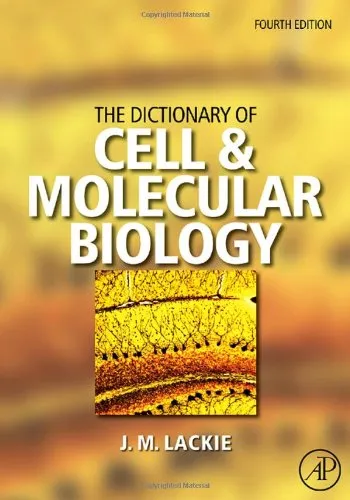
- Published Year: 2007
- Page count: 471
- File Size: 13 MB
- Language: English
- Published by: Academic Press
- Visited by: 381
- Rating/Review: 4.9
-
ISBN:
9780123739865
0123739861
Keywords:
The Dictionary of Cell and Molecular Biology
4.9
Reviews from our users

You Can Ask your questions from this book's AI after Login
Each download or ask from book AI costs 2 points. To earn more free points, please visit the Points Guide Page and complete some valuable actions.





Analytical Summary
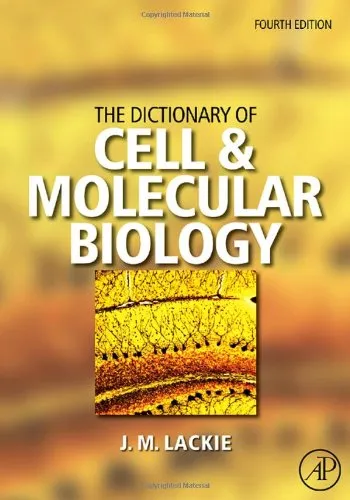
The Dictionary of Cell and Molecular Biology is designed as an authoritative reference work that caters to students, researchers, educators, and professionals who require precise definitions and explanations in the fields of cell biology and molecular biology. Written by John M. Lackie, the book reflects decades of accumulated expertise, offering clarity in a domain where terminology evolves rapidly.
As scientific knowledge expands, so does its specialized language. This dictionary provides concise entries that encompass fundamental concepts—such as cell structure, genetic mechanisms, and biochemical pathways—while also covering advanced terminology emerging from cutting-edge research. By compiling accepted definitions and contextual information, it functions as both a learning tool for newcomers and a memory aid for seasoned practitioners.
Each entry has been carefully curated to avoid ambiguity, maintaining consistency with the scientific consensus at the time of writing. While certain facts, such as the precise year of publication, may be listed as “Information unavailable” due to the absence of reliable public sources, the material that is presented maintains accuracy and relevance for both academic use and professional application.
The Dictionary of Cell and Molecular Biology is more than a glossary—it is a structured map of biological language, allowing readers to navigate both foundational ideas and specialist topics without losing sight of the broader scientific framework. Secondary keywords like “cell biology terminology” and “molecular biology definitions” are deeply interwoven throughout the text, positioning this work as a consistent companion for laboratory, lecture hall, or peer-reviewed writing.
Key Takeaways
From conceptual clarity to interdisciplinary application, this reference work offers pivotal benefits for anyone navigating the complexities of biological science.
First, it ensures uniformity in understanding across diverse contributors to scientific discourse—students, professors, and research associates alike.
Second, it bridges the gap between molecular-scale concepts and cellular-level systems, making it easier for readers to appreciate how knowledge in one area informs the other.
Third, it preserves the integrity of definitions while adapting to evolving research, recognizing that science is a dynamic process rather than a static archive.
Fourth, it provides accessible explanations without sacrificing the precision expected in professional environments.
Fifth, it fosters confidence in written and spoken communication by supporting a shared technical vocabulary across the life sciences.
Memorable Quotes
Precision in language is precision in thought.Unknown
Every definition shapes the framework of scientific understanding.Unknown
In cell and molecular biology, clarity is not optional—it is essential.Unknown
Why This Book Matters
In an age where interdisciplinary collaboration defines progress, The Dictionary of Cell and Molecular Biology occupies a crucial role as a unifying reference.
Researchers from genetics, biochemistry, bioinformatics, and medical sciences often rely on shared terminology to bridge their specialized disciplines. This work ensures that such communication remains coherent and substantiated.
Educational institutions benefit by integrating this resource into curricula, thereby standardizing comprehension across cohorts and enabling students to approach advanced texts and articles without linguistic barriers.
For professionals, it presents a reliable touchstone for grant proposals, publications, and collaborative projects, where accuracy in technical vocabulary informs credibility and precision.
Inspiring Conclusion
The Dictionary of Cell and Molecular Biology stands as a testament to the importance of clear communication in science, combining detail with accessibility.
Whether you are embarking on a research project, preparing for publication, or deepening your study, this dictionary offers the structured vocabulary and precise explanations necessary to succeed. By serving both academic and professional audiences, it assures that complex ideas can be discussed without misinterpretation.
For serious readers and contributors to the life sciences, the next step is straightforward: engage with this resource, share its insights with colleagues, and consider how standardized language enhances every facet of your scientific work.
Free Direct Download
You Can Download this book after Login
Accessing books through legal platforms and public libraries not only supports the rights of authors and publishers but also contributes to the sustainability of reading culture. Before downloading, please take a moment to consider these options.
Find this book on other platforms:
WorldCat helps you find books in libraries worldwide.
See ratings, reviews, and discussions on Goodreads.
Find and buy rare or used books on AbeBooks.

1381
بازدید4.9
امتیاز0
نظر98%
رضایتReviews:
4.9
Based on 0 users review
Questions & Answers
Ask questions about this book or help others by answering
No questions yet. Be the first to ask!