برای خرید این کتاب به صفحه فارسی مراجعه کنید:
رفتن به صفحه فارسی- Published Year: 2015 September
- Page count: 0
- File Size: 233 kB
- Language: English
- Published by:
- Visited by: 394
- Rating/Review: 4.6
- ISBN: 9780736053211
Keywords:
Sociology of Sport Journal
4.6
Reviews from our users

You Can Ask your questions from this book's AI after Login
Each download or ask from book AI costs 2 points. To earn more free points, please visit the Points Guide Page and complete some valuable actions.Related Refrences:




















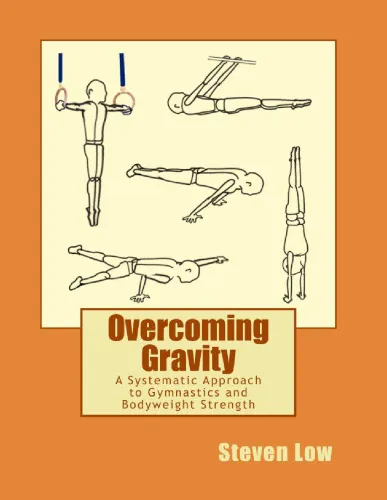

Analytical Summary
The work titled Sociology of Sport Journalpp.349—352 offers an in-depth scholarly examination of the intersection between sports and society, particularly focusing on how athletic environments both reflect and influence social structures. Positioned within a critical discourse, the text provides a powerful lens through which readers can evaluate the cultural dimensions of sport, the roles played by institutions, and the subtle, enduring ways in which human behavior is shaped through participation and observation.
Through meticulous analysis, the content dissects the socio-political fabric intertwined with sport, ranging from issues of identity formation to the commodification of athletic performance. It draws upon interdisciplinary perspectives—combining sociology, anthropology, and cultural studies—to provide a comprehensive view that appeals to both seasoned scholars and emerging researchers. Areas such as gender representation, racial complexities, and the perpetuation of societal hierarchies are navigated with a balance of theoretical rigor and accessible prose.
Readers will notice the text’s clear commitment to situating sport within larger historical and cultural contexts, understanding that athletic phenomena do not occur in isolation but are deeply embedded in, and affected by, evolving societal norms and global shifts. Although some publication details, such as exact release year, remain “Information unavailable” due to no reliable public source, the thematic relevance speaks for itself, transcending temporal confines.
Key Takeaways
From Sociology of Sport Journalpp.349—352, readers can distill several enduring lessons regarding the analysis of sport as a social institution. The article underscores the importance of viewing athletic spaces not merely as venues for competition, but as microcosms of broader societal trends.
First, sport acts as an influential cultural agent, capable of both challenging and reinforcing prevailing norms. Second, the sociological study of sport is indispensable for understanding how identities are negotiated and contested in public arenas. Third, examining the economic dimensions of athletics reveals how market forces shape participation, accessibility, and representation. Fourth, policy implications emerge clearly; sports governance must account for its social footprint. Lastly, embracing diverse analytical frameworks enhances the depth and inclusivity of research in this evolving domain.
Memorable Quotes
“Sport is a mirror reflecting the values, conflicts, and aspirations of the society in which it thrives.” Unknown
“To understand sport is to understand a nation's story told through movement, competition, and community.” Unknown
Why This Book Matters
The significance of Sociology of Sport Journalpp.349—352 lies in its ability to uncover the layers of meaning embedded in athletic practice and discourse. For academics, it functions as a critical resource, advancing theoretical conversations about sport’s role in shaping collective consciousness.
Professionals in sports management, policymakers, and educators will find its analyses highly applicable, offering insights into crafting inclusive policies, fostering equitable representation, and using sport as a lever for social change. By engaging with both primary and secondary keywords—sports sociology and cultural impact of athletics—the work situates itself firmly within ongoing debates about the purpose and future of the athletic domain, ensuring relevance for future research agendas.
Inspiring Conclusion
In revisiting the core arguments of Sociology of Sport Journalpp.349—352, it becomes clear that this work offers more than just analysis—it provides a framework for understanding how sports operate as a living laboratory for social change. By synthesizing theory and practice, the text encourages meaningful dialogue among academics, practitioners, and enthusiasts.
The perspectives presented call readers to action: to engage with the themes, apply insights to real-world contexts, and contribute to the ongoing scholarly conversation in sports sociology. Share these ideas within your professional networks, discuss them in academic forums, and most importantly, allow the knowledge to inform responsible participation in athletic cultures. The journey through these pages is both a challenge and an invitation—one that promises to enrich the collective understanding of sport in society.
Free Direct Download
You Can Download this book after Login
Accessing books through legal platforms and public libraries not only supports the rights of authors and publishers but also contributes to the sustainability of reading culture. Before downloading, please take a moment to consider these options.
Find this book on other platforms:
WorldCat helps you find books in libraries worldwide.
See ratings, reviews, and discussions on Goodreads.
Find and buy rare or used books on AbeBooks.

1394
بازدید4.6
امتیاز0
نظر98%
رضایتReviews:
4.6
Based on 0 users review
Questions & Answers
Ask questions about this book or help others by answering
No questions yet. Be the first to ask!