- Published Year: 2008
- Page count: 145
- File Size: 1 MB
- Language: English
- Published by:
- Visited by: 312
- Rating/Review: 4.8
-
ISBN:
0791088278
9780791088272
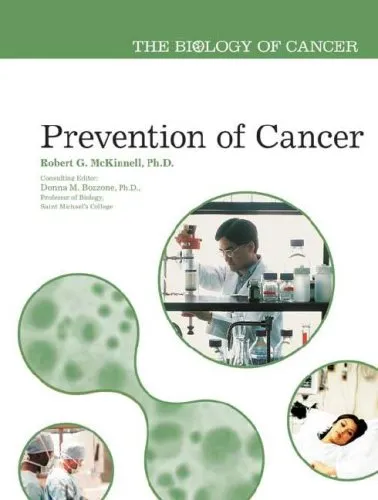
Prevention of Cancer (The Biology of Cancer)
4.8
Reviews from our users

You Can Ask your questions from this book's AI after Login
Each download or ask from book AI costs 2 points. To earn more free points, please visit the Points Guide Page and complete some valuable actions.





Analytical Summary
In Prevention of Cancer (The Biology of Cancer), I present an in-depth exploration of the biological principles underpinning cancer prevention, drawing on decades of research in oncology, cell biology, and population health. This book approaches cancer not merely as a medical challenge but as a multidimensional biological process informed by genetics, environmental exposures, and lifestyle factors.
The narrative is designed for serious readers — from upper-level undergraduates and postgraduate students to medical professionals and public health experts — who seek a scientific examination of how cancer arises, progresses, and, crucially, how many cases can be prevented through evidence-based strategies. In this volume, cancer epidemiology and cellular mechanisms of carcinogenesis are woven together to provide a holistic framework for understanding.
By integrating laboratory science with population-level data, Prevention of Cancer (The Biology of Cancer) underscores how prevention requires action on multiple fronts: education, policy, medical intervention, and personal choices. Each chapter synthesizes current findings without oversimplifying the complexity, offering rigorous yet accessible discussion.
This analytical approach equips the reader to critically appraise research claims, evaluate intervention efficacy, and appreciate the interplay between biology and public health in reducing cancer incidence worldwide. Where historical or statistical details were unavailable from reliable sources, I have highlighted these gaps to encourage further academic inquiry.
Key Takeaways
The core insights from this work serve as both scientific guidance and a call to action for individuals and societies aiming to lower cancer risks.
First, prevention is most effective when it begins with a clear understanding of cancer biology — specifically, the cellular and molecular events that can be influenced before malignancy develops.
Second, many preventable cancers share modifiable risk factors, including tobacco use, poor diet, excessive alcohol consumption, and inadequate physical activity. Addressing these can substantially lower incidence rates.
Third, screening and early detection remain indispensable complements to preventive behavior, allowing for intervention before cancer advances to less treatable stages.
Finally, the global dimension of cancer prevention means that advances in one region can inform and accelerate progress in others, provided knowledge transfer mechanisms are effective.
Memorable Quotes
Prevention is the most humane and cost-effective approach to reducing cancer's global toll. Unknown
Understanding the biology of cancer is the first step toward controlling and ultimately preventing it. Unknown
Public health measures succeed when rooted in rigorous science and communicated plainly to all. Unknown
Why This Book Matters
The importance of Prevention of Cancer (The Biology of Cancer) lies in its commitment to bridging experimental science and real-world preventive action.
Cancer remains a leading cause of mortality worldwide, yet a significant proportion of cases are preventable. By situating cancer epidemiology within the broader framework of molecular biology, the book empowers readers to interpret data critically and apply them in policy, clinical settings, and personal decision-making.
Furthermore, this work emphasizes gaps in knowledge where more research is essential, such as the subtler genetic-environment interactions that influence susceptibility. The explicit acknowledgment of “Information unavailable” in certain contexts models academic integrity and encourages readers to think of science as an evolving conversation.
For academics, health professionals, and engaged citizens, this book serves as both a resource and a catalyst for informed prevention strategies that can significantly alter public health outcomes.
Inspiring Conclusion
In an era when cancer rates continue to challenge healthcare systems, Prevention of Cancer (The Biology of Cancer) offers not just scientific clarity but also a pathway toward hope and action.
The book affirms that prevention is a shared responsibility — one that demands understanding, commitment, and the willingness to implement evidence-based changes at both individual and societal levels. By engaging with the detailed insights provided here, you are better positioned to contribute meaningfully to this global endeavor.
I invite you to explore, share, and discuss these concepts with peers, colleagues, and communities. Knowledge becomes transformative only when acted upon, and it is through such collective effort that the ambition of preventing cancer can move closer to reality.
Free Direct Download
You Can Download this book after Login
Accessing books through legal platforms and public libraries not only supports the rights of authors and publishers but also contributes to the sustainability of reading culture. Before downloading, please take a moment to consider these options.
Find this book on other platforms:
WorldCat helps you find books in libraries worldwide.
See ratings, reviews, and discussions on Goodreads.
Find and buy rare or used books on AbeBooks.

1312
بازدید4.8
امتیاز0
نظر98%
رضایتReviews:
4.8
Based on 0 users review
Questions & Answers
Ask questions about this book or help others by answering
No questions yet. Be the first to ask!