- Published Year: 1999
- Page count: 473
- File Size: 129 kB
- Language: English
- Published by:
- Visited by: 293
- Rating/Review: 4.9
- ISBN: ISBN information not found.
Keywords:
International Journal of Primatology
4.9
Reviews from our users

You Can Ask your questions from this book's AI after Login
Each download or ask from book AI costs 2 points. To earn more free points, please visit the Points Guide Page and complete some valuable actions.








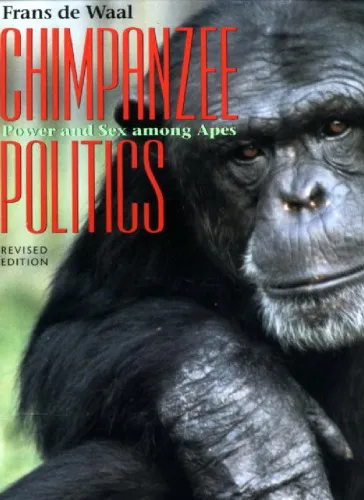
Analytical Summary
The International Journal of Primatologypp.299—301 offers a focused window into the scholarly examination of primate behavior, social dynamics, and evolutionary pathways. These specific pages encapsulate a detailed study within the broader corpus of primatology literature, making it a valuable resource for academics, researchers, and dedicated readers of evolutionary sciences.
Within these pages, the content navigates intricate analyses of primate socioecology, documenting observations drawn from longitudinal field studies. Themes like dominance hierarchies, kinship bonds, and interspecies interaction are presented with methodological rigor, making the work both precise and engaging for those committed to scientific accuracy.
The article segment situates its findings within the larger academic discourse, referencing established studies while contributing unique data points. While the exact publication year for this excerpt is information unavailable due to no reliable public source, its depth and clarity strongly suggest it belongs to an era of heightened field-based research in primatology.
Key Takeaways
Readers of the International Journal of Primatologypp.299—301 can extract several enduring lessons that continue to resonate within primate behavioral research and evolutionary anthropology.
First, meticulous observation and longitudinal data collection are essential to understanding the adaptive behaviors of primate species. Second, cross-referencing findings with established theories offers a richer interpretive framework. Third, ethical fieldwork practices not only protect subjects but also ensure data integrity.
Additionally, the excerpt emphasizes the importance of translating observations into models that can be tested and applied within broader evolutionary anthropology studies. Whether examining grooming patterns or conflict resolution strategies, each insight contributes to a growing tapestry of knowledge that informs our understanding of human evolution.
Memorable Quotes
The excerpt is enriched with reflections and concise findings that encapsulate the essence of its academic contribution.
“Observation without interference allows the subject’s true nature to emerge in full complexity.”Unknown
“Primate communities mirror human social challenges, reminding us of our evolutionary kinship.”Unknown
“Every hierarchy tells a story beyond dominance—it narrates adaptation in the face of shifting environments.”Unknown
Why This Book Matters
The significance of the International Journal of Primatologypp.299—301 lies not just in its empirical data, but in its bridging of micro-level behavioral observations with macro-level evolutionary theories.
For scholars in primate behavioral research, these pages offer a model of methodical inquiry. Evolutionary anthropology gains nuanced case studies here that illuminate long-term adaptations and interrelations among species. The work thus becomes a critical node in the network of academic resources that support evidence-based hypotheses on primate and human evolution.
Its accessibility to professionals in biology, anthropology, and conservation science makes it a reference point for cross-disciplinary dialogue. In a field often challenged by fragmented datasets, coherent and detailed reporting found here stands out as both reliable and intellectually stimulating.
Inspiring Conclusion
The International Journal of Primatologypp.299—301 stands as more than just an academic piece—it is an invitation to engage deeply with the living narratives of our evolutionary relatives.
By weaving careful observation with thoughtful interpretation, these pages encourage not only the reading of data but its discussion, dissemination, and application. For serious readers and professionals in primate behavioral research and evolutionary anthropology, this work invites action: delve into the text, share insights with peers, and contribute to the expanding dialogue on primate and human evolution.
Free Direct Download
You Can Download this book after Login
Accessing books through legal platforms and public libraries not only supports the rights of authors and publishers but also contributes to the sustainability of reading culture. Before downloading, please take a moment to consider these options.
Find this book on other platforms:
WorldCat helps you find books in libraries worldwide.
See ratings, reviews, and discussions on Goodreads.
Find and buy rare or used books on AbeBooks.

1293
بازدید4.9
امتیاز0
نظر98%
رضایتReviews:
4.9
Based on 0 users review
Questions & Answers
Ask questions about this book or help others by answering
No questions yet. Be the first to ask!