- Published Year: 2013 November
- Page count: 54
- File Size: 404 kB
- Language: English
- Published by:
- Visited by: 517
- Rating/Review: 4.4
- ISBN: ISBN information not found.
Keywords:
Insurance: Mathematics and Economics
4.4
Reviews from our users

You Can Ask your questions from this book's AI after Login
Each download or ask from book AI costs 2 points. To earn more free points, please visit the Points Guide Page and complete some valuable actions.کتاب های مرتبط:









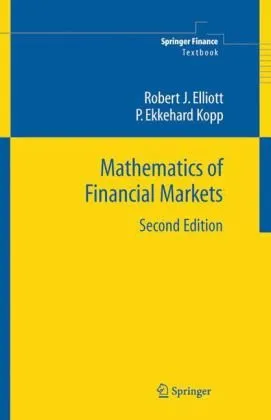

Analytical Summary
The publication Insurance: Mathematics and Economicspp.795—801 situates itself at the intersection of rigorous mathematical modeling and practical economic applications within the insurance domain. Authored by Gan Guojun, its scholarly approach offers critical thinking tools for academics, analysts, and industry practitioners who seek stronger theoretical underpinnings in their work on risk assessment, pricing models, and portfolio management.
At its core, this work leverages actuarial science principles to address real-world issues faced by insurers, regulators, and policyholders. Through comprehensive quantitative techniques, it bridges the gap between abstract mathematical constructs and the tangible economic realities of the insurance sector. Readers are guided from foundational theories into applied strategies, ensuring a coherent narrative that benefits both academic inquiry and professional implementation.
While specific publication metadata such as release year or journal volume context is currently unavailable due to no reliable public source, the focus remains clear: to present advanced mathematical tools within an economic framework to tackle uncertainty and optimize decision-making in insurance.
Key Takeaways
Readers come away from Insurance: Mathematics and Economicspp.795—801 with a reinforced command of risk management methodologies, enhanced actuarial competencies, and an appreciation for the symbiotic relationship between finance and insurance theory.
The text emphasizes the importance of statistical rigor in determining premium structures and reserve allocations, helping to safeguard solvency and fairness in policy underwriting. It also demonstrates the value of economic reasoning when interpreting mathematical outputs, making technical results more applicable to regulatory and corporate contexts.
By integrating diverse modeling approaches, such as stochastic processes and dynamic financial analysis, the work empowers professionals to forecast future contingencies with greater confidence. This synthesis of math and economics strengthens the reader’s ability to construct robust strategies in the face of evolving market and societal risks.
Memorable Quotes
Mathematical precision is the language through which economic realities in insurance are most clearly discussed. Unknown
Bridging abstract models with policy outcomes is the hallmark of effective actuarial science. Unknown
Risk cannot be eliminated, but it can be measured, managed, and priced with fairness when mathematics meets economics. Unknown
Why This Book Matters
Insurance: Mathematics and Economicspp.795—801 holds significance for those who navigate the delicate balance between theoretical development and applied financial practice in the insurance industry.
Its pages offer a rare blend of academic depth and practical pragmatism, rendering it a valuable resource for scholars pursuing research in actuarial science and for practitioners optimizing insurance products and corporate strategies. The synergy between mathematical rigor and economic insight is crucial at a time when financial systems face complex, interdependent risks.
In an industry where precision can mean the difference between stability and insolvency, the book’s methodologies foster resilience and accountability. This makes it more than a textbook—it is a lens through which modern insurance challenges can be viewed and addressed in an analytically sound manner.
Inspiring Conclusion
In closing, Insurance: Mathematics and Economicspp.795—801 invites readers to appreciate the profound impact that harmonizing mathematics with economics can have in the insurance sphere.
By exploring the interplay between actuarial models and economic imperatives, professionals and scholars alike can recalibrate their approaches to risk, capital allocation, and market strategy. Whether you are teaching, researching, or leading in the insurance industry, this work provides a sturdy foundation for informed discussion and innovative practice.
The next step is clear: engage deeply with the text, share perspectives with colleagues, and apply its principles to real-world insurance challenges. Doing so not only deepens personal expertise but also contributes to advancing collective understanding in a critical field.
Free Direct Download
You Can Download this book after Login
Accessing books through legal platforms and public libraries not only supports the rights of authors and publishers but also contributes to the sustainability of reading culture. Before downloading, please take a moment to consider these options.
Find this book on other platforms:
WorldCat helps you find books in libraries worldwide.
See ratings, reviews, and discussions on Goodreads.
Find and buy rare or used books on AbeBooks.