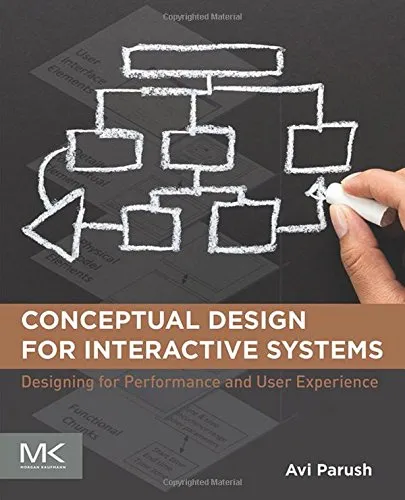
- Published Year: 2015
- Page count: 147
- File Size: 20 MB
- Language: English
- Published by: Morgan Kaufmann
- Visited by: 237
- Rating/Review: 4.5
-
ISBN:
0124199690
9780124199699
Keywords:
Conceptual Design for Interactive Systems: Designing for Performance and User Experience
4.5
Reviews from our users

You Can Ask your questions from this book's AI after Login
Each download or ask from book AI costs 2 points. To earn more free points, please visit the Points Guide Page and complete some valuable actions.



Introduction to "Conceptual Design for Interactive Systems: Designing for Performance and User Experience"
"Conceptual Design for Interactive Systems: Designing for Performance and User Experience" is a comprehensive guide for professionals and students who are passionate about creating user-centric interactive systems. Through clear explanations, real-world examples, and actionable techniques, this book bridges the gap between theoretical knowledge and practical design principles, offering invaluable insights on creating systems that deliver both exceptional performance and outstanding user experiences.
In today’s fast-paced digital environment, the success of any interactive system hinges on its ability to meet users' expectations and deliver tangible value. This book takes a conceptual approach, helping designers, developers, and UX practitioners rethink their design processes and prioritize the users' needs from the outset. It emphasizes the importance of striking a balance between usability, accessibility, and performance to deliver interactive systems that stand out in a competitive marketplace.
Detailed Summary of the Book
The book is structured around a solid framework for understanding and implementing conceptual design in interactive systems. It begins by introducing the fundamental principles of conceptual design, emphasizing the importance of clarity and consistency in user interactions. Readers will find an in-depth discussion of the role that mental models play in informing design decisions. The book underscores the significance of aligning a system's design with users' mental models to create intuitive and user-friendly interfaces.
Moving beyond principles, there is a detailed exploration of the iterative design process. Topics such as user research, scenario development, prototyping, and usability testing are covered comprehensively. These techniques help designers validate their decisions and build systems that evolve with users' needs. Additionally, the book discusses how to balance competing requirements, such as performance optimization and aesthetics, without compromising user experience.
The latter sections of the book tackle advanced topics, including designing for diverse user populations, adaptive systems, and the integration of emerging technologies. It's not just about the "how" of designing systems but also the "why," providing a critical lens to evaluate and improve design processes at every stage.
Key Takeaways
- Understand the foundations of conceptual design and its role in creating intuitive interactive systems.
- Learn to align design with users' mental models to enhance usability and satisfaction.
- Master iterative design techniques, including user research, prototyping, and usability testing.
- Explore strategies for improving system performance while maintaining accessibility and aesthetics.
- Gain insights into designing for diverse populations and incorporating adaptive features into systems.
- Discover how emerging technologies can enhance user experience and generate new opportunities in design.
Famous Quotes from the Book
"The success of an interactive system lies not in its complexity but in its ability to make the complex appear simple to its users."
"Good design begins with a deep understanding of users’ mental models and ends with systems that adapt to their needs without forcing them to adapt to ours."
"A seamless user experience is the intersection of great design and powerful performance — one cannot exist without the other."
Why This Book Matters
In a world where technology constantly evolves, creating systems that resonate with users has never been more critical. This book matters because it provides the tools and frameworks needed to design interactive systems that not only perform efficiently but also delight users. It goes beyond surface-level aesthetics, focusing on the deeper aspects of interaction design, such as usability, accessibility, and adaptability.
Designers and developers often face challenges when balancing user expectations and technological constraints. This book equips them with the knowledge to navigate these challenges effectively and create systems that are not only innovative but also meaningful. Furthermore, its emphasis on iteration and feedback ensures that the solutions remain relevant in dynamically changing contexts.
Whether you are an experienced professional or a newcomer to interaction design, "Conceptual Design for Interactive Systems" offers valuable insights that will inspire and empower you to create systems that truly make a difference in users' lives.
Free Direct Download
You Can Download this book after Login
Accessing books through legal platforms and public libraries not only supports the rights of authors and publishers but also contributes to the sustainability of reading culture. Before downloading, please take a moment to consider these options.
Find this book on other platforms:
WorldCat helps you find books in libraries worldwide.
See ratings, reviews, and discussions on Goodreads.
Find and buy rare or used books on AbeBooks.

1237
بازدید4.5
امتیاز0
نظر98%
رضایتReviews:
4.5
Based on 0 users review
Questions & Answers
Ask questions about this book or help others by answering
No questions yet. Be the first to ask!