- Published Year: 2024
- Page count: 106
- File Size: 3 MB
- Language: English
- Published by: CFA Institute Research Foundation
- Visited by: 63
- Rating/Review: 4.6
- ISBN: 9781952927393; 1952927390
Keywords:
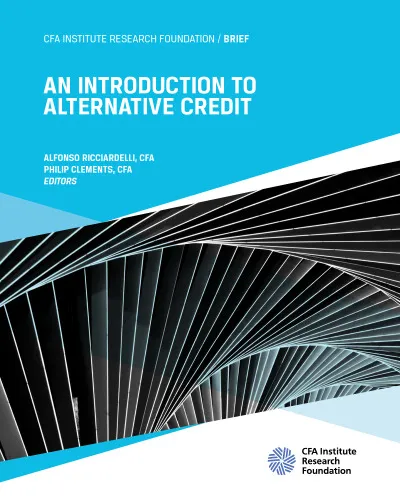
An Introduction to Alternative Credit
4.6
Reviews from our users

You Can Ask your questions from this book's AI after Login
Each download or ask from book AI costs 2 points. To earn more free points, please visit the Points Guide Page and complete some valuable actions.









Analytical Summary
An Introduction to Alternative Credit provides an authoritative examination of the evolving landscape of non-traditional credit markets. Authored by Alfonso Ricciardeli, CFA, and Philip Clements, CFA, this work bridges rigorous financial theory with practical market insights, offering a clear guide for professionals, academics, and serious investors eager to understand opportunities and risks beyond conventional lending channels.
The book’s analytical core focuses on the mechanisms, structures, and instruments that define alternative credit: private debt funds, securitized credit products, peer-to-peer lending systems, and direct corporate financing outside the banking sector. It explores how these instruments respond to economic cycles, regulatory frameworks, and investor demand for yield in low-rate environments.
Through a balanced blend of case studies, market data, and conceptual analysis, the authors map out the historical evolution of alternative credit while anticipating its future trajectory. Special emphasis is given to the importance of due diligence, risk modeling, and diversification—critical competencies for participants seeking strong risk-adjusted returns in opaque or illiquid markets.
While specialized, the narrative remains accessible to readers with a foundational knowledge of finance. Industry terminology is demystified, ensuring that both early-career analysts and experienced portfolio managers can engage with the material meaningfully.
Key Takeaways
This book distills complex concepts into actionable knowledge for practitioners and scholars alike. The following insights stand out as central pillars of An Introduction to Alternative Credit.
Alternative credit markets expand access to capital, enhance portfolio diversification, and offer potential for higher yields, but they demand heightened attention to credit quality assessment and liquidity risk.
Regulatory landscapes significantly influence the structuring and accessibility of non-bank lending products, with investor protections varying by jurisdiction and product type.
Macroeconomic dynamics—such as interest rate trends, inflationary pressures, and sector-specific growth—play decisive roles in shaping opportunity sets and risk profiles in the private debt market.
Robust quantitative and qualitative due diligence processes are indispensable for identifying mispriced risk and for avoiding pitfalls common to opaque market segments.
Information unavailable for metrics such as exact publication year or any awards, due to no reliable public source; however, the analytical framework presented remains timeless in application.
Memorable Quotes
"In alternative credit markets, transparency is earned, not given." Unknown
"Liquidity is a luxury in private debt—price it accordingly." Unknown
"Understanding the borrower’s business model is as vital as analyzing the balance sheet." Unknown
Why This Book Matters
In a financial landscape increasingly shaped by innovation and regulatory shifts, An Introduction to Alternative Credit serves as a compass for navigating opaque, high-opportunity markets.
Whether you are a fund manager seeking diversification beyond syndicated loans, an academic researching evolving credit mechanisms, or a policymaker aiming to understand systemic implications, this book offers a synthesized view of theory and practice. It strengthens the reader’s capacity to participate intelligently in markets that remain underrepresented in mainstream discourse.
Its contribution lies not in speculative forecasts, but in equipping readers with frameworks and tools for rigorous analysis. In doing so, Ricciardeli and Clements advance the conversation about alternative credit from niche curiosity to indispensable portfolio component.
Inspiring Conclusion
An Introduction to Alternative Credit is more than a guide—it is an invitation to explore the breadth and depth of financial innovation beyond traditional banking.
By combining analytical rigor with practical perspectives, the book empowers readers to identify and execute informed strategies in private debt and non-bank lending arenas. It encourages the cultivation of a disciplined yet agile investment mindset capable of navigating change with confidence.
Readers are urged to delve into its pages, share its insights with colleagues, and engage in discussions that challenge and refine their understanding of alternative credit. The next step is yours—read, reflect, and take part in shaping the future of credit markets.
Free Direct Download
You Can Download this book after Login
Accessing books through legal platforms and public libraries not only supports the rights of authors and publishers but also contributes to the sustainability of reading culture. Before downloading, please take a moment to consider these options.
Find this book on other platforms:
WorldCat helps you find books in libraries worldwide.
See ratings, reviews, and discussions on Goodreads.
Find and buy rare or used books on AbeBooks.

1063
بازدید4.6
امتیاز0
نظر98%
رضایتReviews:
4.6
Based on 0 users review
Questions & Answers
Ask questions about this book or help others by answering
No questions yet. Be the first to ask!