

DNA Microarrays and Related Genomics Techniques: Design, Analysis, and Interpretation of Experiments (Biostatistics)
David B. Allison (Editor),Grier P. Page (Editor),T. Mark Beasley (Editor),Jode W. Edwards (Editor
2005
View book
Book guide and evaluation
Picon,Antoine
0 reviews
Published
pages
views
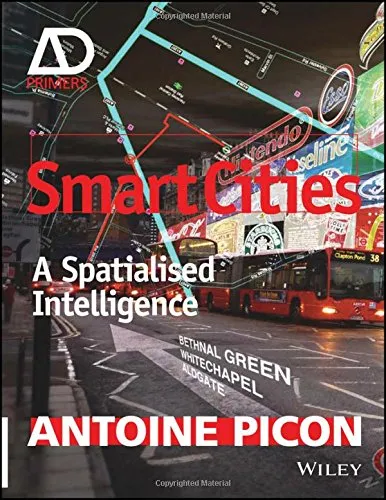
Introduction In an era where urban landscapes are increasingly intertwined with digital technology, the concept of "Smart Cities" emerges as a focal point for discussions surrounding innovation, sustainability, and urban development. "Smart Cities: A Spatialised Intellig
Before you read
In an era where urban landscapes are increasingly intertwined with digital technology, the concept of "Smart Cities" emerges as a focal point for discussions surrounding innovation, sustainability, and urban development. "Smart Cities: A Spatialised Intelligence" delves into the multifaceted nature of these evolving ecosystems, examining the technological, social, and economic dimensions that define them. Authored by Antoine Picon, this book offers a comprehensive exploration of how digital advancements are reshaping our cities, communities, and lives.
The book is structured around the pivotal idea of urban intelligence that is not merely digital but spatialized and embedded in the environmental and societal fabric of cities. Antoine Picon explores how digital technologies and data analytics are being deployed to enhance city life, from transportation and infrastructure to the everyday experiences of city inhabitants. The narrative guides readers through a historical context, comparing previous technological integrations in urban settings with today's digital breakthroughs. Discussions also consider the ethical implications and challenges that arise, such as privacy concerns, digital divides, and the potential loss of human agency.
One of the key arguments presented is the necessity of moving beyond seeing smart cities merely as high-tech constructs. Instead, Picon argues for recognizing the complexity and richness of urban life, where technology serves to enhance existing human dynamics rather than replace them. Through diverse case studies and examples, the book examines various models of smart cities around the globe, providing insights into their successes and limitations.
"In the dance of urban life, technology must act as the music that enhances rhythm, not the spotlight that blinds the dancers."
"A truly smart city recognizes the intelligence of its citizens, not just its sensors."
"Smart Cities: A Spatialised Intelligence" is a seminal contribution to the discourse on urban development and digital transformation. It provides a balanced perspective that acknowledges both the potential and the limitations of smart city initiatives. By foregrounding the concept of spatialized intelligence, Picon challenges readers to rethink the role of technology in society, emphasizing that true progress comes from integrating technological advancements with the human and cultural elements of urban life.
The book stands out for its holistic approach, offering not just technical insights but also cultural, ethical, and philosophical reflections. It serves as a critical resource for policymakers, urban planners, technologists, and anyone interested in the future of cities. As cities around the world continue to grow and evolve, understanding the nuances of smart city development is increasingly essential. This book equips its readers with the knowledge and frameworks needed to navigate this complex landscape and to participate meaningfully in crafting the cities of tomorrow.
Your question is answered in the context of this title and author. Each answer uses 2 points.
0 reviews, 4.0 average out of 5
Sign in to publish a review.
Ask a focused question and learn from the community.
Related references that continue this learning path.
David B. Allison (Editor),Grier P. Page (Editor),T. Mark Beasley (Editor),Jode W. Edwards (Editor
Frank C. Hoppensteadt,Charles S. Peskin (auth.)

Howard R. Moskowitz PhD,Sebastiano Porretta,Matthias Silcher