

DNA Microarrays and Related Genomics Techniques: Design, Analysis, and Interpretation of Experiments (Biostatistics)
David B. Allison (Editor),Grier P. Page (Editor),T. Mark Beasley (Editor),Jode W. Edwards (Editor
2005
View book
Book guide and evaluation
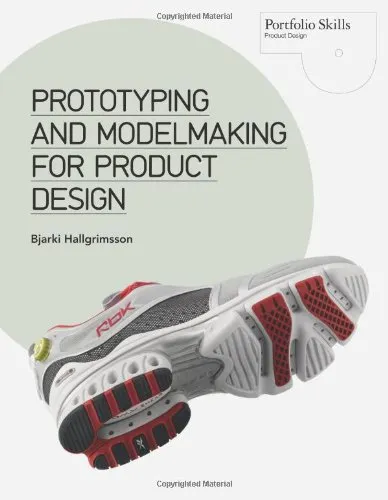
Bjarki Hallgrimsson
0 reviews
Published
pages
views
Introduction to "Prototyping and Modelmaking for Product Design" "Prototyping and Modelmaking for Product Design" is an essential guide for aspiring product designers, design students, and professionals navigating the intricate world of prototyping and physical model creatio
Before you read
"Prototyping and Modelmaking for Product Design" is an essential guide for aspiring product designers, design students, and professionals navigating the intricate world of prototyping and physical model creation. Written by Bjarki Hallgrimsson, this book is a cornerstone of practical knowledge and inspiration, bridging the gap between creative concepts and physical reality. Through rich content, hands-on examples, and expert advice, it explores the core practices of prototyping, detailing how these techniques fuel innovation and contribute to the development of effective and user-centered designs.
Hallgrimsson emphasizes the value of iterative processes, applying diverse tools, materials, and methods to create prototypes that communicate and test ideas effectively. This comprehensive book covers topics ranging from basic materials and tools to advanced technologies like CNC machining and CAD-integrated systems. Whether you're creating rough sketches of your product idea or striving for high-fidelity models, this book walks you through every stage of the prototyping journey.
"Prototyping and Modelmaking for Product Design" serves as a detailed roadmap for mastering the art of transforming concepts into tangible prototypes. The book opens by discussing the importance of prototyping in design processes, focusing on its role in ideation, communication, and testing. Hallgrimsson identifies key stages in model-making, from conceptual exploration to detailed refinement, ensuring that readers understand the impact of each stage on the final outcome.
Divided into clear sections, the author explores the use of traditional craftsmanship techniques alongside modern technologies like 3D printing, laser cutting, and computer-aided design (CAD). Practical advice on selecting the right materials—be it foam, plastic, wood, or metal—pairs with instructions on tools and techniques to make product representations as accurate and functional as possible. The book also discusses different levels of fidelity (low, medium, and high), giving a clear direction on when to use specific prototyping methods effectively.
Through real-world examples, case studies, and insights from Hallgrimsson's own experiences in industrial design, readers gain actionable tips for refining their designs, solving problems creatively, and developing prototypes that help present their ideas persuasively. The result is a highly practical guide for bringing original product designs to life.
"A prototype is not just a finished model; it is an active thought process, continually evolving as design problems and ideas surface."
"The beauty of prototyping lies in its ability to make the invisible visible, turning abstract concepts into tangible forms."
"Good prototyping is not about perfection but about progress and the capacity to learn and adapt."
"Prototyping and Modelmaking for Product Design" provides a critical foundation for anyone involved in the design process. It acknowledges that great designs often stem from trial, error, and iteration—conceptual ideas must be tested against practical realities before they can become successful products. This book equips designers with the skills and confidence to visualize, test, and refine their ideas in a structured way, ultimately leading to more user-centered and robust designs.
In today's fast-paced, technology-driven world, prototyping skills offer a competitive edge. As digital manufacturing and rapid prototyping processes become increasingly common, understanding how and when to apply these tools is indispensable. Hallgrimsson’s work addresses this need by offering a perfectly balanced mix of traditional and cutting-edge insights. For students and practitioners alike, this book opens the door to more innovative designs and a deeper understanding of the hands-on creation process.
Ultimately, this book inspires its readers to embrace prototyping as both an art and a science—a crucial stage where imagination meets reality, bringing designs into the physical world to be tested, critiqued, and refined for success.
Your question is answered in the context of this title and author. Each answer uses 2 points.
0 reviews, 4.4 average out of 5
Sign in to publish a review.
Ask a focused question and learn from the community.
Related references that continue this learning path.
David B. Allison (Editor),Grier P. Page (Editor),T. Mark Beasley (Editor),Jode W. Edwards (Editor

Frank C. Hoppensteadt,Charles S. Peskin (auth.)

Howard R. Moskowitz PhD,Sebastiano Porretta,Matthias Silcher