
DNA Microarrays and Related Genomics Techniques: Design, Analysis, and Interpretation of Experiments (Biostatistics)
David B. Allison (Editor),Grier P. Page (Editor),T. Mark Beasley (Editor),Jode W. Edwards (Editor
2005
View book
Book guide and evaluation
Ernest E. Ludwig (Eds.)
0 reviews
Published
pages
views
Introduction The book "Emphasizes How to Apply Techniques of Process Design and Interpret Results into Mechanical Equipment Details" serves as an essential guide for both beginners and experienced engineers in the fields of process design and mechanical engineering. With
Before you read
The book "Emphasizes How to Apply Techniques of Process Design and Interpret Results into Mechanical Equipment Details" serves as an essential guide for both beginners and experienced engineers in the fields of process design and mechanical engineering. With a focus on the seamless integration of theoretical concepts with practical application, this book is a valuable resource for those aiming to master the art of converting process requirements into detailed mechanical specifications.
The book is structured to provide a comprehensive view of how process design principles apply to the development and specification of mechanical equipment. Beginning with foundational theories, it walks the reader through a step-by-step process of understanding and applying various design techniques to meet real-world industrial needs.
In subsequent chapters, the book delves into specific case studies, illustrating the transformation of initial design concepts into detailed mechanical schematics. Each step is accompanied by practical insights and illustrative examples that reinforce the reader's understanding of complex concepts.
Furthermore, the book highlights the importance of interdisciplinary collaboration between process designers and mechanical engineers, stressing how this synergy enhances innovation and efficiency in equipment design.
Readers can expect to gain:
“Design is where science and art break even.”
“The most reliable way to predict the future is to understand how designs shape it.”
This book is pivotal for anyone involved in the fields of process design and mechanical engineering for several reasons. First, it bridges the gap between theoretical education and practical application, serving as a critical resource for those transitioning from academia to industry. Its focus on real-world applications makes it indispensable for professionals seeking to enhance their careers and contribute meaningfully to their fields.
Moreover, the book's emphasis on cross-disciplinary collaboration not only cultivates a richer understanding of engineering design but also encourages a culture of innovation and teamwork. By imparting a structured methodology for transforming design concepts into mechanical details, it provides a roadmap for success in projects that demand accuracy and efficiency.
Lastly, this book stands out as a comprehensive and respected source of industry knowledge, its insights penned by experienced professionals with years of expertise. Its teachings are not just academically sound but also practically viable and universally recognized as best practices in mechanical equipment design.
Your question is answered in the context of this title and author. Each answer uses 2 points.
0 reviews, 4.3 average out of 5
Sign in to publish a review.
Ask a focused question and learn from the community.
Related references that continue this learning path.
David B. Allison (Editor),Grier P. Page (Editor),T. Mark Beasley (Editor),Jode W. Edwards (Editor
Frank C. Hoppensteadt,Charles S. Peskin (auth.)
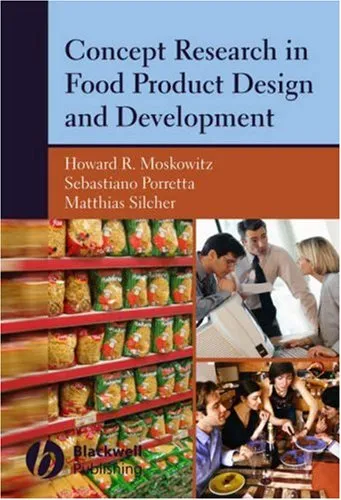
Howard R. Moskowitz PhD,Sebastiano Porretta,Matthias Silcher