
DNA Microarrays and Related Genomics Techniques: Design, Analysis, and Interpretation of Experiments (Biostatistics)
David B. Allison (Editor),Grier P. Page (Editor),T. Mark Beasley (Editor),Jode W. Edwards (Editor
2005
View book
Book guide and evaluation
S. K. Ong
0 reviews
Published
pages
views
Introduction to 'Design Reuse in Product Development: Modeling, Analysis and Optimization' In an era where innovation drives competitiveness and efficiency defines success, the importance of design reuse in product development has surged to the forefront. Thi
Before you read
In an era where innovation drives competitiveness and efficiency defines success, the importance of design reuse in product development has surged to the forefront. This book, "Design Reuse in Product Development: Modeling, Analysis and Optimization," seeks to empower professionals, researchers, and students in product design and engineering by offering a structured framework to maximize design efficiency through reuse. Drawing upon years of research and practical insights, the book delves into the challenges, strategies, and benefits of reusing design assets to accelerate product development while maintaining quality and reducing costs.
Whether you’re grappling with the intricacies of modular product architecture, navigating the complexities of design optimization, or simply searching for ways to save resources in product development, this book provides a comprehensive guide to achieving success. The content combines theoretical modeling with practical applications, making it equally valuable for academic researchers and industry practitioners. Throughout this introduction, we’ll explore the core aspects of the book and why it is a must-read for anyone in the field of design engineering.
"Design Reuse in Product Development: Modeling, Analysis and Optimization" is structured to guide readers systematically from foundational concepts to advanced practices. It begins by defining design reuse and explaining its significance in modern product development. The text pays special attention to how reuse aids in reducing development time and costs, aiding companies in bringing high-quality products to market faster.
The book explores various modeling techniques and analytical methods that enable the identification and extraction of reusable components. It also introduces optimization strategies to improve the utility of reusable designs. Case studies bring the theories to life, showcasing real-world examples of successful design reuse in industries such as automotive, aerospace, and consumer electronics.
By the end of the book, readers develop an in-depth understanding of essential topics, such as modular design, design for manufacturability and assembly (DFMA), lifecycle analysis, and optimization algorithms tailored for reuse. The book also discusses emerging technologies like artificial intelligence and their potential roles in facilitating automated design reuse.
"The art of design reuse is not merely in the repetition of components but in their intelligent reinvention to meet evolving needs."
"Optimization is not a quest for perfection but the pursuit of balance between innovation, cost, and efficiency."
This book matters because it addresses one of the most pressing challenges in contemporary product design: how to innovate while being cost-efficient and resource-conscious. As industries evolve and become more competitive, the ability to reuse and optimize designs becomes a significant differentiator. Not only does the book offer practical strategies for achieving this, but it also emphasizes a broader cultural shift towards thinking systematically about reuse and efficiency.
Additionally, the book plays a significant role in bridging the gap between theory and application. By combining rigorous academic research with actionable insights and real-world case studies, it provides tools and knowledge that are immediately applicable. This makes it a valuable resource for both students pursuing design and engineering degrees as well as experienced professionals in the industry.
Ultimately, "Design Reuse in Product Development: Modeling, Analysis and Optimization" provides a transformative perspective on how to achieve sustainability and efficiency in product design. It lays the foundation for innovation that is smarter, faster, and more resource-conscious—qualities essential for success in the modern industrial landscape.
Your question is answered in the context of this title and author. Each answer uses 2 points.
0 reviews, 4.4 average out of 5
Sign in to publish a review.
Ask a focused question and learn from the community.
Related references that continue this learning path.
David B. Allison (Editor),Grier P. Page (Editor),T. Mark Beasley (Editor),Jode W. Edwards (Editor
Frank C. Hoppensteadt,Charles S. Peskin (auth.)
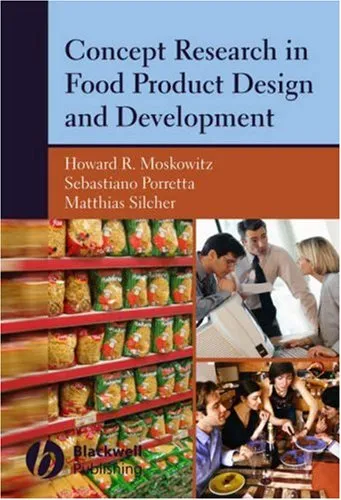
Howard R. Moskowitz PhD,Sebastiano Porretta,Matthias Silcher