

Discover references
UI/UX
UI/UX Design for Online Book Stores
User Interface (UI) and User Experience (UX) play crucial roles in the success of digital platforms, including online book stores like Refhub.ir. This realm of design focuses on enhancing user satisfaction by improving accessibility, usability, and the interaction between the user and the product.
Understanding UI/UX
The concept of UI/UX design centers on crafting intuitive and aesthetically pleasing interfaces that facilitate a seamless user journey. In the context of an online book store, the effectiveness of this design can directly impact the user’s ability to find, access, and purchase literature efficiently.
Key Components of UI in Online Book Stores
UI design involves the overall visual styling of an application or website. Key components of UI in an online book store include:
- Color Schemes: An appropriate color palette is essential for attracting users and retaining their interest as they browse the book collection.
- Typography: Choosing the right fonts enhances readability and contributes to the aesthetic value of the site.
- Navigation: Easy-to-use navigation systems ensure users can quickly find the information or products they are seeking.
- Interactive Elements: Interactive elements such as buttons, sliders, and drop-down menus should be easy to understand and use.
Significance of UX in Online Book Stores
UX design focuses on the total experience a user has while interacting with a website or app. Its significance in an online book store includes:
- User Flow: Creating a logical flow that guides users through the store, making it easy for them to browse categories, find specific books, view recommendations, and ultimately make a purchase.
- Usability Testing: Regular testing with real users to gather insights and identify potential pain points in the book browsing and purchasing process.
- Accessibility: Designing the platform to be accessible for users of all abilities, ensuring compliance with web accessibility standards.
- Feedback Mechanisms: Incorporating customer feedback tools helps refine the experience continuously based on user input.
Best Practices in UI/UX for Online Book Stores
Adopting best practices in UI/UX can significantly enhance user engagement and conversion rates in online book stores:
- Responsive Design: Ensure the book store is mobile-friendly, adapting smoothly to different screen sizes and orientations to provide an optimal viewing experience across all devices.
- Consistent Layouts: Maintain consistency in design elements to help users feel comfortable and familiar as they navigate through various sections of the store.
- Personalization: Use algorithms to suggest books based on user preferences and browsing history, offering a personalized shopping experience.
- Loading Speed: Optimize website performance to reduce loading times, ensuring a quick and efficient shopping experience.
Future Trends in UI/UX for Online Book Stores
As technology evolves, so will the strategies for UI/UX design on platforms like Refhub.ir. Future trends may include:
- Voice User Interfaces: Integrating voice search capabilities to enhance accessibility and convenience for users.
- Artificial Intelligence: Increasing the use of AI for personalized recommendations, providing users with a tailored browsing experience.
- Virtual and Augmented Reality: Implementing immersive experiences that allow users to engage with books in new and interactive ways.
In conclusion, effective UI/UX design is fundamental to the success of an online book store. By prioritizing the user’s needs and continually adapting to new design trends, Refhub.ir can create a compelling digital environment that engages users and encourages them to explore, discover, and purchase books with ease.
Explore within this subject
Books
97 results

English
Unordered
Engineering Interactive Systems: EIS 2007 Joint Working Conferences, EHCI 2007, DSV-IS 2007, HCSE 2007, Salamanca, Spain, March 22-24, 2007. Selected Papers
Nikola Mitrović,Jose A. Royo,Eduardo Mena (auth.),Jan Gulliksen,Morton Borup Harning,Philippe Palanque,Gerrit C. van der Veer,Janet Wesson (eds.)
2008
View book

English
Unordered
Universal Principles of Design, Revised and Updated: 125 Ways to Enhance Usability, Influence Perception, Increase Appeal, Make Better Design Decisions, and Teach through Design
William Lidwell,Kritina Holden,Jill Butler
2010
View book

English
Unordered
Designing with the Mind in Mind, Second Edition Simple Guide to Understanding User Interface Design Guidelines
Jeff Johnson (A
2014
View book

English
Unordered
Advances in Physical Ergonomics and Human Factors: Proceedings of the AHFE 2019 International Conference on Physical Ergonomics and Human Factors, July 24-28, 2019, Washington D.C., USA
Ravindra S. Goonetilleke,Waldemar Karwowski
2020
View book


English
Unordered
The Definitive Guide to DAX: Business intelligence with Microsoft Excel, SQL Server Analysis Services, and Power BI
Alberto Ferrari,Marco Russo
2015
View book
English
Unordered
Integrating Usability Engineering for Designing the Web Experience: Methodologies and Principles
Tasos Spiliotopoulos,Tasos Spiliotopoulos,Panagiota Papadopoulou,Drakoulis Martakos,Georgios Kouroupetroglou
2010
View book

English
Beginner
State of the Art in Deep Geothermal Energy in Europe: With Focus on Direct Heating
Johanna Fink,Elisa Heim,Norbert Klitzsch
2022
View book
English
Beginner
Building Design Systems: Unify User Experiences through a Shared Design Language
Sarrah Vesselov,Taurie Davis
2019
View book

English
Unordered
The UX Book: Agile UX Design for a Quality User Experience
Rex Hartson,Pardha S. Pyla
2018
View book


English
Unordered
HCI in Work and Learning, Life and Leisure: 6th Symposium of the Workgroup Human-Computer Interaction and Usability Engineering, USAB 2010, Klagenfurt, Austria, November 4-5, 2010. Proceedings
Eva Mayr,Michael Smuc,Hanna Risku,Wolfgang Aigner,Alessio Bertone,Tim Lammarsch (auth.),Gerhard Leitner,Martin Hitz,Andreas Holzinger (eds.)
2010
View book
English
Unordered
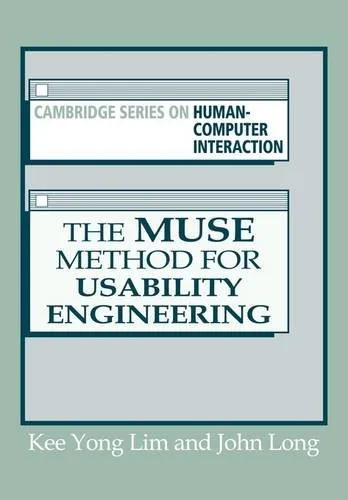
The Muse Method for Usability Engineering
Kee Yong Lim,John B. Long
2009
View book

English
Unordered
Interactive Systems Design, Specification, and Verification: 7th International Workshop, DSV-IS 2000 Limerick, Ireland, June 5–6, 2000 Revised Papers
Timothy N. Wright,T. C. Nicholas Graham,Tore Urnes (auth.),Philippe Palanque,Fabio Paternò (eds.)
2001
View book