
When things fall apart: Qualitative Studies of Poverty in the Former Soviet Union
Dudwick Nora,Comart Elisabeth,Marc Alexandre
2003
View book
Book guide and evaluation
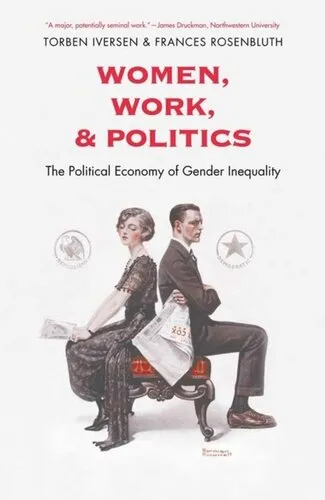
Torben Iversen;Frances McCall Rosenbluth
0 reviews
Published
pages
views
Welcome to the analytical journey through the intricate landscape of gender inequality with the book "Women, Work, and Politics: The Political Economy of Gender Inequality" authored by Torben Iversen and Frances McCall Rosenbluth. This book delves into the political a
Before you read
Welcome to the analytical journey through the intricate landscape of gender inequality with the book "Women, Work, and Politics: The Political Economy of Gender Inequality" authored by Torben Iversen and Frances McCall Rosenbluth. This book delves into the political and economic dimensions of gender disparities, exploring how societal norms, policies, and economic realities shape the lives and roles of women across different cultures and economies.
The book "Women, Work, and Politics" provides a thorough examination of the structural and institutional factors that contribute to gender inequality. By integrating political economy and gender studies, Iversen and Rosenbluth offer a comprehensive insight into how political institutions, economic incentives, and social norms interplay to influence women's roles in the labor market and politics. The authors argue that understanding the political economy is crucial for diagnosing the persistent gender gap, and they provide a global perspective by comparing different countries, thereby uncovering varied institutional arrangements and their impacts on gender inequality. This book dissects the machinations behind labor markets, family dynamics, and political participation, proposing that these elements together can perpetuate or reduce gender inequality.
The book presents several key takeaways that resonate with policymakers, scholars, and readers interested in gender studies:
"To change the political landscape of gender inequality, we must first understand the economic incentives and institutional structures that sustain it."
"The intersections of politics, economy, and gender reveal a complex tapestry of power dynamics and social expectations that shape women's lives."
This book is pivotal for several reasons. It breaks down complex economic and political systems to illuminate the root causes of gender inequality, offering a unique synthesis that is both scholarly and accessible. By focusing on a comparative international approach, it debunks the one-size-fits-all narrative, acknowledging that gender inequality manifests differently across cultures and economies. The book empowers readers with knowledge that can drive informed debates and foster progressive policy changes. It is an essential read for anyone committed to understanding and dismantling the barriers that women face in achieving equal representation and participation in society.
Your question is answered in the context of this title and author. Each answer uses 2 points.
0 reviews, 4.0 average out of 5
Sign in to publish a review.
Ask a focused question and learn from the community.
Related references that continue this learning path.
Dudwick Nora,Comart Elisabeth,Marc Alexandre

Simon J. Bronner