The Principia. Preceded by a guide to Newton's Principia by I. Bernard Cohen: mathematical principles of natural philosophy
Cohen, Ierome Bernard;Whitman, Anne;Newton, Isaac
1999
View book
Book guide and evaluation
Fritjof Capra
0 reviews
Published
pages
views
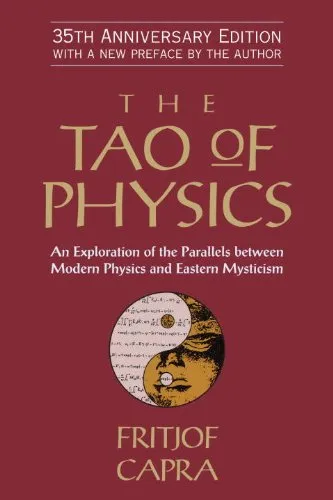
Introduction to 'The Tao of Physics' Fritjof Capra's 'The Tao of Physics: An Exploration Of the Parallels between Modern Physics and Eastern Mysticism' is a groundbreaking work that synthesizes the complex realms of quantum physics and ancient Eastern philosoph
Before you read
Fritjof Capra's 'The Tao of Physics: An Exploration Of the Parallels between Modern Physics and Eastern Mysticism' is a groundbreaking work that synthesizes the complex realms of quantum physics and ancient Eastern philosophy. First published in 1975, this book traverses the seemingly disparate disciplines, offering profound insights into the interconnectedness of all things.
In 'The Tao of Physics', Capra embarks on an intellectual journey to illustrate how the mysticism of Hinduism, Buddhism, and Taoism aligns with the principles of modern physics. The book argues that both fields ultimately seek to describe reality's underlying unity. Capra explores how the discoveries in quantum physics, like the indeterminate nature of subatomic particles and the concept of energy fields, align closely with the way Eastern philosophies perceive the world. The narrative is deeply philosophical yet remains accessible, balancing scientific accuracy with the poetic allure of mysticism.
Capra's examination is divided into several sections. Initially, he provides a historical overview of Western science before discussing fundamental concepts of quantum mechanics. He then introduces readers to Eastern mystical traditions, drawing parallel concepts such as meditation and the interconnectedness of nature. Rather than viewing science and spirituality as mutually exclusive, Capra presents them as complementary frameworks for understanding the universe. This synthesis points towards a holistic view of life, promoting mindfulness and ecological equilibrium.
"Science does not need mysticism and mysticism does not need science; but man needs both."
"The Tao of physics is not a journey, but rather a method for seeing nature with new eyes."
"Modern physics has shown us that matter is completely mutable, just as Buddha and the early sages of India and China declared."
'The Tao of Physics' stands as a classic work, fostering dialogue between science and spirituality. Its significance is underscored by its influence on both scientific and philosophical communities. In an era marked by technological advancements and environmental challenges, Capra's work calls for a reconnection with the wisdom of traditional cultures. By illuminating the bridge between Western and Eastern thought, it encourages a comprehensive approach to understanding the universe and our place within it. This book matters not only for its philosophical insights but also for advocating a sustainable worldview that is vital for contemporary society.
Your question is answered in the context of this title and author. Each answer uses 2 points.
0 reviews, 4.5 average out of 5
Sign in to publish a review.
Ask a focused question and learn from the community.
Related references that continue this learning path.
Cohen, Ierome Bernard;Whitman, Anne;Newton, Isaac
Giovanna Corsi,Maria Luisa Dalla Chiara,Gian Carlo Ghirardi (Editors)