
The Principia. Preceded by a guide to Newton's Principia by I. Bernard Cohen: mathematical principles of natural philosophy
Cohen, Ierome Bernard;Whitman, Anne;Newton, Isaac
1999
View book
Book guide and evaluation
Patrick A. Heelan
0 reviews
Published
pages
views
Introduction to Quantum Mechanics and Objectivity: A Study of the Physical Philosophy of Werner Heisenberg Quantum mechanics represents one of the most sophisticated areas of physics while simultaneously challenging our conventional perceptions of reality and o
Before you read
Quantum mechanics represents one of the most sophisticated areas of physics while simultaneously challenging our conventional perceptions of reality and objectivity. In my book, "Quantum Mechanics and Objectivity: A Study of the Physical Philosophy of Werner Heisenberg," I delve into the intriguing philosophical implications of quantum mechanics as articulated by Werner Heisenberg. My goal is to illuminate Heisenberg's philosophical contributions, exploring his interpretations and how they reshape our understanding of both science and the broader world.
The book offers a comprehensive examination of Werner Heisenberg's philosophical approach to quantum mechanics. It begins with an exploration of the historical context and the revolutionary impact of quantum theory in the early 20th century. Heisenberg's role in the development of matrix mechanics, one of the first formulations of quantum mechanics, serves as a focal point. By analyzing Heisenberg's principle of uncertainty, the book outlines how this principle challenges the classical notions of determinism and predictability.
We discuss Heisenberg's view that the act of observation affects the phenomenon being observed, an idea that has profound ramifications for the concept of objectivity. The text further explores the philosophical aspects of these ideas, particularly in what they suggest about the nature of reality and measurement. Special emphasis is placed on Heisenberg's dialogues with other scholars, such as Niels Bohr, to highlight differing perspectives within the interpretation of quantum mechanics.
Heisenberg's Uncertainty Principle redefines our understanding of the limitations of observation and measurement in quantum physics.
The book underscores the impact of Heisenberg's work on philosophical discussions about reality, determinism, and free will.
Heisenberg's contributions provide a foundation for ongoing debates surrounding the interpretation of quantum mechanics, such as those about 'hidden variables' and the role of the observer.
Here are some of the most profound insights from Heisenberg's work discussed in the book:
"What we observe is not nature itself, but nature exposed to our method of questioning."
"The more precisely the position is determined, the less precisely the momentum is known in this instant, and vice versa."
This book matters not only to those interested in the realm of physics but also to philosophers, historians of science, and anyone intrigued by the philosophical implications of scientific discovery. It bridges the complex worlds of quantum physics and philosophical inquiry, offering a nuanced look at how these fields interact.
By examining Heisenberg's contributions, the book provides readers with a deeper understanding of how quantum mechanics poses fundamental questions about reality and human knowledge. It demonstrates the ongoing relevance of Heisenberg's ideas in today's scientific and philosophical dialogues. Moreover, it invites readers to ponder larger questions about the universe and our place within it, presenting quantum mechanics as a pivotal element of modern thought.
Your question is answered in the context of this title and author. Each answer uses 2 points.
0 reviews, 4.5 average out of 5
Sign in to publish a review.
Ask a focused question and learn from the community.
Related references that continue this learning path.
Cohen, Ierome Bernard;Whitman, Anne;Newton, Isaac
Giovanna Corsi,Maria Luisa Dalla Chiara,Gian Carlo Ghirardi (Editors)
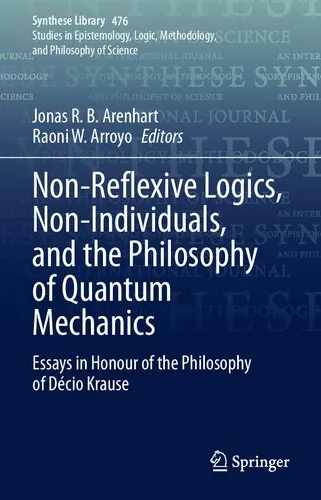
Jonas R. B. Arenhart (editor),Raoni W. Arroyo (editor)