
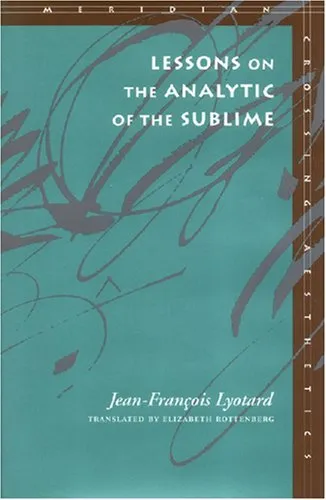
Lessons on the Analytic of the Sublime (Meridian: Crossing Aesthetics)
Jean-Francois Lyotard
1994
View book
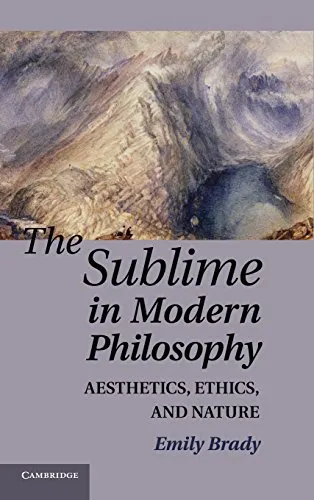
Book guide and evaluation
Emily Brady
0 reviews
Published
pages
views
Welcome to an exploration of the profound interconnections between aesthetics, ethics, and nature as revealed in my book, The Sublime in Modern Philosophy: Aesthetics, Ethics, and Nature. This book traverses the rich philosophical landscape where the concept of the sublime brid
Before you read
Welcome to an exploration of the profound interconnections between aesthetics, ethics, and nature as revealed in my book, The Sublime in Modern Philosophy: Aesthetics, Ethics, and Nature. This book traverses the rich philosophical landscape where the concept of the sublime bridges our perceptions of the beautiful and the overwhelming forces of nature, ethics, and human experience.
The concept of the sublime has captivated thinkers from antiquity to modernity, serving as a nexus for discussions about the limits of human experience, the grandeur of nature, and the unfathomable power of emotion. In The Sublime in Modern Philosophy, I delve into the historical evolution of the sublime, tracing its roots from early classical formulations through the transformative insights of Enlightenment philosophers such as Immanuel Kant and Edmund Burke.
Each chapter of the book unpacks different perspectives on the sublime, beginning with a foundational understanding of its aesthetic dimensions—how grandeur, terror, and magnificence come to transcend normal human experience. I then navigate the moral and ethical implications that emerge when humans confront nature’s vastness and power, exploring how these confrontations shape our ethical responses and duties.
Later chapters focus on the ecological and environmental relevance of the sublime, considering our contemporary engagement with nature and how the sublime can inform and inspire sustainable living and environmental ethics. By revisiting modern philosophy through the lens of the sublime, I aim to reveal its enduring relevance and potential as a tool for addressing current environmental challenges.
“The sublime not only tests the boundaries of human experience but also challenges the imagination to envision a world where human and nature coexist harmoniously.”
“In confronting the overwhelming forces of nature, we find ourselves both humbled and elevated—caught between admiration and our moral responsibilities.”
In our rapidly changing world, where environmental concerns are at the forefront of global discourse, revisiting philosophical ideas that bridge the aesthetic and ethical becomes increasingly vital. The Sublime in Modern Philosophy offers a comprehensive examination of how historical and contemporary interpretations of the sublime can inspire a deeper understanding of our responsibilities to the planet and each other.
This book stands out for its intricate blend of philosophical analysis and practical application, aiming to resonate with scholars, students, and environmentalists alike. By linking aesthetics and ethics, it challenges readers to rethink their interactions with the natural world and adopt more sustainable and conscientious lifestyles. The book underscores the relevance of the sublime as a catalyst for change—inviting us to reflect, appreciate, and act on our shared existence within the tapestry of nature.
Your question is answered in the context of this title and author. Each answer uses 2 points.
0 reviews, 4.5 average out of 5
Sign in to publish a review.
Ask a focused question and learn from the community.
Related references that continue this learning path.
Jean-Francois Lyotard
Edited by Paul Guyer. Contributors: Paul Guyer,Nick Zangwill,Christopher Janaway,Anthony Savile,Eva Schaper,Malcolm Budd,Donald W. Crawford,Brigitte Sassen,Lambert Zuidevaart,Jane Kneller,Peter McLaughlin,Henry E. Allison
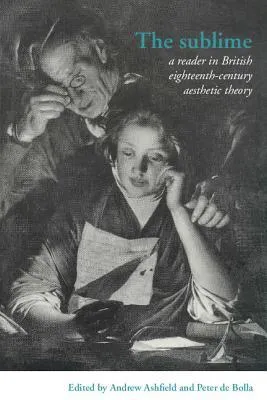
Andrew Ashfield;Peter de Bolla