
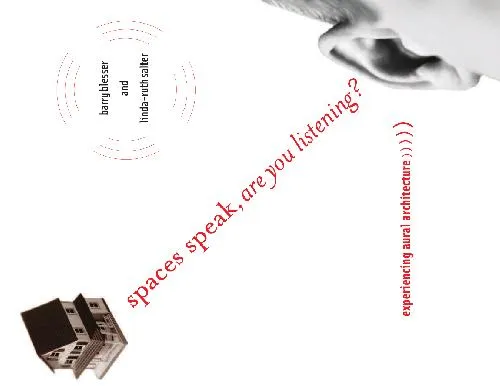
Spaces Speak, Are You Listening?: Experiencing Aural Architecture
Barry Blesser,Linda-Ruth Salter
2006
View book
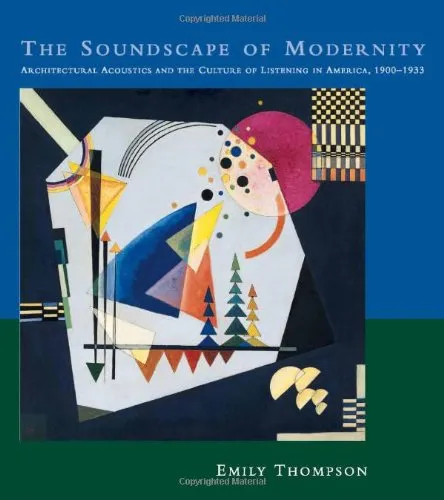
Book guide and evaluation
Emily Thompson
0 reviews
Published
pages
views
Introduction to "The Soundscape of Modernity: Architectural Acoustics and the Culture of Listening in America, 1900-1933" "The Soundscape of Modernity" is a profound exploration of the intersection between sound, architecture, and cultural transformation in early 20th-century
Before you read
"The Soundscape of Modernity" is a profound exploration of the intersection between sound, architecture, and cultural transformation in early 20th-century America. Through meticulous research and eloquent storytelling, this book delves into how modern technologies, architectural advancements, and new cultural perspectives collectively shaped the way people heard and understood the world around them during a pivotal time in history. By examining key figures, spaces, and technologies, the book highlights how changing attitudes toward sound and acoustics influenced modern architecture as well as human perception of the auditory experience.
Within the pages of this book, readers will journey through the fascinating evolution of soundscapes during a transformative period in American history, starting with the emergence of modern architectural acoustics at the turn of the 20th century. It investigates the work of influential architects, acousticians, physicists, and cultural commentators who sought to control, manipulate, and refine the sonic environments in which people lived, worked, and listened. This is a book not only about acoustics but also about the changing ways in which people conceptualized listening, silence, noise, and communication. An essential read for those interested in architecture, cultural history, or audio technology, it reveals sound as a central element in the modern experience.
"The Soundscape of Modernity" provides a detailed investigation of how the built environment and the technology of the early 20th century redefined the auditory experience. The book begins with the development of architectural acoustics as a scientific discipline, especially through the pioneering work of Wallace Sabine, who was instrumental in creating the field of acoustic design. His revolutionary work at Harvard University on computing reverberation times laid the foundation for modern acoustics. The book examines how architects and engineers applied this newfound knowledge to create iconic spaces such as concert halls, theaters, and churches that embodied the cutting-edge sound design of the era.
Moving beyond technical advances, the book explores broader cultural shifts that reframed how society understood sound itself. The rise of industrial noise, the growing popularity of recorded performances, and the development of radio broadcasting all contributed to redefining societal perceptions of sound and silence. In each of these domains, technologies like soundproof materials, electrical amplification, and reverberation control played critical roles.
Throughout the narrative, you'll also find discussions of how spaces like New York’s Radio City Music Hall and Boston's Symphony Hall exemplified the blending of aesthetic ambition and technological innovation. Furthermore, the book places the science of sound within the context of the cultural tensions of the time, including urbanization, modernism, and the search for control over chaotic environments. Ultimately, "The Soundscape of Modernity" reveals the intertwined nature of technology, architecture, and culture, showing that listening is as much shaped by ideology as by science or design.
"Silence, as it was encountered in the concert hall or the modern soundproofed building, was no longer natural silence but instead a silence that had been manipulated, measured, and controlled."
"The soundscape of modernity is not merely a backdrop to history, but a vital element of modern experience itself."
"Architectural acoustics provided a language for controlling sound, but it also influenced the way people understood listening as an act anchored in modern scientific principles."
"The Soundscape of Modernity" offers an invaluable perspective on the historical interplay of architecture, technology, and culture. In an age where sound is often taken for granted, this book reminds us that the auditory environment we occupy is the result of conscious choices and technological advancements. Whether it is the serene stillness of a well-designed concert hall or the cacophony of an urban street, our soundscapes shape both the way we experience the world and the way we think about it.
By connecting the development of acoustic science to broader cultural movements, the book challenges readers to consider how technology affects perception and, in turn, how perception influences culture. It underscores the idea that sound is not neutral; it carries with it ideals, cultural meanings, and power dynamics. This makes the book essential not only for historians of architecture and technology but for anyone curious about the ways in which sound continues to shape modern life.
Your question is answered in the context of this title and author. Each answer uses 2 points.
0 reviews, 4.5 average out of 5
Sign in to publish a review.
Ask a focused question and learn from the community.
Related references that continue this learning path.
Barry Blesser,Linda-Ruth Salter

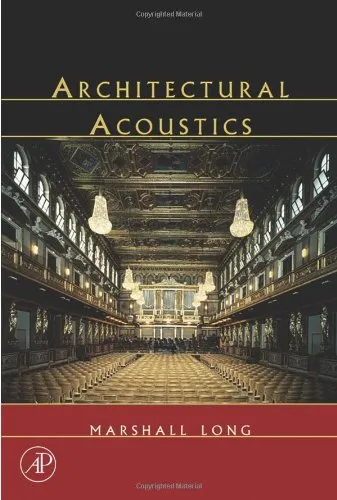
Marshall Long,Moises Levy,Richard Stern