Book guide and evaluation
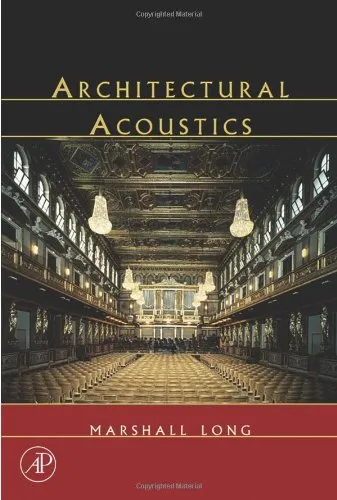
Architectural Acoustics (Applications of Modern Acoustics)
Marshall Long,Moises Levy,Richard Stern
English
Beginner
Engineering
4.5 / 5
0 reviews
2006
Published
873
pages
481
views
Introduction to "Architectural Acoustics (Applications of Modern Acoustics)" Welcome to the world of sound, where physics meets architecture and creativity harmonizes with functionality. Architectural Acoustics (Applications of Modern Acoustics) serves as both a comprehensive
Before you read
What will you get from this book?
Introduction to "Architectural Acoustics (Applications of Modern Acoustics)"
Welcome to the world of sound, where physics meets architecture and creativity harmonizes with functionality. Architectural Acoustics (Applications of Modern Acoustics) serves as both a comprehensive guide and a practical resource for anyone interested in understanding the science and artistry of acoustics in built environments. Whether you're an engineer, architect, student, or simply a curious reader, this book dives deep into the fascinating interplay between sound and structure, making it essential for modern design and urban living.
Written by a team of experts with years of real-world experience, the book covers the core principles and advanced applications of acoustic science in architecture. It is tailor-made for those who acknowledge the importance of sound in our everyday lives, from concert halls to classrooms, recording studios to open-plan offices. Let’s explore why this book is indispensable and what makes it such a benchmark in its field.
Detailed Summary of the Book
At its heart, Architectural Acoustics bridges the gap between highly technical acoustic theory and practical, hands-on implementation for built environments. The book begins by laying the groundwork with foundational concepts in acoustics — sound propagation, frequency, decibels, and room modes. This theoretical base is seamlessly integrated into architectural practice, focusing on how design choices directly influence acoustical outcomes.
One of the strengths of the book is its highly structured approach. It delves into specific topics like sound insulation, reverberation time, speech intelligibility, and acoustic privacy. There is a strong emphasis on performance spaces, such as theaters and auditoriums, while also addressing everyday applications like residential and commercial building design. Using examples and case studies, the authors explain how elements like materials, geometry, and technology can be leveraged to optimize sound quality.
Advanced topics include the use of modern acoustic simulation tools, noise control strategies, HVAC system design for minimal sound impact, and integration of electroacoustic systems. The book rounds out its discussion by examining the environmental impact of noise and sustainable acoustics, making it relevant for the challenges of the 21st century.
Key Takeaways
The book is packed with actionable insights and concepts that readers can immediately apply. Here are some key takeaways:
- Understanding the fundamentals of sound and its behavior in different architectural spaces.
- Practical techniques for optimizing sound insulation and minimizing noise intrusion.
- Strategies for balancing aesthetics and functionality in acoustic design.
- Guidelines for designing spaces with specific acoustic requirements, from high-fidelity concert halls to quiet offices.
- Sustainable approaches to acoustical design, including noise reduction and eco-friendly materials.
Famous Quotes from the Book
"Acoustics is more than just physics; it is the invisible art form that shapes our perception of time, space, and emotion."
"To design with acoustics in mind is not simply to control sound, but to elevate the human experience in its interaction with architecture."
Why This Book Matters
As we move deeper into an age of rapid urbanization and technological development, sound has become a critical component of modern design. Poor acoustics can ruin a live performance, disrupt communication, or even negatively impact mental health. On the flip side, skillful acoustic design enhances functionality, supports cultural expression, and promotes well-being.
Architectural Acoustics stands out because it not only educates but also empowers readers to think critically about the role of sound in shaping human environments. The authors provide a robust framework for addressing real-world challenges, all while fostering innovation in how we design spaces. By combining scientific rigor with artistic sensitivity, the book ensures it will remain a trusted resource for years to come.
Whether you're designing a state-of-the-art performance space, retrofitting an office with noise reduction solutions, or simply curious about acoustics, this book equips you with the tools, knowledge, and inspiration to make sound decisions.
Ask this book
Your question is answered in the context of this title and author. Each answer uses 2 points.
Sign in to ask the book assistant.
Reader reviews
0 reviews, 4.5 average out of 5
No reviews yet
If you have read this book, help the next reader with your experience.
Write a review
Sign in to publish a review.
Reader questions and answers
Ask a focused question and learn from the community.
Sign in to ask or answer a question.
No questions yet
Be the first to ask a clear, useful question.
What to read next
Related references that continue this learning path.
Shaping Climate Friendly Transport in Europe: Key Findings & Future Directions, REACT 2011, Proceedings
Zoran Radmilović,Dragan Čišić (eds.)
2011
View book