Loading
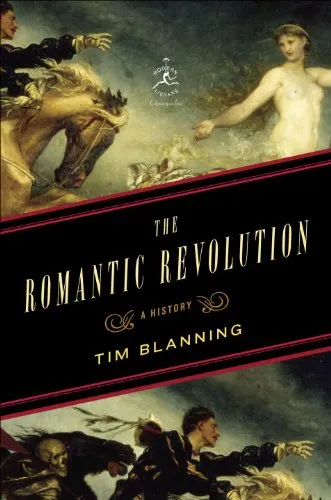
Cover of The Romantic Revolution: A History
English Intermediate novel

The Romantic Revolution: A History

Tim Blanning

Tim Blanning

4.2 / 5

0 reviews

2011

Published

272

pages

433

views

From the preeminent historian of Europe in the eighteenth and nineteenth centuries comes a superb, concise account of a cultural upheaval that still shapes sensibilities today. Long overshadowed by the contemporaneous American, French, and Industrial revolutions, the Romantic Rev

About this book

From the preeminent historian of Europe in the eighteenth and nineteenth centuries comes a superb, concise account of a cultural upheaval that still shapes sensibilities today. Long overshadowed by the contemporaneous American, French, and Industrial revolutions, the Romantic Revolution finally receives its due in Tim Blanning’s bold and brilliant work.A rebellion against the rationality of the Enlightenment, a rejection of “the Academy” in favor of public opinion, Romanticism was a profound shift in expression that altered the arts and ushered in modernity, even as it championed a return to the intuitive and the primitive. Blanning describes its beginnings in Rousseau’s novel La Nouvelle Héloïse, the biggest bestseller of the eighteenth century, a work that placed the creator—and not the created—at the center of aesthetic activity and led to the virtual worship of creative geniuses by the general public. Blanning reveals the glamorizing of artistic madness and suicide in Goethe’s novel The Sufferings of Young Werther and the ballet Giselle; the role of sex as a psychological force in Friedrich Schlegel’s novel Lucinde; the importance of mind-altering drugs to the fictional protagonist of Confessions of an English Opium Eater and to the composer Hector Berlioz in his Symphonie fantastique; and the use of naïve, dreamlike imagery in Goya’s paintings of monsters, devils, and witches.Whether it was the new notion of “sex appeal” in the fames of Paganini, Liszt, and Byron, or the celebration of accessible storytelling in the novels of Walter Scott (the most popular writer of the day), The Romantic Revolution unearths the origins of ideas now commonplace in our culture. It is the best introduction to an essential time whose influence would far outlast the mechanistic “age of the railway” that, in the mid-nineteenth century, replaced it.

Ask this book

Your question is answered in the context of this title and author. Each answer uses 2 points.

Sign in to ask the book assistant.

Reader reviews

0 reviews · 4.2 average out of 5

No reviews yet

If you have read this book, help the next reader with your experience.

Write a review

Sign in to publish a review.

Reader questions and answers

Ask a focused question and learn from the community.

Sign in to ask or answer a question.

No questions yet

Be the first to ask a clear, useful question.

Related references that continue this learning path.