Book guide and evaluation
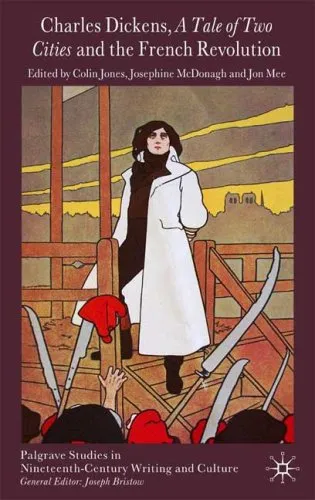
Charles Dickens, A Tale of Two Cities and the French Revolution (Palgrave Studies in Nineteenth-Century Writing and Culture)
Colin Jones,Josephine McDonagh,Jon Mee
English
Intermediate
novel
3.9 / 5
0 reviews
2009
Published
225
pages
560
views
Introduction to "Charles Dickens, A Tale of Two Cities and the French Revolution" Delving into the entwined narratives of historical upheaval and literature, "Charles Dickens, A Tale of Two Cities and the French Revolution" is an incisive examination of Dickens's renowned nove
Before you read
What will you get from this book?
Introduction to "Charles Dickens, A Tale of Two Cities and the French Revolution"
Delving into the entwined narratives of historical upheaval and literature, "Charles Dickens, A Tale of Two Cities and the French Revolution" is an incisive examination of Dickens's renowned novel against the backdrop of one of history's most tumultuous events.
Detailed Summary of the Book
The book offers a profound exploration of Charles Dickens's "A Tale of Two Cities", situating the novel within the broader canvas of revolutionary France and its echoes in Victorian England. This scholarly work investigates how Dickens interprets the seismic shifts of the French Revolution, reflecting on the tension between chaos and order, and the duality inherent in human nature. Authors Colin Jones, Josephine McDonagh, and Jon Mee provide an insightful analysis of Dickens's historical methodology, examining his sources, influences, and the implications of his novel's revolutionary themes. Through careful dissection of character, plot, and rhetoric, they illuminate Dickens's perspectives on justice, sacrifice, and the cyclical nature of history. This book is part of the Palgrave Studies in Nineteenth-Century Writing and Culture series and is essential for understanding both the novel and the intricate interplay between literature and historical consciousness.
Key Takeaways
- The interplay between history and literature: how Dickens captures the essence of revolutionary France.
- Exploration of duality: the novel's persistent themes of dualities such as peace and violence, and revolution and stability.
- The transformation of historical narrative into moral inquiry within Dickens's work.
- Insights into how Dickens's personal context in Victorian England shaped his portrayal of historical events.
Famous Quotes from the Book
"It was the best of times, it was the worst of times, it was the age of wisdom, it was the age of foolishness..." – A passage that perfectly encapsulates the heart of Dickens's exploration of paradoxes.
"The period was so far like the present period, that some of its noisiest authorities insisted on its being received, for good or for evil, in the superlative degree of comparison only." – Reflecting on the timelessness of certain societal dynamics.
Why This Book Matters
Understanding the historical context and literary prowess embedded in Dickens's "A Tale of Two Cities" is crucial for scholars and enthusiasts of both history and literature. This book opens up discussion on the ways literature can influence and be influenced by historical events, providing a model of how texts can serve as windows to the past. It underscores the enduring questions about justice and human nature that continue to resonate today. Moreover, it highlights Dickens's unique narrative perspective that combines storytelling with social commentary. By shedding light on these aspects, the book enriches our comprehension of how 19th-century writing engages with revolutionary change, making it an indispensable resource for those interested in the intersections of literature, history, and culture.
Ask this book
Your question is answered in the context of this title and author. Each answer uses 2 points.
Sign in to ask the book assistant.
Reader reviews
0 reviews, 3.9 average out of 5
No reviews yet
If you have read this book, help the next reader with your experience.
Write a review
Sign in to publish a review.
Reader questions and answers
Ask a focused question and learn from the community.
Sign in to ask or answer a question.
No questions yet
Be the first to ask a clear, useful question.
What to read next
Related references that continue this learning path.