Book guide and evaluation
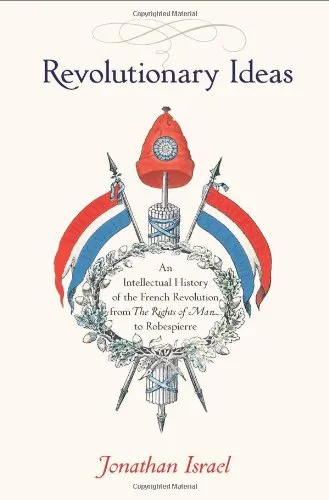
Revolutionary Ideas: An Intellectual History of the French Revolution from The Rights of Man to Robespierre
Jonathan Israel
English
Intermediate
novel
4.3 / 5
0 reviews
2014
Published
883
pages
492
views
Historians of the French Revolution used to take for granted what was also obvious to its contemporary observers--that the Revolution was caused by the radical ideas of the Enlightenment. Yet in recent decades scholars have argued that the Revolution was brought about by social f
Before you read
What will you get from this book?
Historians of the French Revolution used to take for granted what was also obvious to its contemporary observers--that the Revolution was caused by the radical ideas of the Enlightenment. Yet in recent decades scholars have argued that the Revolution was brought about by social forces, politics, economics, or culture--almost anything but abstract notions like liberty or equality. In Revolutionary Ideas, one of the world's leading historians of the Enlightenment restores the Revolution's intellectual history to its rightful central role. Drawing widely on primary sources, Jonathan Israel shows how the Revolution was set in motion by radical eighteenth-century doctrines, how these ideas divided revolutionary leaders into vehemently opposed ideological blocs, and how these clashes drove the turning points of the Revolution.Revolutionary Ideas demonstrates that the Revolution was really three different revolutions vying for supremacy--a conflict between constitutional monarchists such as Lafayette who advocated moderate Enlightenment ideas; democratic republicans allied to Tom Paine who fought for Radical Enlightenment ideas; and authoritarian populists, such as Robespierre, who violently rejected key Enlightenment ideas and should ultimately be seen as Counter-Enlightenment figures. The book tells how the fierce rivalry between these groups shaped the course of the Revolution, from the Declaration of Rights, through liberal monarchism and democratic republicanism, to the Terror and the Post-Thermidor reaction.In this compelling account, the French Revolution stands once again as a culmination of the emancipatory and democratic ideals of the Enlightenment. That it ended in the Terror represented a betrayal of those ideas--not their fulfillment.
Ask this book
Your question is answered in the context of this title and author. Each answer uses 2 points.
Sign in to ask the book assistant.
Reader reviews
0 reviews, 4.3 average out of 5
No reviews yet
If you have read this book, help the next reader with your experience.
Write a review
Sign in to publish a review.
Reader questions and answers
Ask a focused question and learn from the community.
Sign in to ask or answer a question.
No questions yet
Be the first to ask a clear, useful question.
What to read next
Related references that continue this learning path.
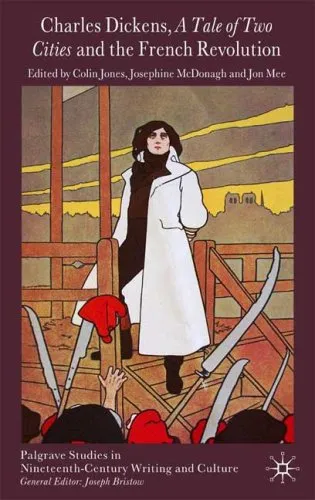
Charles Dickens, A Tale of Two Cities and the French Revolution (Palgrave Studies in Nineteenth-Century Writing and Culture)
Colin Jones,Josephine McDonagh,Jon Mee
2009
View book
Charles Dickens, A Tale of Two Cities and the French Revolution
Colin Jones,Josephine McDonagh,Jon Mee (eds.)
2009
View book