Book guide and evaluation
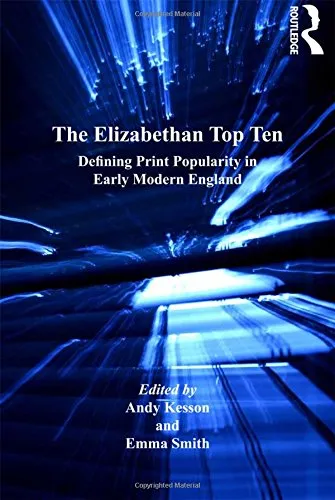
The Elizabethan Top Ten: Defining Print Popularity in Early Modern England
Emma Smith,Andy Kesson
English
Intermediate
novel
4.6 / 5
0 reviews
2016
Published
284
pages
281
views
Engaging with histories of the book and of reading, as well as with studies of material culture, this volume explores ’popularity’ in early modern English writings. Is ’popular’ best described as a theoretical or an empirical category in this period? How can we account for the g
Before you read
What will you get from this book?
Engaging with histories of the book and of reading, as well as with studies of material culture, this volume explores ’popularity’ in early modern English writings. Is ’popular’ best described as a theoretical or an empirical category in this period? How can we account for the gap between modern canonicity and early modern print popularity? How might we weight the evidence of popularity from citations, serial editions, print runs, reworkings, or extant copies? Is something that sells a lot always popular, even where the readership for print is only a small proportion of the population, or does popular need to carry something of its etymological sense of the public, the people? Four initial chapters sketch out the conceptual and evidential issues, while the second part of the book consists of ten short chapters-a ’hit parade’- in which eminent scholars take a genre or a single exemplar - play, romance, sermon, or almanac, among other categories-as a means to articulate more general issues. Throughout, the aim is to unpack and interrogate assumptions about the popular, and to decentre canonical narratives about, for example, the sermons of Donne or Andrewes over Smith, or the plays of Shakespeare over Mucedorus. Revisiting Elizabethan literary culture through the lenses of popularity, this collection allows us to view the subject from an unfamiliar angle-in which almanacs are more popular than sonnets and proclamations more numerous than plays, and in which authors familiar to us are displaced by names now often forgotten.
Ask this book
Your question is answered in the context of this title and author. Each answer uses 2 points.
Sign in to ask the book assistant.
Reader reviews
0 reviews, 4.6 average out of 5
No reviews yet
If you have read this book, help the next reader with your experience.
Write a review
Sign in to publish a review.
Reader questions and answers
Ask a focused question and learn from the community.
Sign in to ask or answer a question.
No questions yet
Be the first to ask a clear, useful question.
What to read next
Related references that continue this learning path.
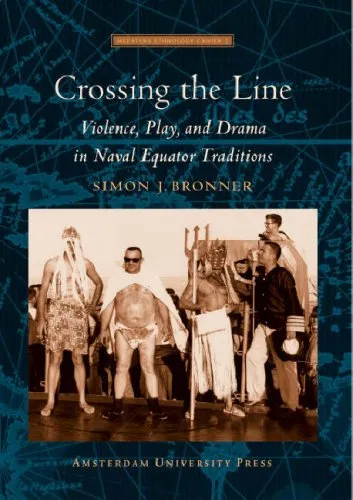
Crossing the Line: Violence, Play, and Drama in Naval Equator Traditions
Simon J. Bronner
2007
View book