Book guide and evaluation
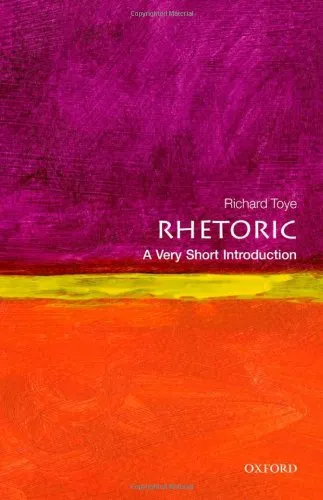
Rhetoric: A Very Short Introduction
Richard Toye
English
Advanced
Art
5.0 / 5
0 reviews
2013
Published
136
pages
1025
views
Rhetoric: A Very Short Introduction persuasive communication, history of rhetoric Rhetoric: A Very Short Introduction explores the art, history, and power of persuasive communication in society. Analytical Summary Rhetoric: A Very Short Introduction serves as a concise yet
Before you read
What will you get from this book?
Analytical Summary
Rhetoric: A Very Short Introduction serves as a concise yet rich guide to the art of persuasion, tracing its historical roots while addressing its relevance in contemporary discourse. Authored by Richard Toye, this work navigates the complexities of persuasive communication by examining its theoretical foundations, practical applications, and enduring significance.
The book covers a broad sweep of rhetorical history, from its origins in ancient Greek society through its development in Roman times, the Middle Ages, and into modern political and media landscapes. While highlighting key figures such as Aristotle, Cicero, and Quintilian, it also scrutinizes the transformation of rhetoric through the Renaissance and Enlightenment, all the way to today's soundbite-driven culture.
Toye’s approach balances accessible explanation with scholarly depth. He examines how rhetoric has been both celebrated as a vital tool for democratic engagement and derided as manipulation or empty flourish. By dissecting components such as ethos, pathos, and logos, the book provides tools for decoding persuasive messages in politics, law, advertising, and everyday communication.
Rather than simply a history lesson, this volume encourages readers to critically assess the ethical dimensions of persuasion. In an age of rapid information exchange, understanding rhetorical strategies is essential not only for public speakers and writers but for consumers of information who wish to remain discerning, thoughtful participants in public life.
Key Takeaways
Readers of Rhetoric: A Very Short Introduction gain a practical framework for identifying persuasive techniques, alongside a nuanced perspective on their use across contexts.
The work underscores the dual nature of rhetoric as both a tool for enlightenment and a potential instrument of deception. It also demonstrates how rhetoric shapes public debate, policy formation, and cultural narratives.
Toye explains that effective rhetoric requires an understanding of audience, purpose, and context, making it an adaptable skill across professions and disciplines.
Memorable Quotes
“Rhetoric is the art of ruling the minds of men.” Plato
“Persuasion is achieved by the speaker’s personal character when the speech is so spoken as to make us think him credible.” Aristotle
“Words are, of course, the most powerful drug used by mankind.” Rudyard Kipling
Why This Book Matters
In a world saturated with messages, from political speeches to social media posts, the ability to analyze and craft persuasive communication is invaluable.
Rhetoric: A Very Short Introduction equips readers with the critical tools to navigate these messages intelligently. Its blend of historical perspective and contemporary application makes it relevant to academics, professionals, and engaged citizens alike.
Whether one’s interest lies in political science, law, marketing, or personal expression, this book offers enduring insights into the mechanics of influence and the shaping of public opinion.
Inspiring Conclusion
Rhetoric: A Very Short Introduction is more than an overview of persuasive communication—it is a call to intellectual vigilance in a dynamic public sphere.
By engaging with the material, readers will not only learn to identify rhetorical techniques but also to deploy them responsibly in their own work and dialogue. The text invites academics, students, and professionals to reflect on the ethics and impact of their words, fostering a culture that values thoughtful persuasion over manipulation.
If you wish to sharpen your ability to think, speak, and write persuasively while contributing positively to public discourse, reading this book is an essential step. Share its insights, discuss its themes, and integrate its lessons into your personal and professional life.
Ask this book
Your question is answered in the context of this title and author. Each answer uses 2 points.
Sign in to ask the book assistant.
Your previous questions
Where can i download this pdf?
Sorry, your question is not related to my book.
Reader reviews
0 reviews, 5.0 average out of 5
No reviews yet
If you have read this book, help the next reader with your experience.
Write a review
Sign in to publish a review.
Reader questions and answers
Ask a focused question and learn from the community.
Sign in to ask or answer a question.
No questions yet
Be the first to ask a clear, useful question.
What to read next
Related references that continue this learning path.
The Art of Rhetoric in the Roman World 300 B.C.-A.D. 300 (A History of Rhetoric, )
George Alexander Kennedy
1972
View book