
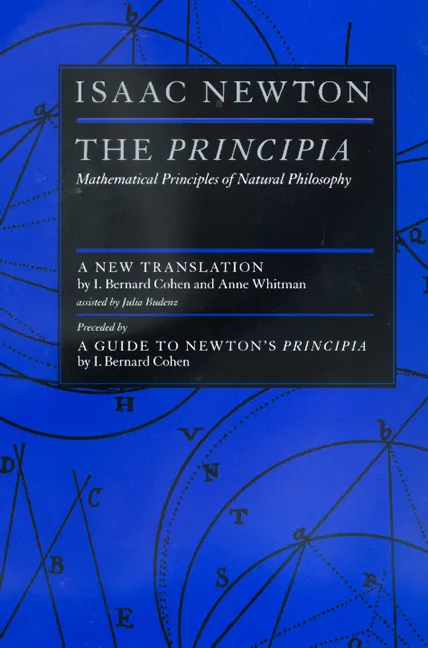
The Principia: Mathematical Principles of Natural Philosophy
Isaac Newton,I. Bernard Cohen,Anne Whitman,Julia Budenz
1999
View book
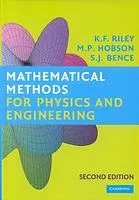
Book guide and evaluation
K. F. Riley M. P. Hobson S. J. Bence
0 reviews
Published
pages
views
Introduction to "Mathematical Methods for Physics and Engineering: A Comprehensive Guide (2nd Edition)" "Mathematical Methods for Physics and Engineering: A Comprehensive Guide (2nd Edition)" is an extensively detailed and well-structured textbook co-authored by K.
Before you read
"Mathematical Methods for Physics and Engineering: A Comprehensive Guide (2nd Edition)" is an extensively detailed and well-structured textbook co-authored by K. F. Riley, M. P. Hobson, and S. J. Bence. This textbook has been celebrated as one of the most comprehensive resources for undergraduate and introductory graduate students in physics, engineering, and applied mathematics. Its emphasis on clarity and logical development has made it a go-to resource for students and academics alike.
Designed to guide readers from the foundations of mathematical methods to advanced problem-solving approaches, the book carefully balances between theoretical presentation and practical examples. With an emphasis on problem-solving, it brings together a variety of techniques essential for addressing physical and engineering scenarios. From linear algebra to differential equations, and from complex numbers to Fourier analysis, this guide integrates mathematics seamlessly into the natural and applied sciences, offering significant real-world relevance.
The book spans a multitude of mathematical topics, ensuring that no essential concept is left unexplored. Comprehensive in scope and detail, it is organized to support both learning and application. The content has been structured to address the needs of students encountering these topics for the first time, as well as for those looking to refine their mathematical tools for research or professional application.
Some of the primary areas covered in this volume include:
Each chapter introduces fundamental concepts before diving into advanced applications, supplemented by numerous worked examples and end-of-chapter problems. The inclusion of solutions to selected problems enhances self-study, allowing readers to verify their understanding in real-time.
Throughout the book, the authors emphasize the practical value of mathematics, with some notable insights:
"The language of mathematics does not merely describe physical phenomena; it enables us to predict, analyze, and understand them in profound ways."
"A comprehensive grasp of mathematical techniques is not a luxury in the sciences—it is an absolute necessity."
"The power of mathematics lies in its precision and versatility, offering tools that are as elegant as they are effective."
"Mathematical Methods for Physics and Engineering: A Comprehensive Guide (2nd Edition)" is more than just a textbook; it is a bridge between theoretical mathematics and practical application. Its intuitive approach and exhaustive range of topics make it essential for a diverse audience, from students to researchers.
For students, it offers an accessible and well-supplemented introduction to mathematical methods, ensuring they are well-equipped to tackle complex physical and engineering problems. For seasoned academics, it provides a reliable reference that integrates seamlessly into research or lecture preparation.
The book’s emphasis on real-world applications ensures its utility extends beyond academia into technology, data analysis, engineering design, and more. Its enduring relevance makes it a timeless resource for anyone whose work or study involves applied mathematics.
Whether you are beginning your journey in mathematical methods or seeking to refine your expertise, this guide offers a definitive roadmap through the fascinating landscape of applied mathematics.
Your question is answered in the context of this title and author. Each answer uses 2 points.
0 reviews, 4.6 average out of 5
Sign in to publish a review.
Ask a focused question and learn from the community.
Related references that continue this learning path.
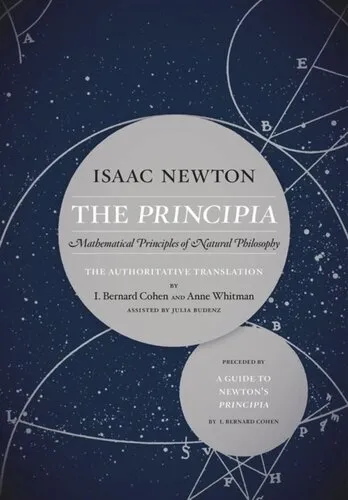
Isaac Newton,I. Bernard Cohen,Anne Whitman,Julia Budenz
Philip J. Davis,Reuben Hersh,Elena Anne Marchisotto (auth.)