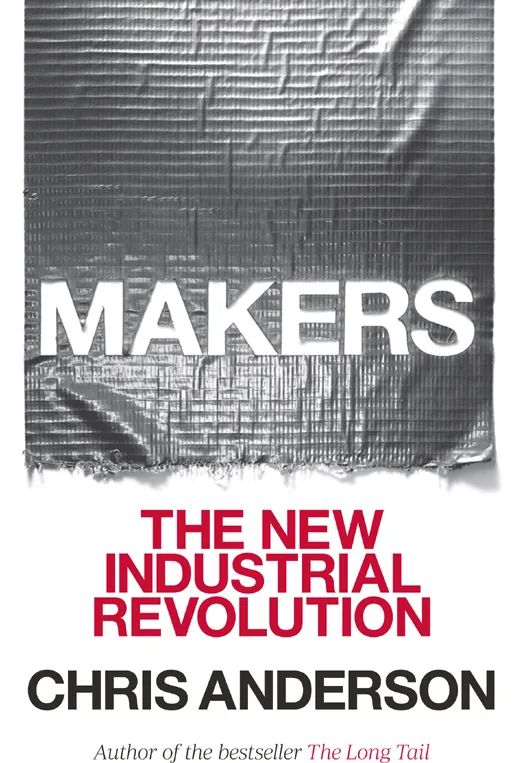
Book guide and evaluation
Makers: the new industrial revolution
Chris Anderson
English
Beginner
Product Design
4.0 / 5
0 reviews
2012
Published
262
pages
613
views
Introduction to 'Makers: The New Industrial Revolution' In "Makers: The New Industrial Revolution," Chris Anderson takes readers on a journey exploring the astounding possibilities that the maker movement has unleashed. This book delves into how individual innovation and
Before you read
What will you get from this book?
Introduction to 'Makers: The New Industrial Revolution'
In "Makers: The New Industrial Revolution," Chris Anderson takes readers on a journey exploring the astounding possibilities that the maker movement has unleashed. This book delves into how individual innovation and grassroots production are fostering a new wave of industrial revolution. By blending technology, creativity, and entrepreneurship, 'Makers' demonstrates how small-scale inventors can compete with corporate giants, fostering unprecedented economic and cultural shifts.
Detailed Summary of the Book
The book begins by drawing parallels between the maker movement and the earlier industrial revolutions that transformed economies and societies worldwide. Anderson highlights how, unlike traditional manufacturing, which often requires substantial capital investment, the digital age democratizes the tools of production. Thanks to technologies such as 3D printing, crowdsourcing, and open-source software, individuals or small teams can design, produce, and distribute products widely.
Anderson introduces the concept of the 'Long Tail' in manufacturing—how niche markets become profitable by virtue of the increased accessibility and affordability of production technology. This contrasts sharply with mass production which focuses on the broadest appeal. By leveraging the power of the internet and global communication, makers can reach a broader or more specific audience and cater to their unique needs.
Furthermore, the book explores how platforms like Etsy, Kickstarter, and other crowd-funded incubation networks support this movement by connecting creators to capital and clients. Anderson posits that in the future, we will see an expansion of 'micro-manufacturers' and a shift from the centralized factory model to decentralized, personalized production networks.
Key Takeaways
Here are some of the essential insights from 'Makers: The New Industrial Revolution':
- Technology has leveled the playing field, allowing small makers to have a significant impact in the industry.
- The open-source movement in hardware and software is vital for future innovations and product diversity.
- Platforms that encourage collaboration and sharing are central to the success of the maker movement.
- The blending of bits and atoms has resulted in new business models that defy traditional economic structures.
Famous Quotes from the Book
"We're all makers. We're born makers (just watch a child with a box of crayons)."
"The tools of factory production, once reserved for giants, now belong to everyone."
"The next industrial revolution will not be about computers or software, but about the physical world."
Why This Book Matters
"Makers: The New Industrial Revolution" is not just a book about technology, but a manifesto for innovation and change. Anderson highlights the transformative power of the maker movement, predicting it will reshape economies and democratize production. This spirit of innovation reflects broader shifts in global manufacturing, suggesting that creativity and entrepreneurship could be just as important as traditional business models. Whether you're an inventor, entrepreneur, student, or business leader, understanding this transition is crucial. The book inspires readers to embrace the tools and mentality of a maker, encouraging them to view challenges as opportunities for innovation and creativity.
Ask this book
Your question is answered in the context of this title and author. Each answer uses 2 points.
Sign in to ask the book assistant.
Reader reviews
0 reviews, 4.0 average out of 5
No reviews yet
If you have read this book, help the next reader with your experience.
Write a review
Sign in to publish a review.
Reader questions and answers
Ask a focused question and learn from the community.
Sign in to ask or answer a question.
No questions yet
Be the first to ask a clear, useful question.
What to read next
Related references that continue this learning path.