Book guide and evaluation
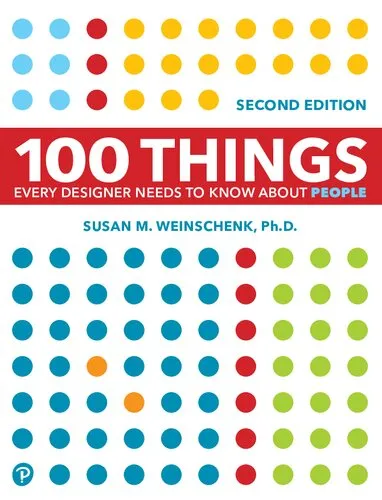
100 Things Every Designer Needs to Know About People
Susan Weinschenk
English
Beginner
Product Design
4.7 / 5
0 reviews
2020
Published
256
pages
538
views
Introduction to "100 Things Every Designer Needs to Know About People" Welcome to an essential resource for designers eager to deepen their understanding of human psychology. "100 Things Every Designer Needs to Know About People" provides insigh
Before you read
What will you get from this book?
Introduction to "100 Things Every Designer Needs to Know About People"
Welcome to an essential resource for designers eager to deepen their understanding of human psychology. "100 Things Every Designer Needs to Know About People" provides insights into the way people think, perceive, and interact with the world around them, revealing the direct implications for design. Whether you are a seasoned professional or new to the field, this book aims to bridge the gap between cognitive psychology and practical design.
Detailed Summary
The book is structured around 100 scientifically-grounded facts about human behavior, perception, and cognitive psychology, each followed by practical advice on how these insights can be leveraged in design. It covers topics such as attention span, memory mechanics, decision-making processes, and emotional engagement. By combining research findings with case studies and examples, Susan Weinschenk elucidates how understanding human psychology enhances user experience and effectiveness in design.
Key Takeaways
- People don’t want to work or think more than they have to.
- Memory is very unreliable and is easily influenced by various factors.
- Emotions greatly influence decision-making and attention.
- People scan web pages and do not read word for word.
- Social validation is crucial and heavily affects user actions.
Famous Quotes from the Book
"People make decisions more with the unconscious mind than the conscious mind."
"People notice what’s different and new, but not necessarily the important changes."
Why This Book Matters
In an age where digital interactions are constant and pervasive, understanding your audience is not merely beneficial but imperative. This book fills a critical void by synthesizing psychological insights with actionable design strategies. The importance of this book lies in its ability to transform abstract psychological principles into concrete design actions that enhance user experience and satisfaction. With this knowledge, designers can craft more engaging, intuitive, and user-centered products that do more than meet user needs—they anticipate them.
Ask this book
Your question is answered in the context of this title and author. Each answer uses 2 points.
Sign in to ask the book assistant.
Reader reviews
0 reviews, 4.7 average out of 5
No reviews yet
If you have read this book, help the next reader with your experience.
Write a review
Sign in to publish a review.
Reader questions and answers
Ask a focused question and learn from the community.
Sign in to ask or answer a question.
No questions yet
Be the first to ask a clear, useful question.
What to read next
Related references that continue this learning path.