Book guide and evaluation
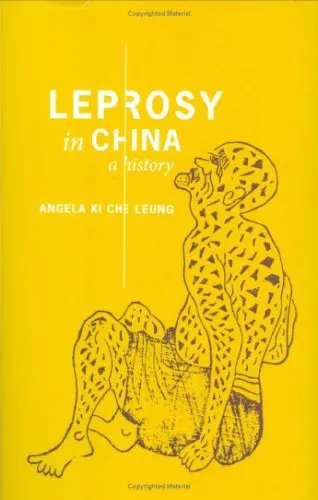
Leprosy in China: A History (Studies of the Weatherhead East Asian Institute, Columbia University)
Angela Ki Che Leung
English
Advanced
Art
4.3 / 5
0 reviews
2008
Published
388
pages
331
views
Angela Ki Che Leung's meticulous study begins with the classical annals of the imperial era, which contain the first descriptions of a feared and stigmatized disorder modern researchers now identify as leprosy. She then tracks the relationship between the disease and China's soci
Before you read
What will you get from this book?
Angela Ki Che Leung's meticulous study begins with the classical annals of the imperial era, which contain the first descriptions of a feared and stigmatized disorder modern researchers now identify as leprosy. She then tracks the relationship between the disease and China's social and political spheres (theories of contagion prompted community and statewide efforts at segregation); religious traditions (Buddhism and Daoism ascribed redemptive meaning to those suffering from the disease), and evolving medical discourse (Chinese doctors have contested the disease's etiology for centuries). Leprosy even pops up in Chinese folklore, attributing the spread of the contagion to contact with immoral women.Leung next places the history of leprosy into a global context of colonialism, racial politics, and "imperial danger." A perceived global pandemic in the late nineteenth century seemed to confirm Westerners' fears that Chinese immigration threatened public health. Therefore battling to contain, if not eliminate, the disease became a central mission of the modernizing, state-building projects of the late Qing empire, the nationalist government of the first half of the twentieth century, and the People's Republic of China. Stamping out the curse of leprosy was the first step toward achieving "hygienic modernity" and erasing the cultural and economic backwardness associated with the disease. Leung's final move connects China's experience with leprosy to a larger history of public health and biomedical regimes of power, exploring the cultural and political implications of China's Sino-Western approach to the disease. (1/1/10)
Ask this book
Your question is answered in the context of this title and author. Each answer uses 2 points.
Sign in to ask the book assistant.
Reader reviews
0 reviews, 4.3 average out of 5
No reviews yet
If you have read this book, help the next reader with your experience.
Write a review
Sign in to publish a review.
Reader questions and answers
Ask a focused question and learn from the community.
Sign in to ask or answer a question.
No questions yet
Be the first to ask a clear, useful question.
What to read next
Related references that continue this learning path.